Fatma Bucak : le rosier de Damas Fatma Bucak: The Damask Rose - Érudit
←
→
Transcription du contenu de la page
Si votre navigateur ne rend pas la page correctement, lisez s'il vous plaît le contenu de la page ci-dessous
Document generated on 01/14/2025 7:48 a.m.

esse arts + opinions

Fatma Bucak : le rosier de Damas
Fatma Bucak: The Damask Rose
Anaïs Castro

Number 99, Spring 2020

Plantes
Plants

URI: https://id.erudit.org/iderudit/93188ac

See table of contents

Publisher(s)
Les éditions Esse

ISSN
0831-859X (print)
1929-3577 (digital)

Explore this journal

Cite this article
Castro, A. (2020). Fatma Bucak : le rosier de Damas / Fatma Bucak: The Damask
Rose. esse arts + opinions, (99), 48–53.

Tous droits réservés © Anaïs Castro, 2020                                       This document is protected by copyright law. Use of the services of Érudit
                                                                                (including reproduction) is subject to its terms and conditions, which can be
                                                                                viewed online.
                                                                                https://apropos.erudit.org/en/users/policy-on-use/

                                                                                This article is disseminated and preserved by Érudit.
                                                                                Érudit is a non-profit inter-university consortium of the Université de Montréal,
                                                                                Université Laval, and the Université du Québec à Montréal. Its mission is to
                                                                                promote and disseminate research.
                                                                                https://www.erudit.org/en/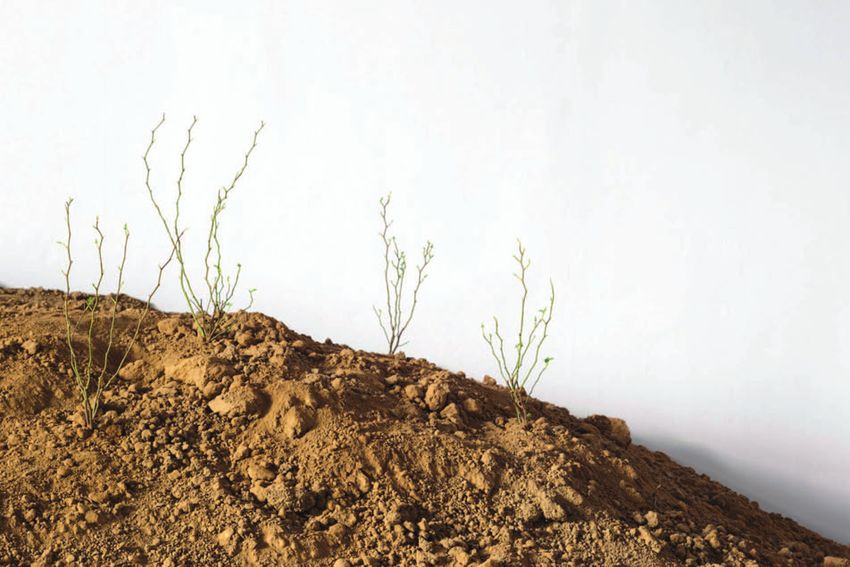
Esse

48 — Dossier
Esse

                                                                                 De la fin de 2016 au début de
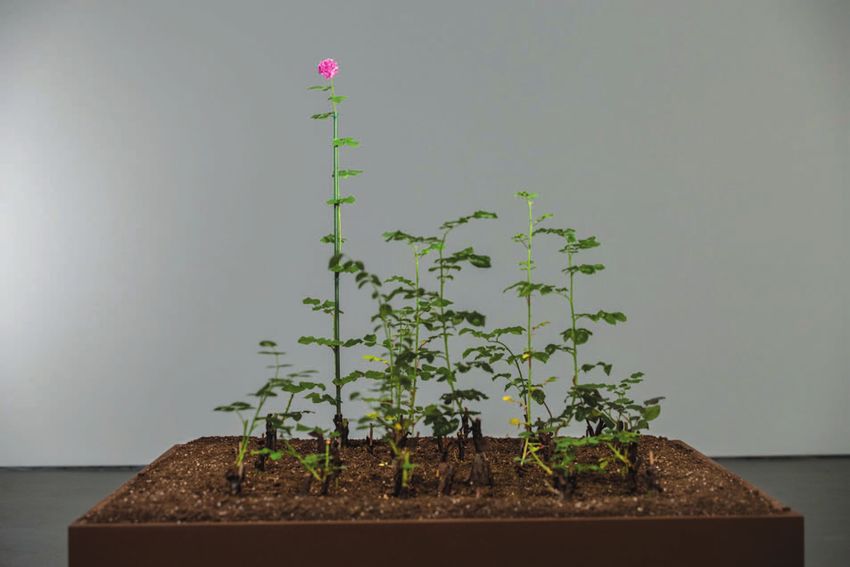
                                                                                 2017, un jardin de roses a poussé
                                                                                 dans une structure métallique
                                                                                 rectangulaire au centre de la

le rosier                                                                        galerie David Winton Bell de
                                                                                 l’Université Brown, à Providence,
                                                                                 au Rhode Island. Un an plus tard,
de Damas                                                                         ce même jardin a été replanté,
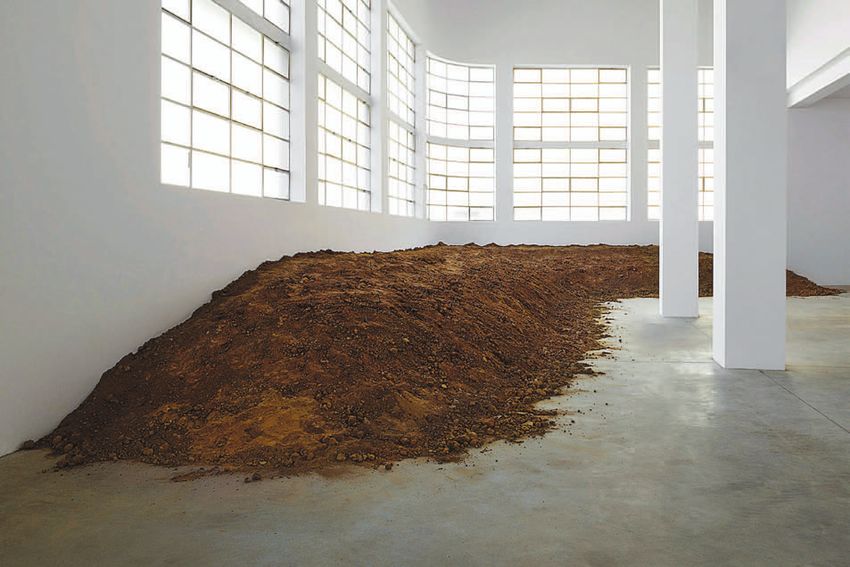
                                                                                 cette fois dans un grand tas de
                                                                                 terre déversé à la Fondation Merz,
                                                                                 à Turin, en Italie. Au premier
                                                                                 regard, ces actions peuvent faire
                                                                                 allusion au land art, une référence
                                                                                 romantique aux pratiques
                                                                                 autrefois subversives de Walter De
                                                                                 Maria, Robert Smithson et Agnes
                                                                                 Denes. Mais derrière l’œuvre
                                                                                 Damascus Rose (2016-) de Fatma
                                                                                 Bucak se trouve un récit poétique
                                                                                 de courage qui raconte l’histoire
                                                                                 d’un vaillant geste de survie.

 Au plus fort de la guerre civile syrienne, Bucak      le projet comme une façon compliquée de poser
a travaillé avec un réseau de collaborateurs ano-      une question toute simple : est-il possible de se
nymes afin de transporter de jeunes boutures de        réenraciner en sol étranger ? Même si ces paral-
l’iconique Rosa × damascena depuis la capitale         lèles métaphoriques existent entre le voyage
syrienne jusqu’à la Nouvelle-Angleterre, en pas-       de la plante et celui des migrants, l’œuvre de
sant par le Liban, l’Arabie saoudite, l’Italie et la   Bucak est plus qu’une astuce alambiquée pour
Turquie. Après une arrivée retardée, seulement         attirer l’attention sur leur sort, que l’artiste a
17 des 50 boutures avaient survécu au voyage.          par ailleurs déjà documenté avec grande empa-
Ces survivantes botaniques ont été greffées sur        thie dans plusieurs autres œuvres telles que
des rosiers « hôtes » pour être ensuite replantées     De Silencio et I Must Say a Word about Fear. Ce
dans l’espace d’exposition à des dizaines de mil-      projet découle plutôt d’un examen approfondi
liers de kilomètres de leur patrie.                    du rôle et de la fonction des frontières comme       Anaïs Castro
     Ceux qui ont écrit sur le travail de Bucak se     lignes transnationales par une exploration des
sont empressés de souligner que le périple des         thèmes de la migration, du déplacement et de la
rosiers reflète les périlleux voyages, par voie ter-   guerre. Au cours de la dernière décennie, Bucak
restre ou maritime, de millions de migrants à la       a reçu des bourses et participé à des résidences
recherche d’un lieu sûr en terres étrangères. Les      qui lui ont permis de voyager jusqu’à des fron-
retards, les mauvaises manipulations et la des-        tières controversées partout dans le monde,
truction des plantes vulnérables sont similaires       entre la Turquie et l’Arménie, entre la Turquie
à la détresse des migrants, qui ont confié leur        et la Syrie, entre le Mexique et les États-Unis et
fortune en péril à la bonne volonté d’étrangers        entre le Maroc et le Sahara occidental. Avec sa
ainsi qu’à une bureaucratie étrangère complexe         double citoyenneté – elle détient des passeports
et souvent inhospitalière. Beaucoup interprètent       turc et italien –, elle possède le privilège de la

             49 — Feature
Esse
Fatma Bucak
So as to find the strength to see, vue
d’installation et détail | installation
view and detail, Fondation Merz, Turin,
2018.
Photos : Renato Ghiazza, permission de |
courtesy of the artist, Pi Artworks, London &
Alberto Peola Gallery, Turin
mobilité, qui lui permet de sonder ces thèmes chuté rapidement lorsque la guerre a éclaté, ce À propos de Damascus Rose, la critique d’art
sans restriction. Cela dit, Bucak, qui est née à qui profite à d’autres régions productrices en anglaise Philomena Epps écrit : « Ce n’est pas un
İskenderun, ville du sud de la Turquie près de France, au Maroc, en Iran et en Turquie. geste didactique, mais symbolique qui s’inscrit
la frontière syrienne, a développé une pratique D’autre part, Bucak s’intéresse également à dans les interstices entre les marges du politique
multidisciplinaire caractérisée par d’audacieux la façon dont la guerre affecte le paysage d’un et de la poésie5 . » Avec cet acte de transgres-
actes de courage. Que l’artiste compromette sa lieu. Symbole pour les résidents de la capitale sion poétique, Bucak montre que l’expérience
sécurité en documentant la frontière États- syrienne, le rosier était jadis répandu à Damas humaine de la guerre est enchevêtrée aux consi-
Unis–Mexique ou qu’elle risque la prison pour et dans le reste de sa province, où il agrémentait dérations environnementales et aux politiques
avoir dénoncé la propagande et la censure de jardins, balcons et bords de routes. Interviewé sociales de l’agriculture et de la production ali-
la presse turque, sa pratique est définie par des pour un article intitulé « Syria’s Famous Damask mentaire. Sans diminuer l’expérience humaine
gestes poétiques de transgression visant à révé- Rose Withered by War » publié dans The Times de la migration ni montrer qui ou quoi que ce soit
ler les mécanismes complexes qui entravent la of Israel, Abu Bilal, ancien propriétaire d’une du doigt, elle défend une perspective plus large
liberté humaine. distillerie d’huile de rose de la région fermée sur les conflits transnationaux qui propose une
Dans le contexte de Damascus Rose, Bucak en 2011, se souvient que « Douma [ville de la manière essentielle de voir à travers les temps
examine la façon dont la guerre et le conflit Ghouta orientale] sentait la rose, mais empeste troubles qui sont à venir.
transnational affectent l’économie d’un lieu. La maintenant la poudre à canon4 ». Quelque chose
culture du rosier de Damas en Syrie et sa distri- dans ce projet rappelle aussi le déplacement des Traduit de l’anglais par Catherine Barnabé
bution en Europe sont largement documentées plantes durant les expéditions coloniales, ainsi
depuis le 12e siècle1. Conséquence de la guerre que la collecte et l’entretien de spécimens du
civile, la fertilité des sols en Syrie s’est détério- monde entier dans des jardins botaniques osten-
rée, les champs ont été abandonnés et avec cela, tatoires partout en Europe à la fin du 18e siècle et 1 — À preuve, la plante est notamment men-
plusieurs cultures se sont perdues. Depuis le durant le 19e. Pensons notamment aux Jardins tionnée dans le sonnet CXXX de William
début de la guerre en 2011, l’agriculture en Syrie botaniques royaux de Kew et à leur rôle signifi- Shakespeare.
a décliné à un niveau presque apocalyptique2. catif dans le développement de la botanique éco-
2 — En 2015, le Centre international de
Bucak se rappelle avoir lu un article publié en nomique et de l’ethnobotanique, deux domaines recherche agricole dans les zones arides a
2014, trois ans après le début de la guerre, où précurseurs du génie biologique et agricole. En évalué la sécurité alimentaire en Syrie et établi
l’on affirmait que 70 % de la production du rosier fait, la plupart des roses cultivées en Europe pro- que la situation y était périlleuse, si bien qu’il
de Damas avait été détruite. Elle explique : « Je viennent du rosier de Damas. a demandé à placer des échantillons de blé,
d’orge et d’herbe dans la Réserve mondiale
voulais aborder le sujet à ma façon, en com- Lors d’une conversation avec l’artiste, nous de semences du Svalbard afin de remplacer
mençant par le sol. Comment transporte-t-on avons discuté d’une potentielle et ultime étape les semences endommagées à Alep durant
quelque chose de Damas vers un autre pays au projet qui consisterait, à la fin de la guerre, à la guerre.
pour tenter de l’y cultiver3 ? » Le rosier de Damas retourner les boutures en Syrie, où elles seraient
3 — Philomena Epps, « Fatma Bucak: Finding
joue un rôle important dans l’économie de son replantées dans leur lieu d’origine. En traçant la the Strength to See », Elephant, 26 mars
pays d’origine. Il est utilisé pour la produc- trajectoire de la fleur du Moyen-Orient jusqu’en 2018, . [Trad. libre]
grandes parfumeries, comme ingrédient pour sion historique de violence, violence liée à l’hé-
4 — Maher Al Mounes, « Syria’s Famous
les produits nettoyants ainsi que dans l’indus- ritage de la botanique. L’espoir émerge toutefois Damask Rose Withered by War », The Times
trie alimentaire. Avant la guerre, la culture et la de son projet avec la promesse de la réconcilia- of Israel, 17 mai 2016, . [Trad. libre]
une industrie de plusieurs millions de dollars. de références, Damascus Rose soulève d’impor-
Faire pousser cette plante est ardu et exige un tantes questions concernant les notions com- 5 — Philomena Epps, loc. cit. [Trad. libre]
travail manuel intense ; la production a donc plexes d’appartenance, de patrie, d’origine.
50 — DossierEsse 51 — Feature
Esse

Fatma Bucak:              Fatma Bucak
                          And men turned their faces from
                          there, vue d’installation | installation

The Damask Rose           view, David Winton Bell Gallery, Brown
                          University, Providence, 2017.
                          Photo : Jesse Banks III, permission de |
                          courtesy of the artist, Pi Artworks, London &
                          Alberto Peola Gallery, Turin
Anaïs Castro

           52 — Dossier
Esse
In late 2016 and early 2017, a of migration, displacement, and war. In the past and cared for in ostentatious botanical gardens
decade, she has received grants and participated across Europe in the late eighteenth century and
rose garden grew out of a rec- in residencies that have allowed her to travel to through the nineteenth century. Notably, we can
tangular metallic structure in contentious borders around the world, between think of the Royal Botanical Garden at Kew and
Turkey and Armenia, between Turkey and Syria, its significant role in the development of econo-
the middle of the David Winton between Mexico and the United States, and mic botany and ethnobotany, two precursor
Bell Gallery at Brown University between Morocco and Western Sahara. As a fields of biological and agricultural engineering.
dual citizen, holding passports from Turkey and In fact, most European-grown roses derive from
in Providence, Rhode Island. Italy, she has the privilege of mobility, enabling the Damask rose.
A year later, that same garden her to investigate this theme without restric- During a conversation I had with the artist,
tions. That being said, Bucak, who was born in we discussed a potential and ultimate stage
was replanted, this time in a Iskenderun, a town in southern Turkey close to of the project in which the cuttings would
large pile of soil unloaded at the the Syrian border, has developed a multidiscipli- be returned to Syria, where they would be
nary practice characterized by repeated daring replanted in their place of origin at the end of the
Merz Foundation in Turin, Italy. acts of courage. Whether she is compromising war. In tracing the trajectory of the flower from
Upon first glance, these actions her own safety by documenting the U.S.–Mexico the Middle East to Europe, there was an attempt
border or risking jail time by calling out the pro- on Bucak’s part to underline a historical succes-
might allude to the expression paganda and censorship of the Turkish press, sion of violence, one connected to the heritage
of Land Art, a romantic refer- Bucak’s art practice is defined by poetic gestures of botany. But there is hope in her project via
of transgression aimed at revealing the complex the promise of reconciliation, of homecoming.
ence to the once-subversive mechanisms that hinder human freedom. And by way of its rich baggage of references,
practices of Walter De Maria, In the context of Damascus Rose, Bucak exa- Damascus Rose raises important questions
mines how war and transnational conflict affect related to complex notions of belonging, of
Robert Smithson, and Agnes the economy of a place. The cultivation of the homeland, of origin.
Denes. But behind Fatma Damask rose in Syria and its distribution in In speaking about Fatma Bucak’s Damascus
Europe have been largely documented since the Rose, the English art critic Philomena Epps
Bucak’s Damascus Rose (2016– twelfth century.1 As a consequence of the civil wrote, “It is not didactic, but a symbolic gesture,
ongoing) is a poetic story of war in Syria, the fertility of the country’s soil has working in the gaps between the margins of the
deteriorated and fields have been abandoned, political and the poetic.”5 Through a poetic act
courage that recounts the tale and with this the loss of cultivation of several of transgression, Bucak demonstrates how the
of a valiant gesture for survival. vegetables and crops. Since the beginning of the human experience of war is entangled with
war in 2011, agriculture in Syria has declined to a environmental considerations and the social
near apocalyptic level. 2 Bucak remembers read- politics of agriculture and food production.
ing an article published in 2014 — three years Without diminishing the human experience
At the height of the Syrian Civil War, Bucak into the war — that stated that seventy percent of migration or finger-pointing, she promotes
worked with a network of anonymous collab- of the production of Damask roses had been a wider perspective on transnational conflicts
orators to move young cuttings of the iconic destroyed. She explained, “I wanted to approach that offers a vital way to see through the troubled
rosa damascena from the Syrian capital to New the subject in my own way, starting with the times ahead. •
England, via Lebanon, Saudi Arabia, Italy, and soil. What is the process of bringing something
Turkey. After a delayed arrival, only seventeen from Damascus to another country, and trying
of the fifty cuttings had survived the journey. to cultivate it?”3 The Damask rose has played
1 — This is proven by multiple mentions most
These botanic survivors were grafted onto an important role in the economy of its country notably in William Shakespeare’s Sonnet
“host” rose plants and then replanted in a gal- of origin. It has been used in the production of CXXX.
lery space tens of thousands of kilometres from essential oils adopted by high perfumery, as
their motherland. an ingredient in cleaning products, and in the 2 — In 2015, the International Center for
Agricultural Research in the Dry Areas eval-
In writing about Bucak’s work, people have food industry. Before the war, the cultivation uated the level of food security in Syria and
been quick to point out how the journey of the and processing of the Damask rose was a mul- established that the situation was perilous
roses mirrors the perilous journeys of the mil- ti-million-dollar industry. But growing the plant to the extent that a request was placed to
lions of migrants, by land and sea, to find safe is arduous and entails intense manual labour; the Svalbard Global Seed Vault for samples
of wheat, barley, and grass to replace seeds
ground on foreign land. The delays, mishand- production rapidly dropped with the outbreak damaged in Aleppo during the war.
ling, and destruction of the vulnerable plants of the war, benefiting other producing regions
further parallels the plight of migrants who in France, Morocco, Iran, and Turkey. 3 — Philomena Epps, “Fatma Bucak:
entrusted their imperilled fortunes to the On another level, Bucak’s work also Finding the Strength to See,” Elephant,
March 18, 2018, .
often inhospitable foreign bureaucracy. Many place. The Damask rose was once a common
interpret the project as a complicated means sight in and around Damascus and its province, 4 — Maher Al Mounes, “Syria’s famous damask
of begging a simple question: can one be gracing gardens, balconies, and roadsides. It rose withered by war,” The Times of Israel,
May, 17, 2016, .
phoric parallels exist between the journey of Interviewed for an article titled “Syria’s Famous
the plant and that of the migrant, Bucak’s work Damask Rose Withered By War” published in 5 — Epps, “Fatma Bucak.”
is more than a sophisticated gimmick to draw The Times of Israel, Abu Bilal, a former owner of a
attention to the fate of the migrant, which she rose oil distillery in the region that closed down
has already documented with great empathy in 2011, remembers how “Douma [a town of
in several other projects, including De Silencio Eastern Ghouta] used to smell of roses, but now
and I Must Say A Word About Fear. Rather, her it reeks of gunpowder.” 4 There is also something
project arises from a thorough examination of about this project that recalls the displacement
the role and function of borders as transnational of plants during colonial expeditions and how
lines via a continued engagement with themes specimens from all over the world were collected
53 — FeatureVous pouvez aussi lire


