INFORMATION NOTE on the Court's case-law 240
←
→
Transcription du contenu de la page
Si votre navigateur ne rend pas la page correctement, lisez s'il vous plaît le contenu de la page ci-dessous
240                               INFORMATION NOTE
                                             on the Court’s case-law
            May
           2020                  NOTE D’INFORMATION
            Mai                sur la jurisprudence de la Cour

  The Court’s monthly     Le panorama mensuel        European Court of Human Rights
 round-up of case-law,       de la jurisprudence,
news and publications        de l’actualité et des   Cour européenne des droits
                         publications de la Cour     de l’homme
The Information Note contains legal summaries of the cases examined during the month in question which the Registry considers to be
of particular interest. The summaries are drafted by Registry’s lawyers and are not binding on the Court. They are normally drafted in the
language of the case concerned. The translation of the legal summaries into the other official language can be accessed directly through
hyperlinks in the Note. These hyperlinks lead to the HUDOC database, which is regularly updated with new translations. The electronic
versions of the Note (in PDF, EPUB and MOBI formats) may be downloaded at www.echr.coe.int/NoteInformation/en.
Legal summaries published in the Case-Law Information Notes are also available in HUDOC, under “Legal Summaries” in the Document
Collections box. The HUDOC database is available free-of-charge through the Court’s Internet site (http://hudoc.echr.coe.int). It provides
access to the case-law of the European Court of Human Rights (Grand Chamber, Chamber and Committee judgments and decisions,
communicated cases, advisory opinions and legal summaries from the Case-Law Information Note) and of the former European
Commission of Human Rights (decisions and reports), and to the resolutions of the Council of Europe‘s Committee of Ministers.
An annual index provides an overview of the cases that have been summarised in the monthly Information Notes. The annual index is
cumulative; it is regularly updated.
-ooOoo-
La Note d’information contient les résumés d’affaires dont le greffe de la Cour a indiqué qu’elles présentaient un intérêt particulier. Les
résumés sont rédigés par des juristes du greffe et ne lient pas la Cour. Ils sont en principe rédigés dans la langue de l’affaire concernée.
Les traductions des résumés vers l’autre langue officielle de la Cour sont accessibles directement à partir de la Note d’information, au
moyen d’hyperliens pointant vers la base de données HUDOC qui est alimentée au fur et à mesure de la réception des traductions.
Les versions électroniques de la Note (en format PDF, EPUB et MOBI) peuvent être téléchargées à l’adresse suivante : www.echr.coe.int/
NoteInformation/fr.
Les résumés juridiques publiés dans la Note d’information sur la jurisprudence de la Cour sont également disponibles dans la base de
données HUDOC, sous la catégorie de documents « Résumés juridiques ». La base de données HUDOC, disponible en libre accès à partir
du site internet de la Cour (http://hudoc.echr.coe.int), permet d’accéder à la jurisprudence de la Cour européenne des droits de l’homme
(arrêts et décisions de Grande Chambre, de chambre et de comité, affaires communiquées, avis consultatifs et résumés juridiques extraits
de la Note d’information sur la jurisprudence), ainsi qu‘à celle de l‘ancienne Commission européenne des droits de l’homme (décisions et
rapports) et aux résolutions du Comité des Ministres du Conseil de l‘Europe.
Un index annuel récapitule les affaires résumées dans les Notes d’information. L’index est cumulatif pour chaque année ; il est régulière-
ment édité.
Anyone wishing to reproduce and/or Toute personne souhaitant reproduire et/ou traduire
translate all or part of the Information tout ou partie de la Note d’information, sous forme de
Note in print, online or in any other publication imprimée ou électronique, ou sous tout
format should contact publishing@ autre format, est priée de s’adresser à publishing@echr.
echr.coe.int for further instructions. coe.int pour connaître les modalités d’autorisation.
European Court of Human Rights Cour européenne des droits de l’homme
(Council of Europe) (Conseil de l’Europe)
67075 Strasbourg Cedex – France 67075 Strasbourg Cedex – France
Tel: + 33 (0)3 88 41 20 18 Tél. : + 33 (0)3 88 41 20 18
Fax: + 33 (0)3 88 41 27 30 Fax : + 33 (0)3 88 41 27 30
publishing@echr.coe.int publishing@echr.coe.int
www.echr.coe.int www.echr.coe.int
twitter.com/ECHR_CEDH twitter.com/ECHR_CEDH
RSS feeds Fils RSS
For publication updates, please follow Pour toute nouvelle information relative aux
the Court’s Twitter account at publications, veuillez consulter le compte
twitter.com/ECHR_CEDH Twitter de la Cour : twitter.com/ECHR_CEDH
Photos: Council of Europe Photos : Conseil de l’Europe
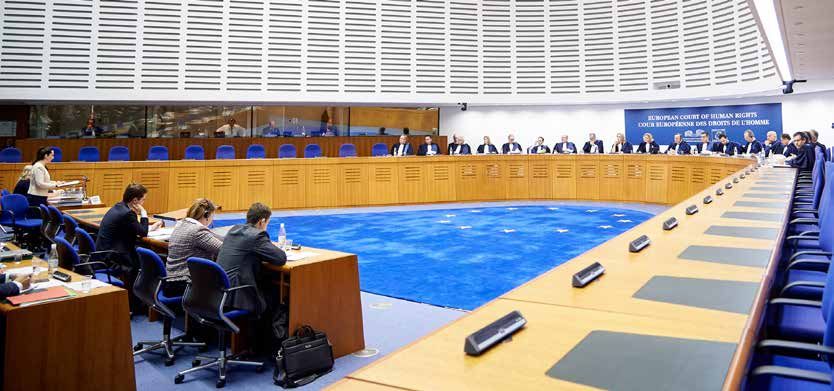
Cover: interior of the Human Rights Couverture : vue intérieure du Palais des droits
Building (Architects: Richard Rogers de l’homme (architectes : Richard Rogers
Partnership and Atelier Claude Bucher) Partnership et Atelier Claude Bucher)
© Council of Europe – European © Conseil de l’Europe – Cour européenne
Court of Human Rights, 2020 des droits de l’homme, 2020Information Note 240 – May 2020 ◄ ECHR/CEDH ► Note d’information 240 – Mai 2020
TABLE OF CONTENTS / TABLE DES MATIÈRES
ARTICLE 1
Jurisdiction of States/Juridiction des États
• Refusal to grant visa applications submitted to an embassy in a non-member State on the basis of a risk of
ill-treatment: lack of jurisdiction
• Refus de visas sollicités depuis une ambassade dans un État non membre sur le fondement d’un risque de
mauvais traitements : absence de juridiction
M.N. and Others/et autres – Belgium/Belgique, 3599/18, Decision/Décision 5.5.2020 [GC]........................................... 8
ARTICLE 2
Life/Vie
Positive obligations (substantive aspect)/Obligations positives (volet matériel)
• Death from carbon monoxide poisoning following reconnection of improperly installed gas-operated water
heater despite warning from gas company: no violation
• Décès par intoxication au monoxyde de carbone à la suite du mauvais raccordement d’une chaudière à gaz,
malgré l’avertissement d’une société gazière : non violation
Vardosanidze – Georgia/Géorgie, 43881/10, Judgment/Arrêt 7.5.2020 [Section V]........................................................10
• Azerbaijan’s “approval and endorsement” of crimes committed by its agent in private capacity, without clear
and unequivocal “acknowledgement” and “adoption” of crimes “as its own”: no violation
• L’Azerbaïdjan « approuve » des infractions commises dans un cadre privé par l’un de ses agents, sans y
« adhérer » ni « s’y associer » de manière claire et non équivoque : non-violation
Makuchyan and/et Minasyan – Azerbaijan and Hungary/Azerbaïdjan et Hongrie, 17247/13,
Judgment/Arrêt 26.5.2020 [Section IV].........................................................................................................................................11
Positive obligations (procedural aspect)/Obligations positives (volet procédural)
• Azerbaijan’s unjustified failure to enforce prison sentence for ethnic hate crime, imposed abroad on its
officer, who was pardoned, promoted and awarded benefits upon return: violation
No failure by Hungary to ensure that Azerbaijani national would continue to serve his prison sentence in
home country: no violation
• Les autorités azerbaïdjanaises renoncent, sans justifier leur décision, à faire exécuter la condamnation à une
peine de prison qui avait été prononcée à l’étranger pour crime de haine motivé par l’origine ethnique contre
l’un de ses agents et décident, au retour de l’intéressé, de le gracier, de le promouvoir et de lui octroyer des
avantages : violation
Absence de manquement des autorités hongroises à leur obligation de veiller à ce qu’un ressortissant azer-
baïdjanais continue à purger sa peine de prison dans son pays d’origine : non-violation
Makuchyan and/et Minasyan – Azerbaijanand Hungary/Azerbaïdjan et Hongrie, 17247/13,
Judgment/Arrêt 26.5.2020 [Section IV].........................................................................................................................................11
Effective investigation/Enquête effective
• Lack of proper investigation into refusal by medical personnel to administer usual insulin treatment to a
diabetic in precarious condition: violation
• Défaut d’enquête effective sur des allégations de refus de la part de personnel soignant d’administrer à une
personne diabétique en situation de précarité son traitement habituel par insuline : violation
Aftanache – Romania/Roumanie, 999/19, Judgment/Arrêt 26.5.2020 [Section IV]........................................................14
ARTICLE 3
Degrading treatment/Traitement dégradant
• Compensation for poor conditions of detention by specific and measurable reduction in sentence leading to
applicants’ release: inadmissible
• Mauvaises conditions de détention compensées par une remise de peine explicite et mesurable ayant
entraîné la libération des requérants : irrecevable
Dîrjan and/et Ştefan – Romania/Roumanie, 14224/15 and/et 50977/15, Decision/Décision
15.4.2020 [Section IV]........................................................................................................................................................................15
3Information Note 240 – May 2020 ◄ ECHR/CEDH ► Note d’information 240 – Mai 2020
ARTICLE 5
Article 5 § 1
Deprivation of liberty/Privation de liberté
Lawful arrest or detention/Arrestation ou détention régulières
• Arbitrary and unlawful six-hour involuntary confinement in hospital: violation
• Confinement forcé, arbitraire et illégal, pendant six heures, dans un hôpital : violation
Aftanache – Romania/Roumanie, 999/19, Judgment/Arrêt 26.5.2020 [Section IV]........................................................16
ARTICLE 6
Article 6 § 1 (civil)
Access to court/Accès à un tribunal
• Inability of chief prosecutor to effectively challenge premature termination of mandate: violation
• Impossibilité pour la procureure principale de contester effectivement sa révocation précoce : violation
Kövesi – Romania/Roumanie, 3594/19, Judgment/Arrêt 5.5.2020 [Section IV]................................................................16
• Inability of a member of the National Council of the Judiciary to challenge premature termination of
mandate: communicated
• Impossibilité pour un membre du Conseil national de la magistrature de contester la cessation anticipée de
son mandat : affaire communiquée
Żurek – Poland/Pologne, 39650/18, Communication [Section I]..........................................................................................18
Article 6 § 1 (criminal/pénal)
Public hearing/Audience publique
• Exclusion of public from entire rape trial in order to protect victim, even though she had given interviews to
media about the case: no violation
• Procès pour viol intégralement tenu à huis clos afin de protéger la victime, alors que celle-ci avait accordé
des interviews aux médias sur l’affaire : non-violation
Mraović – Croatia/Croatie, 30373/13, Judgment/Arrêt 14.5.2020 [Section I]....................................................................18
Article 6 § 1 (enforcement/exécution)
Civil rights and obligations/Droits et obligations de caractère civil
• Non-enforcement of judicial decision concerning administrative refusals to grant visas: article 6 not applicable
• Non-exécution d’une décision judiciaire portant sur des refus de visas par l’administration : article 6 non
applicable
M.N. and Others/et autres – Belgium/Belgique, 3599/18, Decision/Décision 5.5.2020 [GC].........................................19
Article 6 § 2
Presumption of innocence/Présomption d’innocence
• Applicant, neither charged nor aware of criminal investigation until after its discontinuation, ordered to pay
compensation for “crime” in civil proceedings brought shortly thereafter: Article 6 applicable; violation
• Condamnation d’un ressortissant azerbaïdjanais, qui n’avait pas été mis en examen et qui n’avait été informé
de l’enquête pénale dont il avait fait l’objet qu’une fois celle-ci terminée, à verser une réparation à l’issue
d’une procédure civile dans le cadre de laquelle il avait été reconnu coupable d’« infraction pénale » : article 6
applicable ; violation
Farzaliyev – Azerbaijan/Azerbaïdjan, 29620/07, Judgment/Arrêt 28.5.2020 [Section V]..............................................19
ARTICLE 7
Nullum crimen sine lege
Retroactivity/Rétroactivité
• Use of the “blanket reference” or “legislation by reference” technique in the definition of an offence and
standards of comparison between the criminal law in force at the time of the commission of the offence and
the amended criminal law
4Information Note 240 – May 2020 ◄ ECHR/CEDH ► Note d’information 240 – Mai 2020
• Utilisation de la technique de « législation par référence » pour la définition d’une infraction et critères à
appliquer pour comparer la loi pénale telle qu’elle était en vigueur au moment de la commission de
l’infraction et la loi pénale telle que modifiée
Advisory opinion requested by the Armenian Constitutional Court/Avis consultatif demandé par la Cour
Constitutionnelle arménienne, P16-2019-001, Opinion/Avis 29.5.2020 [GC]....................................................................21
ARTICLE 8
Respect for private and family life/Respect de la vie privée et familiale
• Eviction, without any offer of accommodation, of Roma living in an unauthorised camp for six months and
belated review, post-eviction, of the proportionality of the measure: violation
• Expulsion, sans proposition de relogement, de Roms vivant illégalement dans un camp depuis six mois et
examen tardif après l’évacuation de la proportionnalité de la mesure : violation
Hirtu and Others/et autres – France, 24720/13, Judgment/Arrêt 14.5.2020 [Section V]................................................23
• Challenge of a foreseeable contact ban in the context of sexual abuse of a mentally disabled woman, mother
of the applicant’s child: inadmissible
• Contestation d’une interdiction de contact imposée de manière prévisible dans le cadre d’une affaire d’abus
sexuels perpétrés sur une femme handicapée mentale, mère de l’enfant du requérant : irrecevable
Evers – Germany/Allemagne, 17895/14, Judgment/Arrêt 28.5.2020 [Section V]..............................................................25
Respect for private life/Respect de la vie privée
Positive obligations/Obligations positives
• Protracted difficulties for stateless person to regularise legal position: violation
• Obstruction prolongée à la régularisation d’un apatride : violation
Sudita Keita – Hungary/Hongrie, 42321/15, Judgment/Arrêt 12.5.2020 [Section IV].....................................................26
Respect for private life/Respect de la vie privée
• Unnecessary disclosure of sensitive medical data in certificate to be produced in various situations: violation
• Présence non nécessaire de données médicales sensibles sur une attestation destinée à être produite dans
diverses situations : violation
P.T. – Republic of Moldova/République de Moldova, 1122/12, Judgment/Arrêt 26.5.2020 [Section II].......................27
Respect for family life/Respect de la vie familiale
• Severance of parent-child tie, in a specific context of differences in cultural and religious backgrounds of
mother and adoptive parents: case referred to the Grand Chamber
• Rupture des liens parent-enfant, dans un contexte de différences religieuses et culturelles entre la mère et les
parents adoptifs : affaire renvoyée devant la Grande Chambre
Abdi Ibrahim – Norway/Norvège, 15379/16, Judgment/Arrêt 17.12.2019 [Section II]....................................................28
ARTICLE 9
Freedom of religion/Liberté de religion
• Muslim prisoner reprimanded for performing acts of worship at night time in breach of prison schedule:
violation
• Avertissement infligé à un détenu musulman ayant accompli des rites religieux pendant la nuit, en violation
du règlement pénitentiaire : violation
Korostelev – Russia/Russie, 29290/10, Judgment/Arrêt 12.5.2020 [Section III].................................................................28
ARTICLE 10
Freedom of expression/Liberté d’expression
• Premature termination of chief prosecutor’s mandate following public criticism of legislative reforms:
violation
• Révocation précoce de la procureure principale à la suite de critiques qu’elle avait formulées contre des
réformes législatives : violation
Kövesi – Romania/Roumanie, 3594/19, Judgment/Arrêt 5.5.2020 [Section IV]................................................................29
5Information Note 240 – May 2020 ◄ ECHR/CEDH ► Note d’information 240 – Mai 2020
• Lack of adequate safeguards for suspending journalists’ accreditation to enter Parliament on account of
interviews and video recordings with MPs outside designated areas: violation
• Absence de garanties relativement à la décision de retirer à des journalistes l’accréditation qui leur permettait
d’entrer au Parlement, au motif qu’ils avaient interviewé et filmé des parlementaires en dehors des zones
prévues à cet effet : violation
Mándli and Others/et autres – Hungary/Hongrie, 63164/16, Judgment/Arrêt 26.5.2020 [Section IV]......................29
• Premature termination of mandate of a member of the National Council of the Judiciary, following public
criticism of the Government-led reform of the judiciary: communicated
• Cessation anticipée du mandat d’un membre du Conseil national de la magistrature, faisant suite à des
critiques publiques des réformes judiciaires du gouvernement : affaire communiquée
Żurek – Poland/Pologne, 39650/18, Communication [Section I]..........................................................................................30
ARTICLE 11
Freedom of association/Liberté d’association
• Refusal to register a political party declaring itself as the successor to the communist party dissolved in 1989
for imposing a totalitarian regime: no violation
• Refus d’inscrire, sur la liste des partis politiques, un parti se voulant continuateur du parti communiste
dissous en 1989 pour son régime totalitaire : non-violation
Ignatencu et Parti communiste roumain (PCR) – Romania/Roumanie, 78635/13, Judgment/Arrêt
5.5.2020 [Section IV]...........................................................................................................................................................................31
ARTICLE 13
Effective remedy/Recours effectif
• Failure to exhaust new remedy dealing with prolonged non-enforcement of final decisions awarding
compensation for property expropriated during the communist regime: inadmissible
• Défaut d’épuisement d’un nouveau recours permettant de remédier aux inexécutions prolongées de décisions
définitives accordant des indemnités pour des biens expropriés à l’époque du régime communiste : irrecevable
Beshiri and Others/et autres – Albania/Albanie, 29026/06, Decision/Décision 7.5.2020 [Section II]..........................33
ARTICLE 14
Discrimination (Article 2)
• Azerbaijan’s failure to enforce prison sentence for hate crime against Armenian victims, imposed abroad on
its officer, who was glorified as hero, promoted and awarded benefits upon return: violation
• Défaut d’exécution par l’Azerbaïdjan d’une peine de prison pour crime de haine contre des victimes
arméniennes qui avait été prononcée à l’étranger contre l’un de ses agents, lequel, à son retour en
Azerbaïdjan, a été accueilli en héros, a reçu une promotion et a bénéficié d’avantages : violation
Makuchyan and/et Minasyan – Azerbaijan and Hungary/Azerbaïdjan et Hongrie, 17247/13,
Judgment/Arrêt 26.5.2020 [Section IV].........................................................................................................................................35
ARTICLE 34
Victim/Victime
• Compensation for poor conditions of detention by specific and measurable reduction in sentence leading to
applicants’ release: loss of victim status
• Mauvaises conditions de détention compensées par une remise de peine explicite et mesurable ayant
entraîné la libération des requérants : perte de la qualité de victime
Dîrjan and/et Ştefan – Romania/Roumanie, 14224/15 and/et 50977/15, Decision/Décision
15.4.2020 [Section IV]........................................................................................................................................................................35
ARTICLE 35
Article 35 § 1
Exhaustion of domestic remedies/Épuisement des voies de recours internes
• No final decision in main proceedings, leaving open the possibility of in concreto examination notwithstand-
ing the reply to a priority question of constitutionality: inadmissible
6Information Note 240 – May 2020 ◄ ECHR/CEDH ► Note d’information 240 – Mai 2020
• Absence de décision définitive dans la voie de recours principale, laissant toujours une possibilité de contrôle
in concreto nonobstant la réponse reçue à une question prioritaire de constitutionnalité : irrecevable
Graner – France, 84536/17, Decision/Décision 5.5.2020 [Section V]....................................................................................36
Exhaustion of domestic remedies/Épuisement des voies de recours internes
Effective domestic remedy/Recours interne effectif – Albania/Albanie
• Failure to exhaust new remedy dealing with prolonged non-enforcement of final decisions awarding
compensation for property expropriated during the communist regime: inadmissible
• Défaut d’épuisement d’un nouveau recours permettant de remédier aux inexécutions prolongées de
décisions définitives accordant des indemnités pour des biens expropriés à l’époque du régime communiste :
irrecevable
Beshiri and Others/et autres – Albania/Albanie, 29026/06, Decision/Décision 7.5.2020 [Section II]..........................37
PROTOCOL No. 16/DU PROTOCOLE N° 16
Advisory opinions/Avis consultatifs
• Use of the “blanket reference” or “legislation by reference” technique in the definition of an offence and
standards of comparison between the criminal law in force at the time of the commission of the offence and
the amended criminal law
• Utilisation de la technique de « législation par référence » pour la définition d’une infraction et critères à
appliquer pour comparer la loi pénale telle qu’elle était en vigueur au moment de la commission de
l’infraction et la loi pénale telle que modifiée
Advisory opinion requested by the Armenian Constitutional Court/Avis consultatif demandé par la Cour
Constitutionnelle arménienne, P16-2019-001, Opinion/Avis 29.5.2020 [GC]....................................................................38
GRAND CHAMBER (PENDING)/GRANDE CHAMBRE (EN COURS)
Referrals/Renvois
Abdi Ibrahim – Norway/Norvège, 15379/16, Judgment/Arrêt 17.12.2019 [Section II]....................................................38
COURT NEWS/DERNIÈRES NOUVELLES DE LA COUR
70th anniversary of the Convention: European conference/70 ans de la Convention :
conférence européenne.....................................................................................................................................................................38
SCN: new member/SCN : nouveau membre................................................................................................................................38
New President of the ECHR/Nouveau président de la CEDH...................................................................................................38
Videoconference by President Spano/Visioconférence du président Spano......................................................................39
RECENT PUBLICATIONS/PUBLICATIONS RÉCENTES
The ECHR and Greece in Facts and Figures/La CEDH et la Grèce en faits et chiffres.........................................................39
Case-law guides: new translations/Guides sur la jurisprudence : nouvelles traductions...............................................39
7Information Note 240 – May 2020 ◄ ECHR/CEDH ► Note d’information 240 – Mai 2020
ARTICLE 1 En juin 2017, la cour d’appel de Bruxelles consta-
ta que les arrêts précités des 20 octobre et 7 dé-
cembre 2016 n’étaient plus d’actualité, puisque la
Jurisdiction of States/Juridiction des États première décision de l’Office refusant la délivrance
des visas était devenue définitive, faute d’avoir fait
Refusal to grant visa applications submitted to an l’objet d’un recours en annulation, et ce, avant que
embassy in a non-member State on the basis of a l’astreinte contre l’État belge ait été prononcée.
risk of ill-treatment: lack of jurisdiction
En droit
Refus de visas sollicités depuis une ambassade Article 1 (à l’égard des griefs tirés des articles 3 et
dans un État non membre sur le fondement d’un 13) : Tout en précisant que cette conclusion ne fait
risque de mauvais traitements : absence de
pas obstacle aux efforts entrepris par les États par-
juridiction
ties pour faciliter l’accès aux procédures d’asile par
le biais de leurs ambassades ou représentations
M.N. and Others/et autres – Belgium/Belgique,
consulaires (voir N.D. et N.T. c. Espagne [GC], 8675/15
3599/18, Decision/Décision 5.5.2020 [GC]
et 8697/15, 13 février 2020, Note d’information
English translation of the summary – Version imprimable
237), la Cour estime pour les raisons suivantes que
les requérants ne relevaient pas de la juridiction de
En fait – Ressortissants syriens résidant à Alep, ville la Belgique au titre des faits dénoncés par eux sur le
alors théâtre d’affrontements armés destructeurs, terrain de l’article 3 de la Convention, ni, par consé-
les requérants se rendirent au Liban, d’où ils solli- quent, de l’article 13.
citèrent en août 2016 auprès du consulat belge à a) L’absence de lien juridictionnel « territorial » – Les
Beyrouth des visas de court séjour dits « huma- décisions litigieuses ont été prises par l’adminis-
nitaires » (article 25 du code communautaire des tration centrale en Belgique, en réponse à des
visas), indiquant avoir l’intention de demander demandes de visas que les requérants avaient
l’asile une fois arrivés en Belgique. La demande fut remises aux services consulaires de l’ambassade
transmise à l’Office des étrangers (« l’Office »), qui belge au Liban. Ces décisions de refus ont ensuite
estima que cette intention la faisait sortir du champ à nouveau transité par les services consulaires
d’application de la disposition invoquée. de l’ambassade, qui en ont informé les requé-
rants. Certes, en statuant sur ces demandes, les
S’ensuivit une série de procédures d’extrême ur-
autorités belges ont pris des décisions portant
gence devant la justice administrative belge, les
sur les conditions d’entrée sur le territoire belge
requérants se plaignant que ce refus les exposait à
et ont, de ce fait, ont exercé une prérogative de
des risques contraires à l’article 3 de la Convention. puissance publique. Toutefois, ce constat ne suf-
Dans ce cadre, l’Office réitéra sa décision à deux fit pas à attirer les requérants sous la juridiction
reprises. Le 20 octobre 2016, le Conseil du conten- « territoriale » de la Belgique au sens de l’article 1
tieux des étrangers (CCE) enjoignit aux autorités de la Convention. La circonstance qu’une décision
belges de leur délivrer sous 48 heures les visas peut avoir un impact sur la situation de personnes
demandés. résidant à l’étranger n’est pas davantage de nature
Les autorités n’entendant pas revenir sur leur refus, à établir la juridiction de l’État concerné à leur
les requérants se tournèrent avec succès vers la égard en dehors de son territoire (voir Banković
justice civile : le 7 décembre 2016, considérant ce et autres c. Belgique et autres (déc.) [GC], 52207/99,
refus persistant comme une « voie de fait », la cour 12 décembre 2001).
d’appel de Bruxelles ordonna d’exécuter immé- b) L’absence de circonstances exceptionnelles
diatement la décision du CCE, sous astreinte de propres à créer un lien juridictionnel « extraterritorial »
1 000 euros par jour de retard. Cette décision fait – Il s’agit là avant tout d’une question de fait qui
l’objet d’un pourvoi en cassation de l’État, toujours nécessite de s’interroger sur la nature du lien entre
pendant. les requérants et l’État défendeur et de détermi-
Entre-temps, le CCE interrogea la Cour de justice ner si celui-ci a effectivement exercé son autorité
de l’Union européenne (CJUE) par la voie du renvoi ou son contrôle sur eux. Peu importe à cet égard
préjudiciel dans une affaire similaire : la CJUE esti- que les agents diplomatiques n’aient eu, comme en
ma que la disposition invoquée du droit de l’Union l’espèce, qu’un rôle de « boîte aux lettres », ou de sa-
n’avait pas vocation à s’appliquer dans le cas de voir à qui, de l’administration belge sur le territoire
national ou des agents diplomatiques en poste à
figure en cause ; en conséquence de quoi, l’affaire
l’étranger, les décisions sont à attribuer.
relevait du seul droit national (voir l’arrêt de la CJUE
X et X c. État belge, C-638/16 PPU, 7 mars 2017, résu- Ne sont invoqués ici par les requérants : i) aucune
mé dans la Note d’information 205). présence antérieure sur le territoire national de la
8 Article 1Information Note 240 – May 2020 ◄ ECHR/CEDH ► Note d’information 240 – Mai 2020
Belgique ; ii) aucune vie familiale ou privée préexis- procédurales découlant de l’article 2. Or, ceci est
tante avec ce pays ; iii) aucune forme quelconque très différent d’une procédure administrative enga-
de contrôle que les autorités belges exerceraient gée à l’initiative de particuliers sans aucun lien avec
en territoire syrien ou libanais. l’État concerné autre qu’une procédure engagée
par eux de leur plein gré et sans que leur choix de
N’apparaissent non plus pertinents aucuns des pré-
cet État ne s’impose au titre d’une quelconque obli-
cédents jurisprudentiels sur lesquels ils s’appuient.
gation conventionnelle.
En premier lieu, les requérants ne présentent aucun
Au contraire, dans la décision Abdul Wahab Khan
des liens de rattachement qui caractérisaient les
c. Royaume-Uni (11987/11, 28 janvier 2014, Note
affaires examinées par la Commission européenne
d’information 171), la Cour a clairement jugé que
des droits de l’homme concernant les actes ou
le simple fait pour un requérant d’engager une pro-
omissions des agents diplomatiques. D’une part,
cédure dans un État partie avec lequel il n’a aucun
ils ne sont pas des ressortissants belges deman-
lien de rattachement ne pouvait suffire à établir
dant à bénéficier de la protection de leur ambas-
la juridiction de cet État à son égard : en décider
sade. D’autre part, les agents diplomatiques n’ont
autrement aboutirait à consacrer une application
à aucun moment exercé un contrôle de fait sur leur
quasi universelle de la Convention sur la base du
personne : les requérants ont librement choisi de se
choix unilatéral de tout individu, où qu’il se trouve
présenter à l’ambassade de Belgique et d’y déposer dans le monde, et donc à créer une obligation illi-
leurs demandes de visas, comme ils auraient d’ail- mitée pour les États parties d’autoriser l’entrée sur
leurs pu le faire en s’orientant vers l’ambassade de leur territoire de toute personne qui risquerait de
tout autre État ; ils ont ensuite pu librement quitter subir un traitement contraire à la Convention en
les locaux de l’ambassade belge sans rencontrer dehors de leur juridiction.
aucune entrave. Quant au contrôle administratif
que l’État exerce sur les locaux de ses ambassades, Or, il en irait de même si la circonstance qu’un État
ce critère ne saurait suffire à faire relever de la juri- partie se prononce sur une demande en matière
diction de la Belgique toute personne qui entre d’immigration devait être regardée comme suffi-
dans ces lieux. sante pour faire relever le demandeur de sa « juri-
diction » : le demandeur pourrait créer un lien juri-
Deuxièmement, la présente affaire est fondamen- dictionnel en déposant une demande où qu’il se
talement différente des nombreuses affaires d’ex- trouve et donner ainsi naissance, le cas échéant, à
tradition ou d’éloignement, dans lesquelles les in- une obligation au titre de l’article 3 qui n’existerait
téressés se trouvent par hypothèse sur le territoire, pas autrement.
ou à la frontière, de l’État concerné et relèvent dès
lors manifestement de sa juridiction. Une telle extension du champ d’application de la
Convention aurait en outre pour effet de réduire à
Troisièmement, on ne trouve aucun appui dans la néant le principe bien établi en droit international
jurisprudence à la thèse consistant à considérer selon lequel les États parties ont – sans préjudice
le fait d’avoir engagé une procédure au niveau de leurs engagements conventionnels – le droit
national comme une circonstance exception- de contrôler l’entrée, le séjour et l’éloignement des
nelle suffisante pour déclencher, unilatéralement, non-nationaux (voir également l’arrêt précité de la
un lien juridictionnel extraterritorial. Ainsi, dans CJUE).
l’affaire Markovic et autres c. Italie [GC] (1398/03,
14 décembre 2006, Note d’information 92), à pro- Conclusion : irrecevable (incompatibilité ratione
pos d’une procédure civile en dommages-intérêts loci).
engagée par les requérants devant les tribunaux Article 6 § 1 : La doléance des requérants vise le
italiens sur le fondement du droit national, en rai- droit à l’exécution d’une décision judiciaire – en
son du décès de leurs proches à la suite de frappes l’occurrence, l’arrêt de la cour d’appel ordonnant
aériennes conduites par l’alliance de l’OTAN contre sous astreinte d’exécuter l’arrêt du CCE qui enjoi-
la République fédérale de Yougoslavie, la Cour a gnait aux autorités de délivrer les visas demandés.
conclu à l’absence de « juridiction » pour tous les
griefs matériels (c’est-à-dire, autres que ceux visant Il n’y a pas lieu ici de statuer sur la « juridiction »
de l’État défendeur, puisque l’article 6 apparaît
l’article 6). Et dans l’affaire Güzelyurtlu et autres
en tout état de cause inapplicable en l’espèce. En
c. Chypre et Turquie [GC] (36925/07, 29 janvier 2019,
effet, les procédures en cause ne portaient pas sur
Note d’information 225), la procédure établissant la
des « droits et obligations de caractère civil », et ce,
juridiction de la Turquie s’agissant de décès surve-
pour les raisons suivantes.
nus en dehors de son territoire était une procédure
pénale ouverte à l’initiative des autorités turques En l’état du droit belge, la compétence de l’admi-
(contrôlant la « République turque de Chypre du nistration pour octroyer ou refuser les visas de
Nord ») qui s’inscrivait dans le cadre des obligations court séjour au regard de l’article 25 du code com-
Article 1 9Information Note 240 – May 2020 ◄ ECHR/CEDH ► Note d’information 240 – Mai 2020
munautaire des visas revêtait un caractère discré- Vardosanidze – Georgia/Géorgie, 43881/10,
tionnaire. Néanmoins, les requérants ont pu saisir Judgment/Arrêt 7.5.2020 [Section V]
un tribunal (le CCE), qui a suspendu l’exécution des
Traduction française du résumé – Printable version
décisions de l’administration et avait compétence
pour les annuler. En pareille hypothèse, si l’article Facts – In June 2007 gas company technicians dis-
6 § 1 peut trouver à s’appliquer, c’est à la condition covered, as part of a safety check, that a gas-oper-
que l’avantage ou le privilège en cause, une fois ac- ated water heater had been improperly installed in
cordé, crée un droit civil (voir Regner c. République the apartment of the applicant’s son. The inspec-
tchèque [GC], 35289/11, 19 septembre 2017, Note tion record indicated that the water heater had
d’information 210). Or, tel n’aurait pas été le cas de been disconnected from the gas pipe and that the
l’entrée sur le territoire belge qui aurait résulté de resident had been provided with instructions. In
l’octroi des visas demandés. En effet, il est de juris- April 2008 the applicant’s son was found dead at
prudence constante, pour toutes les décisions rela- home. A forensic medical examination concluded
tives à l’immigration, l’entrée, le séjour ou l’éloigne- that he had died as a result of poisoning by carbon
ment des étrangers, que ces matières sont hors du monoxide. The domestic courts upheld the deci-
champ de l’article 6. sion of the prosecutor to terminate a preliminary
Certes, dans la procédure subséquente sur le refus investigation, finding that the water heater had
de l’État d’exécuter une décision juridictionnelle been carelessly reconnected to the gas supply by
en matière administrative, la cour d’appel, pour the applicant’s family, leading to the fatal accident.
établir sa compétence au regard du droit interne, Law – Article 2
a considéré que la contestation portée devant elle
(a) Substantive aspect – The core of the applicant’s
avait un caractère « civil ». Pour autant, cette action
complaint concerned the alleged inadequacy of
n’était que le prolongement de la procédure en
the regulatory framework with respect to the safe
contestation au fond des refus de délivrer les visas ;
use of gas-operated household devices, in the con-
il en va de même pour les procédures ultérieures
text of the Government’s positive obligations re-
d’exécution de l’arrêt rendu à son tour par la cour
garding dangerous activities carrying an inherent
civile. Or, le contentieux sous-jacent n’acquiert pas
risk to life.
une nature « civile » du seul fait que son exécution
est poursuivie en justice et donne lieu à une déci- It was undisputed that the applicant’s son had
sion judiciaire (voir Panjeheighalehei c. Danemark died as a result of poisoning by carbon monoxide
(déc.), 11230/07, 13 octobre 2009, Note d’infor- emitted from an incorrectly installed gas-operated
mation 123). Peu importe ici que les juridictions water heater. By contrast, the parties disagreed as
belges n’aient pas mis en question l’applicabilité de to whether the domestic legislation had contained
l’article 6 ; en effet, la Convention ne fait pas obs- adequate guarantees to safeguard his life, as to
tacle à ce que les États parties accordent aux droits what particular regulations had been in place to
et libertés qu’elle garantit une protection juridique prevent accidents related to the use of gas-oper-
plus étendue (article 53). ated household devices, and as to whose respon-
sibility it had been to ensure compliance with such
Conclusion : irrecevable (incompatibilité ratione regulations. While the Court noted the statistical in-
materiae). formation regarding the high number of incidents
relating to carbon monoxide poisoning in the city
of Tbilisi, the Court’s task was not to make an ab-
ARTICLE 2 stract assessment of the regulatory framework ap-
plicable but to determine whether the manner in
which they had been applied to, or had affected,
Life/Vie the applicant’s son had given rise to a violation of
Positive obligations (substantive aspect)/ the Convention.
Obligations positives (volet matériel)
Various regulations had existed at the material time
Death from carbon monoxide poisoning following which prohibited the installation of the type of
reconnection of improperly installed gas- the water heater at the core of the applicant’s case
operated water heater despite warning from gas in spaces which had not been equipped with ad-
company: no violation equate ventilation systems. Such safety rules were
aimed at avoiding the accumulation of exhaust
Décès par intoxication au monoxyde de carbone à fumes inside dwelling spaces to safeguard life and
la suite du mauvais raccordement d’une chaudière health of the population, and appeared reason-
à gaz, malgré l’avertissement d’une société able. By contrast, as concerned the supervision of
gazière : non violation compliance with those rules, the legislation in force
10 Article 2Information Note 240 – May 2020 ◄ ECHR/CEDH ► Note d’information 240 – Mai 2020
at the material time did not specify how frequently capacity, without clear and unequivocal
the gas company was to perform safety checks and “acknowledgement” and “adoption” of crimes “as
it was only subsequently that the relevant amend- its own”: no violation
ments had been introduced to address the matter.
L’Azerbaïdjan « approuve » des infractions
Furthermore, the domestic legislation did not ap- commises dans un cadre privé par l’un de ses
pear to have required that a written warning be agents, sans y « adhérer » ni « s’y associer » de
given to a resident of an apartment when a viola- manière claire et non équivoque : non-violation
tion of a safety rule had been found. Nevertheless,
those deficiencies were not sufficient to hold the Makuchyan and/et Minasyan – Azerbaijan and
respondent Government accountable for failing to Hungary/Azerbaïdjan et Hongrie, 17247/13,
avert the death of the applicant’s son. Judgment/Arrêt 26.5.2020 [Section IV]
In particular, while the safety regulations did not (See below/Voir ci-après)
appear to have been respected, and deficiencies
existed in respect of the regularity of safety check- Positive obligations (procedural aspect)/
ups and the manner in which a violation of the
Obligations positives (volet procédural)
safety rules was to be communicated to the indi-
viduals concerned, the Court drew particular atten- Azerbaijan’s unjustified failure to enforce prison
tion to the undisputed fact that the violation of the sentence for ethnic hate crime, imposed abroad
relevant safety rules had in fact been discovered on its officer, who was pardoned, promoted and
by the gas company before the death of the appli- awarded benefits upon return: violation
cant’s son, and the water heater had been discon- No failure by Hungary to ensure that Azerbaijani
nected and nevertheless reconnected by the appli- national would continue to serve his prison
cant’s family. sentence in home country: no violation
In that context, the positive obligation under Ar-
ticle 2 could not impose an excessive burden on Les autorités azerbaïdjanaises renoncent, sans
the authorities, bearing in mind, in particular, the justifier leur décision, à faire exécuter la
unpredictability of human conduct. The applicant’s condamnation à une peine de prison qui avait été
family having been warned, even if verbally, against prononcée à l’étranger pour crime de haine
using the water heater, their subsequent decision motivé par l’origine ethnique contre l’un de ses
to take the fatal risk by reconnecting the device to agents et décident, au retour de l’intéressé, de le
gracier, de le promouvoir et de lui octroyer des
the gas supply did not appear reasonable, especial-
avantages : violation
ly in the face of the widespread knowledge relating
to the attendant risks, and could not, in the particu- Absence de manquement des autorités
lar circumstances of the case, give rise to a violation hongroises à leur obligation de veiller à ce qu’un
ressortissant azerbaïdjanais continue à purger sa
of the State’s obligations under Article 2.
peine de prison dans son pays d’origine : non-
(b) Procedural aspect – The principal conclusion of violation
the domestic criminal investigation into the death of
the applicant’s son – that his death had been a fatal Makuchyan and/et Minasyan – Azerbaijanand
accident after the water heater had been reconnect- Hungary/Azerbaïdjan et Hongrie, 17247/13,
ed against the warning of the gas company – upheld Judgment/Arrêt 26.5.2020 [Section IV]
by the domestic courts did not appear arbitrary and,
Traduction française du résumé – Printable version
in the circumstances of the case, did not raise an
issue under the procedural limb of Article 2. Facts – While taking part in a NATO course in Buda-
Conclusion: no violation (unanimously). pest, an Azerbaijani officer (R.S.) decapitated an Ar-
menian officer (the second applicant’s relative) and
The Court also found that there had been no fail- threatened to kill another Armenian soldier (the
ure to comply with Article 38 as the Government first applicant), trying to break down the door of
had provided the documents requested by the ap- his room with an axe. R.S. was sentenced to life im-
plicant. prisonment in Hungary. The ethnic bias in respect
of his crimes was fully investigated and highlighted
Life/Vie by the Hungarian courts. Having served eight years
Positive obligations (substantive aspect)/ of his sentence in Hungary, R.S. was transferred to
Obligations positives (volet matériel) Azerbaijan under the Council of Europe Conven-
tion on Transfer of Sentenced Persons (“the Transfer
Azerbaijan’s “approval and endorsement” Convention”) with a view to serving the remain-
of crimes committed by its agent in private der of his sentence in his home country. However,
Article 2 11Information Note 240 – May 2020 ◄ ECHR/CEDH ► Note d’information 240 – Mai 2020
upon his return he was immediately released, par- Viewing the actions of the Azerbaijani Government
doned, promoted at a public ceremony and award- as a whole, including the decisions to pardon and to
ed arrears in salary for the period spent in prison promote R.S. and to award him salary arrears and a
as well as the use of a flat in Baku. Many comments flat, Azerbaijan had to be considered, beyond any
approving R.S.’s conduct and pardon were made by doubt, to have demonstrated its “approval” and “en-
various high-ranking Azerbaijani officials. dorsement” of R.S.’s criminal acts. However, having
most thoroughly examined the nature and scope of
Law
the impugned measures within their overall context,
Article 1 (territorial jurisdiction as regards Azerbaijan): the Court concluded that it had not been convinc-
The enforcement of a sentence imposed in the ingly demonstrated that the State of Azerbaijan had
context of the right to life had to be regarded as “clearly and unequivocally” “acknowledged” and
an integral part of the State’s procedural obliga- “adopted” R.S.’s deplorable acts “as its own”, thus di-
tion under Article 2. Regardless of where the crimes rectly and categorically assuming, as such, respon-
had been committed, in so far as Azerbaijan had sibility for his actual killing of one victim and the
agreed to and assumed the obligation under the preparation of the murder of the other. The Court
Transfer Convention to continue the enforcement emphasised that that assessment was undertaken
of R.S.’s prison sentence, it had been bound to do on the basis of the very stringent standards under
so, in compliance with its procedural obligations the existing rules of international law.
under Article 2 of the Convention. In sum, there
In substance, the impugned measures could rather
were “special features” that triggered the existence
be interpreted as having the purpose of publicly
of Azerbaijan’s jurisdictional link in relation to the
addressing, recognising and remedying R.S.’s ad-
procedural obligation under Article 2.
verse personal, professional and financial situation,
Article 2 which the authorities of Azerbaijan had perceived,
unjustifiably in the Court’s view, as being the con-
(a) Applicability as regards the first applicant – While
sequence of the allegedly flawed criminal proceed-
the first applicant had not sustained any actual
ings in Hungary.
bodily harm, the Hungarian courts had sentenced
R.S. for the “preparation of his murder”. His life had Lastly, in cases where crimes had been committed
thus been in serious and imminent danger. Article by police officers acting outside of their official du-
2 was therefore applicable. ties, the member States of the Council of Europe
were expected to set high professional standards
(b) Substantive obligations under Article 2 of the
within their law-enforcement systems and ensure
Convention as regards Azerbaijan – The Court at-
that the persons serving in these systems met the
tached crucial importance to the fact that R.S., al-
requisite criteria. Similar standards might apply to
though a member of the Azerbaijani military forces
members of the armed forces. However, having re-
at the material time, had not been acting in the
gard to the particular circumstances of the present
exercise of his official duties or on orders by his su-
case, the Court was not convinced that the private
periors. On the contrary, the crimes had been com-
acts of R.S. could have been foreseen by his com-
mitted as a result of his private decision to kill be-
manding officers or should be held imputable to
cause the Armenian victims had allegedly mocked
the Azerbaijani State as a whole, just because that
and provoked him.
individual happened to be its agent. Indeed, the
The current standard under international law, impugned acts had been so flagrantly abusive and
which stemmed from Article 11 of the Draft Articles so far removed from R.S.’s official status as a mili-
on the Responsibility of States of Internationally tary officer that, on the facts of the case, his most
Wrongful Acts of the United Nations (“the Draft Ar- serious criminal behaviour could not engage the
ticles”), set a very high threshold for State respon- State’s substantive international responsibility.
sibility for an act otherwise non-attributable to a Moreover, nothing in the case-file suggested that
State at the time of its commission. In the context the procedure in Azerbaijan for the recruitment of
of the present case, in order to assuredly estab- members of the armed forces and the monitoring
lish that there had been a violation by the State of of their compliance with professional standards
Azerbaijan of Article 2 of the Convention under its at the time that R.S. had been sent on his mission,
substantive limb, it had to be convincingly demon- including their continued mental fitness to serve,
strated that, by their actions, the Azerbaijani au- had been inadequate.
thorities had not only “approved” and “endorsed”
Conclusion: no violation by Azerbaijan (six votes to
the impugned acts, but also had “clearly and un-
one).
equivocally” “acknowledged” and “adopted” those
acts “as their own”, “acknowledgement” and “adop- (c) Procedural obligations under Article 2 of the Con-
tion” being cumulative conditions. vention as regards Azerbaijan – From the point at
12 Article 2Vous pouvez aussi lire


