Les parties du corps Thème - (Body parts)
←
→
Transcription du contenu de la page
Si votre navigateur ne rend pas la page correctement, lisez s'il vous plaît le contenu de la page ci-dessous
Thème
Les parties du corps
     (Body parts)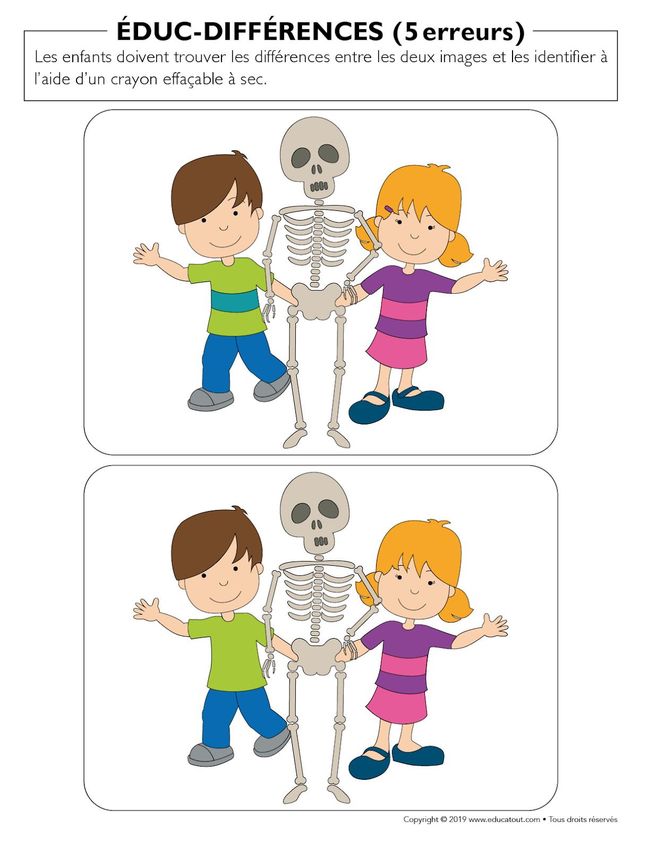
Le corps et les cinq sens
                (The body and its five senses)

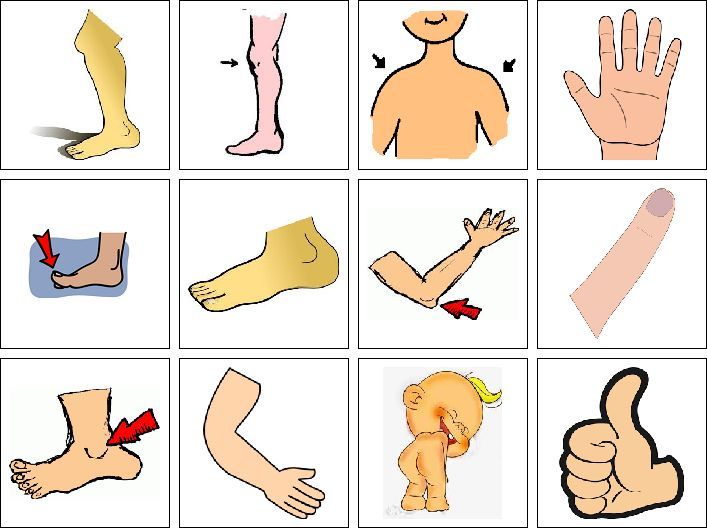
une jambe                      leg

un genou                       knee

le front                       forehead

les yeux                       eyes

une épaule                     shoulder

une main                       hand

une joue                       cheek

un orteil                      toe

un pied                        foot

le coude                       elbow

un doigt                       finger

les lèvres                     lips

un nez                         nose

la cheville                    ankle

un bras                        arm

la bouche                      mouth

la tête                        head

une oreille                    ear

le talon                       heel

le menton                      chin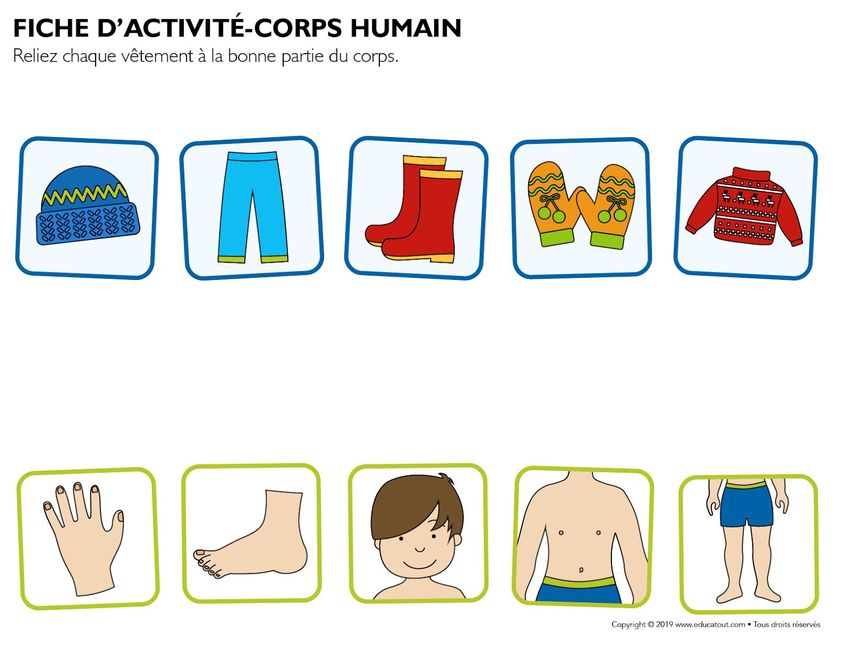
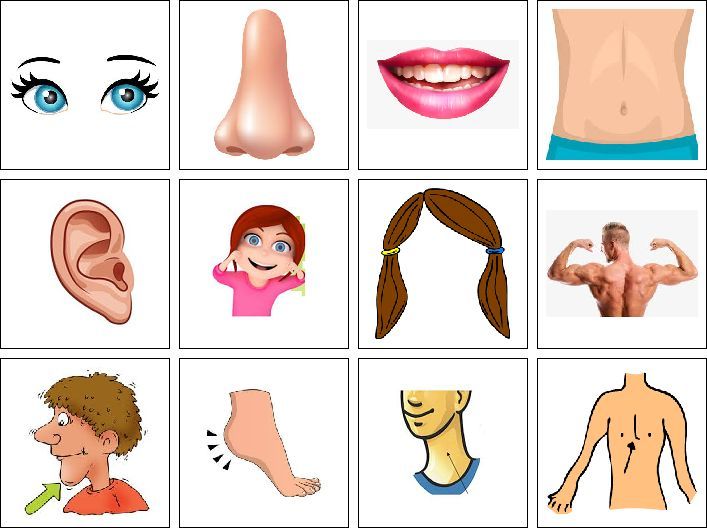
Voici un jeu de “va à la pêche” et/ou “mémoire” à imprimer et à découper. These cards can be printed and cut-out to play a memory game or “Go Fish”.
Règlements de jeux
(Game rules)
Va à la pêche : Chaque joueur reçoit cinq cartes. Les autres
cartes sont placées, images cachées, sur la table. Chaque
joueur prend ensuite son tour pour poser une question à un
autre joueur « As-tu un bras? As-tu __ ». Si le joueur, à qui la
question a été posée, a la carte, il la donne au joueur qui a
posé la question. Il/elle peut ensuite demander une autre
question à n’importe quel joueur. Si le joueur à qui la question
a été posée n’a pas la carte, il dit « va à la pêche ». Alors, le joueur qui a posé la
question pige une carte qui se trouve sur la table et son tour est terminé. C’est au
tour du prochain joueur à jouer. Lorsqu’un joueur a une paire, il la met sur la table
devant lui. Le joueur avec le plus de paires à la fin du jeu gagne.
Go Fish: E ach player receives five cards. The rest of the deck is placed, face down on the table.
Each player takes a turn to ask another player “As-tu un bras?” (Do you have an arm?) “As-tu
un…..? “(Do you have a ….?). If the player does in fact have the card that was asked, he/she must
give that card to the player who asked for it. He/she can then ask for another card from any player.
If the player does not have the card requested, he says “va pêcher” (go fish). The player then
picks a card from the deck on the table and his/her turn is over. The game continues with each
player taking a turn to do the same. If a player has a pair of the same card (two of a kind), he/she
puts them on the table in front of him/her. The player with the most pairs at the ends of the game
wins.
Mémoire : P lacer les paires de cartes, images cachées, sur la table.
Chaque joueur prend son tour pour tourner deux images et formuler
une phrase par image « Je mouche mon nez » ou « J’ai lavé mes
mains » ou une phrase pour les deux images « Je touche mon nez
avec ma main. » Lorsqu’un joueur trouve une paire, il la met sur la
table devant lui et joue à nouveau. Sinon, c’est au tour du prochain joueur à jouer.
Le joueur avec le plus de paires à la fin du jeu gagne.
Memory game: Place all the cards spaced out, face down on the table. Each player takes a turn
to turn over two cards. He/she must then make a sentence using the appropriate vocabulary of
each card “Je mouche mon nez” (I blow my nose) or “J’ai lavé mes mains” (I washed my hands).
He can also make a sentence using both cards such as « Je touche mon nez avec ma main» (I
touch my nose with my hand). When the player finds a pair, he/she puts them in front of him/her
on the table and takes another turn. Otherwise, it’s the next player’s turn. The player with the most
pairs at the ends of the game wins.
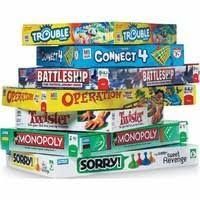
Jeu social : Jouer selon les règlements d’un jeu social p. ex.
(monopoly, yahtzee, serpents et échelles etc.) mais, avant chaque
tour, le joueur pige une image et formule une phrase.
Board game: Play any board game (monopoly, yahtzee, snakes and
ladders etc.). The player must pick a card and make a sentence before each
turn.
Voici un lien que vous pouvez accéder afin d’écouter la prononciation
des mots en français.
Here is a link you can open to listen to the pronunciation of the words.
Invitez votre enfant à naviguer des sites francophones.
Invite your child to visit these french websites.
Jeu d'association
Jeux sur le corps humain
Où se trouve....
Invitez votre enfant à chanter des chansons.
Invite your child to sing along with these songs.
Les 5 sens Les parties du corps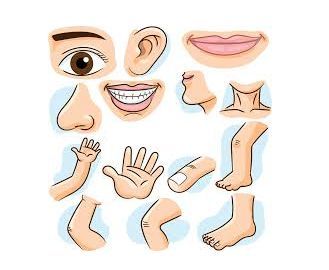
Autres activités:
(additional activities)
Chanson - Tête, épaule, genoux, orteils
(song - Head and shoulders)
Tête, épaules, genoux, orteils,
genoux, orteils, genoux, orteils,
Tête, épaules, genoux, orteils,
Yeux, nez, bouche, oreilles.
Joues, cheveux, menton, talons,
menton, talons, menton, talons,
Joues, cheveux, menton, talons,
Cou, bras, mains et doigts.
Jeu - Je dis…
game - (I say)
Voici un jeu pour permettre de mieux connaître les parties du corps. C’est le jeu de « Simon dit »
mais avec le pronom je p. ex : « Je dis : touches ta tête », « Je dis : touches ton nez ». Si je ne dis
pas je dis p.ex. « touches ta bouche » et votre enfant touche sa bouche, vous devez chanter «
tête. épaules, genoux, orteils » ou « joues, cheveux, menton, talons ».
Amusez-vous!
Here is an activity to practice body parts as well as the pronoun “Je” (I) in sentences. It’s like the game
“Simon says” but you use the pronoun I, for example “Je dis: touches ta tête », (I say touch your head), « Je
dis : touches ton nez » (I say touch your nose). If you do not say “Je dis” (I say) et the child touches the body
part, you must sing “Tête, épaule” (head and shoulders) or play “joues, cheveux, menton, talons” (cheeks,
hair chin, heels).
Have fun!
Amusez-vous avec les aliments
                                       Have fun with food

Cliquer sur ce lien pour imprimer votre napperon.
Open this link to print out your placemat

                                      Napperon des 5 sens

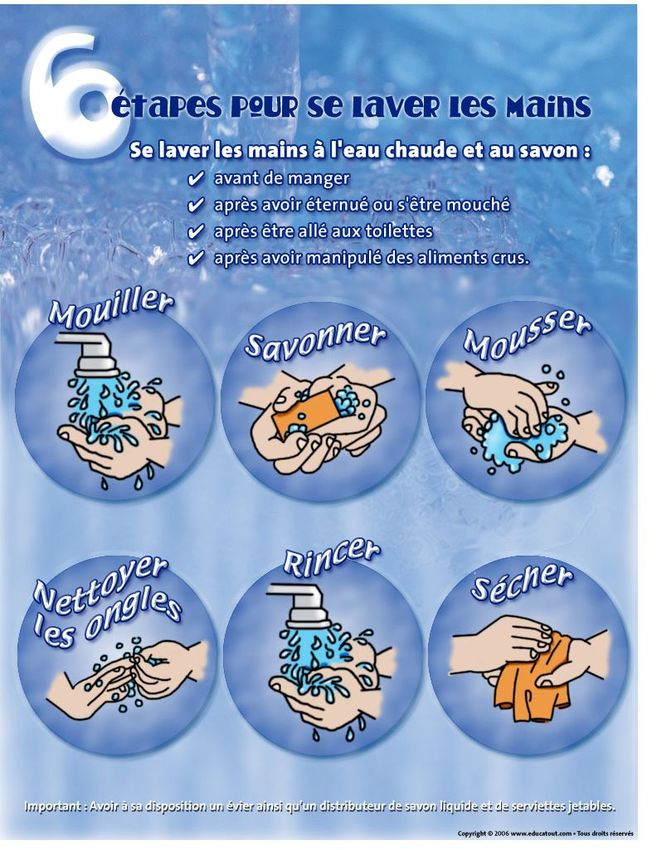
Steps to wash your hands                            1) Wet your hands
   ➔ before eating                                  2) Add soap
   ➔ after sneezing or blowing your nose            3) Lather the soap on your hands
   ➔ after going to the washroom                    4) Clean your nails
   ➔ after handling raw food                        5) Rinse your hands
                                                    6) Dry your hands
Associate the clothes to the appropriate body part.
The child must find 5 differences between the two pictures and identify them.
Invitez votre enfant à lire ces livres.
Invite your child to read these books.

Amusez-vous!
Vous pouvez aussi lire


