INFORMATION NOTE on the Court's case-law 243
←
→
Transcription du contenu de la page
Si votre navigateur ne rend pas la page correctement, lisez s'il vous plaît le contenu de la page ci-dessous
243                               INFORMATION NOTE
   August-                                   on the Court’s case-law
September
     2020                        NOTE D’INFORMATION
     Août-                     sur la jurisprudence de la Cour
Septembre

  The Court’s monthly     Le panorama mensuel        European Court of Human Rights
 round-up of case-law,       de la jurisprudence,
news and publications        de l’actualité et des   Cour européenne des droits
                         publications de la Cour     de l’homme
The Information Note contains legal summaries of the cases examined during the month in question which the Registry considers to be
of particular interest. The summaries are drafted by Registry’s lawyers and are not binding on the Court. They are normally drafted in the
language of the case concerned. The translation of the legal summaries into the other official language can be accessed directly through
hyperlinks in the Note. These hyperlinks lead to the HUDOC database, which is regularly updated with new translations. The electronic
versions of the Note (in PDF, EPUB and MOBI formats) may be downloaded at www.echr.coe.int/NoteInformation/en.
Legal summaries published in the Case-Law Information Notes are also available in HUDOC, under “Legal Summaries” in the Document
Collections box. The HUDOC database is available free-of-charge through the Court’s Internet site (http://hudoc.echr.coe.int). It provides
access to the case-law of the European Court of Human Rights (Grand Chamber, Chamber and Committee judgments and decisions,
communicated cases, advisory opinions and legal summaries from the Case-Law Information Note) and of the former European
Commission of Human Rights (decisions and reports), and to the resolutions of the Council of Europe‘s Committee of Ministers.
An annual index provides an overview of the cases that have been summarised in the monthly Information Notes. The annual index is
cumulative; it is regularly updated.
-ooOoo-
La Note d’information contient les résumés d’affaires dont le greffe de la Cour a indiqué qu’elles présentaient un intérêt particulier. Les
résumés sont rédigés par des juristes du greffe et ne lient pas la Cour. Ils sont en principe rédigés dans la langue de l’affaire concernée.
Les traductions des résumés vers l’autre langue officielle de la Cour sont accessibles directement à partir de la Note d’information, au
moyen d’hyperliens pointant vers la base de données HUDOC qui est alimentée au fur et à mesure de la réception des traductions.
Les versions électroniques de la Note (en format PDF, EPUB et MOBI) peuvent être téléchargées à l’adresse suivante : www.echr.coe.int/
NoteInformation/fr.
Les résumés juridiques publiés dans la Note d’information sur la jurisprudence de la Cour sont également disponibles dans la base de
données HUDOC, sous la catégorie de documents « Résumés juridiques ». La base de données HUDOC, disponible en libre accès à partir
du site internet de la Cour (http://hudoc.echr.coe.int), permet d’accéder à la jurisprudence de la Cour européenne des droits de l’homme
(arrêts et décisions de Grande Chambre, de chambre et de comité, affaires communiquées, avis consultatifs et résumés juridiques extraits
de la Note d’information sur la jurisprudence), ainsi qu‘à celle de l‘ancienne Commission européenne des droits de l’homme (décisions et
rapports) et aux résolutions du Comité des Ministres du Conseil de l‘Europe.
Un index annuel récapitule les affaires résumées dans les Notes d’information. L’index est cumulatif pour chaque année ; il est régulière-
ment édité.
Anyone wishing to reproduce and/or Toute personne souhaitant reproduire et/ou traduire
translate all or part of the Information tout ou partie de la Note d’information, sous forme de
Note in print, online or in any other publication imprimée ou électronique, ou sous tout
format should contact publishing@ autre format, est priée de s’adresser à publishing@echr.
echr.coe.int for further instructions. coe.int pour connaître les modalités d’autorisation.
European Court of Human Rights Cour européenne des droits de l’homme
(Council of Europe) (Conseil de l’Europe)
67075 Strasbourg Cedex – France 67075 Strasbourg Cedex – France
Tel: + 33 (0)3 88 41 20 18 Tél. : + 33 (0)3 88 41 20 18
Fax: + 33 (0)3 88 41 27 30 Fax : + 33 (0)3 88 41 27 30
publishing@echr.coe.int publishing@echr.coe.int
www.echr.coe.int www.echr.coe.int
twitter.com/ECHR_CEDH twitter.com/ECHR_CEDH
RSS feeds Fils RSS
For publication updates, please follow Pour toute nouvelle information relative aux
the Court’s Twitter account at publications, veuillez consulter le compte
twitter.com/ECHR_CEDH Twitter de la Cour : twitter.com/ECHR_CEDH
Photos: Council of Europe Photos : Conseil de l’Europe
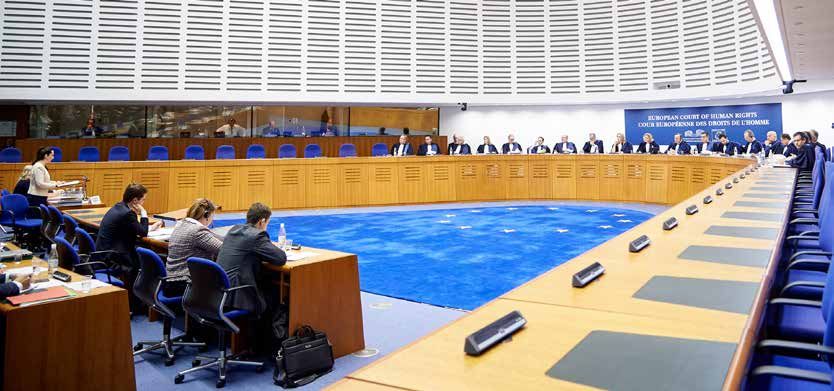
Cover: interior of the Human Rights Couverture : vue intérieure du Palais des droits
Building (Architects: Richard Rogers de l’homme (architectes : Richard Rogers
Partnership and Atelier Claude Bucher) Partnership et Atelier Claude Bucher)
© Council of Europe – European © Conseil de l’Europe – Cour européenne
Court of Human Rights, 2020 des droits de l’homme, 2020Information Note 243 – August-September 2020 ◄ ECHR/CEDH ► Note d’information 243 – Août-Septembre 2020
TABLE OF CONTENTS / TABLE DES MATIÈRES
ARTICLE 2
Positive obligations (substantive aspect)/Obligations positives (volet matériel)
• Failure to preventively confiscate gun from student whose internet postings prior to committing school
killings, while not containing specific threats, cast doubt on his fitness to safely possess firearm: violation
• Défaut de saisie préventive du pistolet d’un étudiant ayant ensuite commis une tuerie dans son école, alors
que ses publications antérieures sur Internet, bien que dépourvues de menaces spécifiques, jetaient un
doute sur son aptitude à posséder une arme à feu en toute sécurité : violation
Kotilainen and Others/et autres – Finland/Finlande, 62439/12, Judgment/Arrêt 17.9.2020 [Section I]...................... 6
Effective investigation/Enquête effective
• Failure of authorities to react with special diligence in conducting a thorough investigation following acid
attack against a woman: violation
• Manquement des autorités à réagir avec la diligence requise dans la conduite d’une enquête approfondie
sur une attaque à l’acide contre une femme : violation
Tërshana – Albania/Albanie, 48756/14, Judgment/Arrêt 4.8.2020 [Section II]................................................................... 7
ARTICLE 5
Article 5 § 3
Reasonableness of pre-trial detention/Caractère raisonnable de la détention provisoire
• Proper justification for applicant’s pre-trial detention, unaffected by law limiting courts’ powers to release
terrorism suspects: no violation
• Placement en détention provisoire ordonné par une décision adéquatement justifiée et non affectée par la
loi limitant les pouvoirs des tribunaux en matière de libération de personnes soupçonnées de terrorisme :
non-violation
Grubnyk – Ukraine, 58444/15, Judgment/Arrêt 17.9.2020 [Section V].................................................................................. 9
ARTICLE 8
Respect for private and family life/Respect de la vie privée et familiale
Respect for correspondence/Respect de la correspondance
• Lack of legal basis for restrictions on detainee’s right to receive and subscribe to socio-political magazines
and newspapers: violation
• Absence de base légale propre à justifier une restriction du droit d’un détenu de recevoir des magazines et
journaux socio-politiques et d’y souscrire un abonnement : violation
Mirgadirov – Azerbaijan and Turkey/Azerbaïdjan et Turquie, 62775/14, Judgment/Arrêt
17.9.2020 [Section V].........................................................................................................................................................................10
ARTICLE 10
Freedom of expression/Liberté d’expression
• Video promoting continuation of pregnancy following Down syndrome diagnosis excluded from television
advertising slots: communicated
• Vidéo promouvant la poursuite de la grossesse en cas de trisomie 21 exclue des espaces publicitaires de la
télévision : affaire communiquée
De Pracomtal et Fondation Jérôme Lejeune – France, 34701/17 and/et 35133/17, Communication
[Section V].............................................................................................................................................................................................11
ARTICLE 11
Freedom of peaceful assembly/Liberté de réunion pacifique
• Ban on demonstrations in the context of the Covid-19 pandemic: communicated
• Interdiction des manifestations dans le contexte de la pandémie de Covid-19 : affaire communiquée
Communauté genevoise d’action syndicale (CGAS) – Switzerland/Suisse, 21881/20, Communication
[Section III]............................................................................................................................................................................................11
3Information Note 243 – August-September 2020 ◄ ECHR/CEDH ► Note d’information 243 – Août-Septembre 2020
Freedom of association/Liberté d’association
• Criminal proceedings unnecessary vis-à-vis attempt to set up political party on religious basis: violation
• Poursuites pénales non nécessaires pour avoir tenté de former un parti politique sur une base religieuse :
violation
Yordanovi – Bulgaria/Bulgarie, 11157/11, Judgment/Arrêt 3.9.2020 [Section V].............................................................11
ARTICLE 14
Discrimination (Article 8 and/et Article 6 § 2)
• Allegations of racial profiling during identity control: communicated
• Contrôle d’identité prétendument opéré « au faciès » : affaire communiquée
Wa Baile – Switzerland/Suisse, 43868/18, Communication 28.8.2020 [Section III]..........................................................13
Discrimination (Article 2 of Protocol No. 1/du Protocole n° 1)
• Inability for autistic child to receive specialised learning support to which she was entitled by law, in first two
years of primary school: violation
• Impossibilité pour une enfant autiste de bénéficier d’un soutien scolaire spécialisé, prévu par la loi, pendant
ses deux premières années d’école primaire : violation
G.L. – Italy/Italie, 59751/15, Judgment/Arrêt 10.9.2020 [Section I].......................................................................................13
ARTICLE 3 OF PROTOCOL No. 1/DU PROTOCOLE N° 1
Stand for election/Se porter candidat aux élections
• Arbitrary disqualification of a party three days before parliamentary elections on account of alleged use of
undeclared foreign funds: violation
• Disqualification arbitraire d’un parti trois jours avant les élections parlementaires à raison de l’utilisation
alléguée de fonds étrangers non déclarés : violation
Political Party “Patria” and Others/Parti politique « Patria » et autres – Republic of Moldova/République
de Moldova, 5113/15 et al., Judgment/Arrêt 4.8.2020 [Section II]........................................................................................15
OTHER JURISDICTIONS/AUTRES JURIDICTIONS
European Union – Court of Justice (CJEU) and General Court/Union européenne – Cour de justice (CJUE) et
Tribunal
• Approximation of laws – The CJEU invalidates Decision 2016/1250 on the adequacy of the protection
provided by the EU-US Data Protection Shield
• Rapprochement des législations – La CJUE invalide la décision 2016/1250 relative à l’adéquation de la
protection assurée par le bouclier de protection des données UE-États-Unis
Joined Cases/Affaires jointes C-133/19, C-136/19 and/et C-137/19, Judgment/Arrêt 16.7.2020.................................15
• Area of Freedom, Security and Justice – The date to be taken into account, in order to determine whether a
family member of a sponsor is a “minor child” is the date of submission of the application for entry and residence
• Espace de liberté, sécurité et justice – La date à prendre en compte, pour déterminer si un membre de la
famille d’un regroupant familial est un « enfant mineur », est la date de présentation de la demande d’entrée
et de séjour
Case/Affaire C-311/18, Judgment/Arrêt 16.7.2020....................................................................................................................16
Inter-American Court of Human Rights (IACtHR)/Cour interaméricaine des droits de l’homme
• Right to life/States’ positive obligations regarding migrants’ right to a fair trial
• Droit à la vie/Obligations positives des États concernant le droit des migrants à un procès équitable
Roche Azaña et al./et autres – Nicaragua, Series C No. 403/Série C no 403, Judgment/Arrêt 3.6.2020.......................16
• Rights of the child / Violence against women / Right to education / Obligation to respect and guarantee
rights without discrimination / Right to life, personal integrity, protection of honour and dignity
• Droits de l’enfant / Violence à l’égard des femmes / Droit à l’instruction / Obligation de respecter et de garantir
les droits sans discrimination / Droit à la vie, à l’intégrité personnelle, à la protection de l’honneur et de la dignité
Guzmán Albarracín et al./et autres – Ecuador/Équateur, Series C No. 405/Série C no 405,
Judgment/Arrêt 24.6.2020.................................................................................................................................................................17
4Information Note 243 – August-September 2020 ◄ ECHR/CEDH ► Note d’information 243 – Août-Septembre 2020
COURT NEWS/DERNIÈRES NOUVELLES DE LA COUR
Elections/Élections..............................................................................................................................................................................18
Interim measures/Mesures provisoires.........................................................................................................................................18
New inter-State application/Nouvelle requête interétatique.................................................................................................19
Protocol No. 15/Protocole n° 15......................................................................................................................................................19
Conference: 70th anniversary of the Convention / Conférence : 70 ans de la Convention.................................................19
RECENT PUBLICATIONS/PUBLICATIONS RÉCENTES
Dialogue between Judges 2020/Dialogue entre juges 2020..................................................................................................19
New factsheets/Nouvelles fiches thématiques...........................................................................................................................20
Joint FRA/ECHR handbooks: new translations/Manuels conjoints FRA/CEDH : nouvelles traductions.....................20
5Information Note 243 – August-September 2020 ◄ ECHR/CEDH ► Note d’information 243 – Août-Septembre 2020
ARTICLE 2 pliance with the relevant legislation (the perpetra-
tor had fulfilled the statutory requirements and
had undergone a personal interview as a prereq-
Positive obligations (substantive aspect)/ uisite for the license) and had found there was no
Obligations positives (volet matériel) evidence of negligence on the part of the licensing
authorities. The Court saw no reason to call these
Failure to preventively confiscate gun from
findings into question.
student whose internet postings prior to
committing school killings, while not containing (iii) Existence of a real and immediate risk to life –
specific threats, cast doubt on his fitness to safely The domestic courts had concluded that, although,
possess firearm: violation prior to the murderous attack committed by the
perpetrator, there had been certain factual ele-
Défaut de saisie préventive du pistolet d’un
étudiant ayant ensuite commis une tuerie dans
ments suggesting that the perpetrator might po-
son école, alors que ses publications antérieures tentially pose a risk of committing life-threatening
sur Internet, bien que dépourvues de menaces acts, the information available to the local police
spécifiques, jetaient un doute sur son aptitude authority at the time preceding the perpetrator’s
à posséder une arme à feu en toute sécurité : criminal act, including his Internet postings, had
violation not given rise to any reason to suspect an actual
risk of an attack in the form of a school shooting.
Kotilainen and Others/et autres – Finland/Finlande, There remained a substantial difference between
62439/12, Judgment/Arrêt 17.9.2020 [Section I] conduct involving video clips and cryptic post-
ings on the Internet without any specific or even
Traduction française du résumé – Printable version
unspecific threats, and the indiscriminate killing of
Facts – The applicants are relatives of individuals persons present at a specific location (see, mutatis
who were killed in a school shooting. The perpe- mutandis, Van Colle v. the United Kingdom, 7678/09,
trator (one of the students) had been licenced to 13 November 2012, Information Note 157). The
possess a gun and, further to certain of his internet domestic courts’ approach had therefore not been
posts, had been interviewed by a police officer as inconsistent with the test of actual or imputed
regards his fitness to possess the weapon, follow- knowledge of a real and imminent risk to life as laid
ing which it was decided that there was no need down in the Court’s case-law.
to withdraw his weapon. He killed ten people and Furthermore, the present case must also be dis-
then killed himself during the incident. tinguished from Bljakaj and Others v. Croatia
Law – Article 2 (substantive limb): The use of fire- (74448/12, 18 September 2014, Information Note
arms entailed a high level of inherent risk to the 177), which concerned a mentally disturbed and
right to life since any kind of misconduct, not only dangerous person in respect of whom the need
intentional but also negligent behaviour, involving for further medical supervision had been identified
the use of firearms might have fatal consequences and who, due to the acute state he had been in and
on victims, and the risk of such weapons being the threats made by him, had been under imme-
used to commit deliberate criminal acts was even diate police control previously on the same day on
more serious. Accordingly, it was a form of danger- which he severely wounded his wife and killed her
ous activity which must engage the States’ positive lawyer.
obligation to adopt and implement measures de- The Court was therefore not in a position to con-
signed to ensure public safety. This primary obliga- clude that there had been a real and immediate risk
tion consisted in the duty to adopt regulations for to life emanating from the perpetrator of which the
the protection of life and to ensure the effective police knew or ought to have known in advance of
implementation and functioning of that regulatory the attack. Thus, it could not be held that the cir-
framework. cumstances in the present case had given rise to a
(i) Regulatory framework – The Court was not pre- duty of personal protection toward the victims of
pared to hold that the absence of a nationwide the subsequent killing, or toward the other pupils
sharing between the various local police authori- or staff of the school concerned.
ties of information regarding past records of vari- The above conclusion was not affected by the ar-
ous threats which had not given rise to criminal
gument advanced by the applicants according to
proceedings could in itself be considered as a rel-
which the police authority ought to have obtained
evant deficiency.
the perpetrator’s medical and military records to
(ii) Licensing of the perpetrator’s firearm – The do- verify data regarding his mental health. Access by
mestic courts had established that the licence the police to an individual’s medical data could not
granted to the perpetrator had been issued in com- be a matter of routine and must remain subject to
6 Article 2Information Note 243 – August-September 2020 ◄ ECHR/CEDH ► Note d’information 243 – Août-Septembre 2020
specific requirements of necessity and justification, involved any particularly difficult or delicate bal-
which could not be established with the benefit ancing exercise. Nor would such a measure have re-
of hindsight. Furthermore, even if the data on the quired any high threshold of application, rather the
perpetrator’s medical history had been available, contrary. This finding was a matter separate from
it could not be determined whether or to what the conclusion according to which it could not be
extent the assessment of whether the perpetrator held that the decision not to seize the gun had
posed a real and imminent risk at the relevant time been causally relevant to the subsequent killings,
might have depended on such information. or that it had entailed a failure to comply with the
State’s obligation to provide personal protection to
(iv) Duty of special diligence – The Court held that
the victims.
the duty to provide general protection to society
against potential criminal acts of one or several Therefore, the domestic authorities had not ob-
individuals may be engaged in respect of persons, served the special duty of diligence incumbent on
notably dangerous prisoners, who were in the them because of the particularly high level of risk
charge of State authorities, or in circumstances to life inherent in any misconduct involving the use
where the imminent danger emanating from them of firearms. There had thus been a violation by the
had become apparent in connection with an inter- respondent State of its substantive positive obliga-
vention by the police. The Court considered that a tions.
similar obligation of special diligence was engaged Conclusion: violation (six votes to one).
in the circumstances of the present case.
The Court found, unanimously, no violation of Ar-
Although the perpetrator was not in the charge of ticle 2 under its procedural aspect.
State authorities, those authorities were respon-
sible for determining and upholding the require- Article 41: EUR 30,000 for non-pecuniary damage
ments for the lawful possession of firearms. Given to each household unit jointly; EUR 31,571.97 for
the particularly high level of risk to life involved in pecuniary damage to one of the applicants (loss of
any misconduct with firearms, it was essential for earnings owing to the death of his mother).
the State to put in place and rigorously apply a sys-
tem of adequate and effective safeguards designed Effective investigation/Enquête effective
to counteract and prevent any improper and dan-
gerous use of such weapons. This entailed a duty Failure of authorities to react with special
for the authorities to intervene when alerted to diligence in conducting a thorough investigation
facts that gave rise to concrete suspicions regard- following acid attack against a woman: violation
ing compliance with such requirements. Manquement des autorités à réagir avec la
In the present case, the local police had become diligence requise dans la conduite d’une enquête
aware of the perpetrator’s postings on the Internet approfondie sur une attaque à l’acide contre une
which, although they did not contain any threats, femme : violation
were of such a nature as to cast doubt on whether Tërshana – Albania/Albanie, 48756/14, Judgment/
the perpetrator could safely remain in possession Arrêt 4.8.2020 [Section II]
of a firearm. Indeed, the police had not remained
passive but had conducted an interview with the Traduction française du résumé – Printable version
perpetrator. No action had been taken, however, to
confiscate the weapon he was known and licensed Facts – The applicant had been disfigured as a re-
to possess. While an individual error of judgment sult of a serious acid attack by an unidentified as-
could not suffice to conclude a violation of the sailant in a street in Tirana. Although she suspected
State’s positive obligations, especially not when her former husband, criminal investigations had
identified with the benefit of hindsight, what was not lead to any criminal conviction.
in issue in the present case could be seen to go be- Law – Article 2 (procedural aspect): The Court had
yond such an error of judgment. to examine whether the investigation carried out
For the Court, the seizure of the perpetrator’s weap- by the State authorities had met the requirements
on was a reasonable measure of precaution to take of the procedural limb of Article 2, having regard to
under circumstances where doubts had arisen, on the general situation of women in Albania in which
the acid attack had occurred and the authorities’ re-
the basis of information that had come to the at-
sponse in investigating the incident.
tention of the competent authority, as to whether
the perpetrator was fit to possess a dangerous fire- International reports in respect of Albania had re-
arm. That measure would not have entailed any peatedly stressed a high prevalence of violence
significant interference with any competing rights against women. Moreover, the national reports lend
under the Convention, and thus it would not have support to the view that at the relevant time vio-
Article 2 7Information Note 243 – August-September 2020 ◄ ECHR/CEDH ► Note d’information 243 – Août-Septembre 2020
lence against women was a widespread problem. The circumstances of the attack on the applicant
International reports further noted that violence – which had the hallmarks of a form of gender-
against women was under-reported, under-inves- based violence – should have incited the authori-
tigated, under-prosecuted, and under-sentenced. ties to react with special diligence in carrying out
They suggested that the police and prosecuting the investigative measures. Whenever there was a
authorities manifested an ineffectual approach to suspicion that an attack might have been gender
violence against women on the ground of ’social at- motivated, it was particularly important that the in-
titude and cultural values’ and that a climate of leni- vestigation was pursued with vigour.
ency or impunity prevailed towards perpetrators of
The final decision in the case – a decision to stay
violence against women. At the time of the attack,
the investigation, which had not been amenable to
there existed prima facie a general climate in Alba-
appeal – had not provided any definite answer to
nia that was conducive to violence against women.
the nature of the substance found in the container
Where an attack happened in such a general cli- and on the applicant’s clothes. Moreover, despite
mate, the investigation assumed even greater im- the applicant’s repeated inquiries about the pro-
portance and the investigative authorities had to gress of the investigation, she had not been given
be more diligent in conducting a thorough inves- any information or documents in response. She
tigation, in order to secure the effective implemen- could not therefore challenge (the omission of ) any
tation of the domestic laws which protected the investigative actions or request the authorities to
right to life. Such diligence to investigate, amongst take other measures. Nor could she bring a claim
other things, an acid attack – which, according to for damages in the absence of an identified per-
the Convention on the Elimination of All Forms of petrator. Accordingly, the criminal investigation in
Discrimination against Women Committee and question had not been an effective response by the
other reports, might be a practice of “gender based authorities to the acid attack.
violence” against women – had been reiterated
in General Recommendation no. 19 according to Conclusion: violation (unanimously).
which “States may also be responsible for private The Court also held, unanimously, that there had
acts if they fail to act with due diligence to prevent been no violation of the substantive aspect of
violations of rights or to investigate and punish Article 2 as there existed an effective legislative
acts of violence, and for providing compensation”, framework in Albania at the relevant time and that
and that had been firmly re-established in General before the attack the applicant had not brought to
Recommendation no. 35. the authorities’ attention any risks posed to her by
An investigation into the acid attack had been her former husband, which would have triggered
opened by the prosecutor and several investiga- the authorities’ positive obligation to take preven-
tive actions had been carried out in respect of the tive measures or other reasonable steps to protect
applicant’s former husband, upon whom a compul- her life.
sion order had been imposed. Further investigative Art. 41: EUR 12,000 in respect of non-pecuniary
steps had been undertaken, including the exami- damage; claim for pecuniary damage dismissed.
nation of the footage from the video cameras of
two nearby banks. Nevertheless, at no point had
the authorities been able to establish the nature ARTICLE 5
of the substance found in the container and on the
applicant’s clothes. No chemical or toxicological
expert report had been obtained as the relevant Article 5 § 3
authorities either lacked the necessary specialist
equipment or it was not within their competence
Reasonableness of pre-trial detention/
to compile such reports. In that regard, it was dif-
ficult for the Court to accept that an investigative Caractère raisonnable de la détention
measure of crucial importance for the case, namely provisoire
an expert report to enable the identification of the
Proper justification for applicant’s pre-trial
substance used to attack the applicant, had not
detention, unaffected by law limiting courts’
been carried out with due expedition and determi-
powers to release terrorism suspects: no violation
nation. It was up to the domestic authorities to sort
out the issues of competence or to establish spe- Placement en détention provisoire ordonné par
cialised institutions to carry out such procedural une décision adéquatement justifiée et non
steps which were decisive for the progress of the affectée par la loi limitant les pouvoirs des
investigation and to meet the procedural obliga- tribunaux en matière de libération de personnes
tions under Article 2. soupçonnées de terrorisme : non-violation
8 Article 5Information Note 243 – August-September 2020 ◄ ECHR/CEDH ► Note d’information 243 – Août-Septembre 2020
Grubnyk – Ukraine, 58444/15, Judgment/Arrêt those in the applicant’s case, it must interpret the
17.9.2020 [Section V] scope of the authorities’ obligations under Article 5
§ 3 to provide reasons for their decisions in a man-
Traduction française du résumé – Printable version
ner consistent with the practical requirements of
discharging that duty.
Facts – Following an explosion outside the offices
of the Odessa Regional Directorate of the Security Moreover, the applicant’s case had been examined
Service of Ukraine, the applicant was arrested on against the background of great tensions in Odessa
suspicion of having participated in a terrorist act. at the relevant time and the fleeing of defendants
He was placed in pre-trial detention, against which in other previous high-profile cases.
he appealed unsuccessfully. In this regard, the ap-
The District Court, which had full jurisdiction in
plicant complained of the application in his case of
that respect, had found that the evidence had
Article 176 § 5 of the Code of the Criminal Proce-
supported a reasonable suspicion against the ap-
dure (“the Bail Exclusion Clause”), which precluded
plicant on those specific charges and that there
the use of non-custodial preventive measures to
had been a risk of him absconding if released. Al-
terrorism suspects. Subsequently, the Constitu-
though the District Court’s initial detention order
tional Court declared unconstitutional the Bail Ex-
had been stated in a succinct fashion, given that
clusion Clause on the grounds that its operation in
the danger of the applicant absconding had been
practice had limited the domestic courts’ ability to
evident, this could not alone amount to a viola-
issue properly reasoned detention orders.
tion of Article 5 § 3. Moreover, the degree of speci-
Law – The Court had held that legislative schemes ficity of the domestic courts’ reasons had evolved
limiting the domestic courts’ decision-making pow- over time.
ers in matters of pre-trial detention had breached
Most importantly, the decision to place the ap-
Article 5 § 3 of the Convention (see S.B.C. v. the
plicant in pre-trial detention had not been based
United Kingdom, 39360/98, 19 June 2001, Informa-
on the Bail Exclusion Clause, although it had con-
tion Note 31; Boicenco v. Moldova, 41088/05, 11 July
tained a reference to the latter, but had been the
2006, Information Note 88; Piruzyan v. Armenia,
result of a balanced assessment which had taken
33376/07, 26 June 2012, Information Note 153).
into account the seriousness of the crime of which
In the present case, however, unlike in the above
the applicant had been suspected and the risk
judgments, the domestic courts had the power
posed by release.
to review the existence of a reasonable suspicion
against the defendant, examine the evidence in The domestic courts had therefore given “relevant”
this respect and order his release if they considered reasons for his detention which were “sufficient”
that no reasonable suspicion was shown in respect under the circumstances to meet the minimum
of the charges brought against him or if they had standard of Article 5 § 3.
considered that there were no risks justifying de-
Conclusion: no violation (unanimously).
tention. The domestic courts, which had before
them considerable evidence in support of the sus- The Court also held, unanimously, that there had
picion against the applicant, had exercised this been two violations of Article 5 § 1, a first one on
power of control in his case, as they had done in account of a delay in drawing up the applicant’s ar-
some other terrorism and national security-related rest report, and a second one on the basis of the
cases. applicant’s arrest without a prior court decision;
that there had been no violation of Article 5 § 2
The unavailability of release had been self-evident,
on the basis that nothing had indicated that any
given the specific circumstances of the applicant’s
possible delay in the formal explanation of the rea-
case. He had been suspected of organising and
sons for the applicant’s arrest had been in any way
leading a terrorist group composed of several in-
prejudicial to the applicant in terms of him being
dividuals, one of whom had already absconded
able to challenge the lawfulness of his detention;
by the time the applicant had been arrested. The
that there had been a violation of Article 6 § 2 on
group had used sophisticated undercover opera-
account of the wording in pre-trial detention order,
tions techniques and had been engaged in a highly
which had expressed the domestic court’s opinion
dangerous activity, an activity which had been al-
that the defendant had been guilty.
legedly ongoing at the time the arrest had been
made. Article 41: finding of violations constituted in itself
sufficient just satisfaction for the non-pecuniary
In this context the authorities had been under a
damage.
duty to protect the rights of the actual and poten-
tial victims of violent attacks under Articles 2, 3 and (See also Khodorkovskiy v. Russia, 5829/04, 31 May
5 § 1 of the Convention. In circumstances such as 2011, Information Note 141)
Article 5 9Information Note 243 – August-September 2020 ◄ ECHR/CEDH ► Note d’information 243 – Août-Septembre 2020
ARTICLE 8 subscribing to socio-political newspapers or maga-
zines. Consequently, it was not possible to estab-
lish that the interference with the applicant’s right
Respect for private and family life/Respect in this regard had a legal basis in domestic law.
de la vie privée et familiale
Respect for correspondence/Respect de (ii) Restrictions on the applicant’s right to have tel-
la correspondance ephone calls, correspondence and visits – Those
restrictions had a legal basis in domestic law, and
Lack of legal basis for restrictions on detainee’s the law itself was clear, accessible and sufficiently
right to receive and subscribe to socio-political precise. They had amounted to a de facto outright
magazines and newspapers: violation ban on the applicant having any contact (meet-
ings, telephone calls or correspondence) with the
Absence de base légale propre à justifier une outside world, except for contact with his lawyers.
restriction du droit d’un détenu de recevoir However, neither the investigator nor the domestic
des magazines et journaux socio-politiques et courts had put forward any relevant justification in
d’y souscrire un abonnement : violation
support of the imposition of such harsh and all-en-
compassing measures. In particular, the domestic
Mirgadirov – Azerbaijan and Turkey/Azerbaïdjan
authorities had confined themselves to referring to
et Turquie, 62775/14, Judgment/Arrêt 17.9.2020
the necessity to protect the confidentiality of the
[Section V]
investigation and prevent the disclosure of infor-
Traduction française du résumé – Printable version mation about the investigation, without providing
any explanation as to why the impugned measures
Facts – Following deportation from Turkey to Azer- were appropriate and necessary in the present
baijan, the applicant was arrested in Azerbaijan case. The Court was unable to discern any factual
and charged with high treason for espionage. He elements which could have warranted such strin-
was held in detention pending trial. The investiga- gent limitations on the family visits in the instant
tor decided to restrict the applicant’s rights to use case, since none of the applicant’s family members
the telephone, to correspond with and meet peo- had been in any way involved in the criminal pro-
ple other than his lawyers, and to receive and sub- ceedings in question, and there were no apparent
scribe to any socio-political newspapers or maga- indications that there was a risk of secret informa-
zines. These measures were imposed temporarily tion being transferred to foreign intelligence ser-
during the preliminary investigation, without any vices through his family members. The reasons
specific time-limit, on the basis of Articles 17.3 and given by the domestic authorities in support of
19.8 of the Law on the Guarantee of the Rights and those restrictions were not relevant and sufficient.
Freedoms of Individuals Kept in Detention Facilities
of 22 May 2012 (“the Law of May 2012”). The appli- Conclusion: violation (unanimously).
cant unsuccessfully challenged these measures. The Court also held, unanimously, that there had
Law been a violation of Article 5 § 1 on account of the
absence of a reasonable suspicion that the appli-
(a) Complaints against Azerbaijan cant had committed an offence and on account of
Article 8: The impugned measures constituted an the applicant’s detention from 19 to 20 November
interference with the exercise of the applicant’s in the absence of a court order; that there had been
right to respect for his private and family life and a violation of Article 5 § 4 on account of the domes-
correspondence. tic courts’ failure to assess the applicant’s arguments
in favour of his release, and of Article 6 § 2 on ac-
(i) Restrictions on the applicant’s right to receive and
count of a public statement on July 2014 which had
subscribe to any socio-political newspaper or maga-
violated the applicant’s right to be presumed inno-
zine – Neither Article 17.3 nor Article 19.8 of the
cent until proven guilty according to the law; that
Law of May 2012 provided for the possibility to
there had been no violation of Article 18 § 5 taken in
impose such a restriction on a detainee. Moreover,
conjunction with Article 5, on the basis that that the
Article 23 of the Law of May 2012, which governs
evidence before the Court did not enable it to find
a detainee’s right to receive and subscribe to a
beyond reasonable doubt that the applicant’s arrest
newspaper or magazine, provided for restrictions
and detention had pursued any ulterior purpose.
only in respect of publications propagandising war,
violence, extremism, terror and cruelty, or inciting (b) Complaints against Turkey – The Court held
racial, ethnic and social enmity and hostility, or that there was no need to examine the applicant’s
containing pornography. The Azerbaijani Govern- complaint under Article 5 § 4 against Turkey, and
ment had also failed to refer to any legal provision declared the remainder of his complaints against
laying down restrictions in respect of receiving and Turkey inadmissible.
10 Article 8Information Note 243 – August-September 2020 ◄ ECHR/CEDH ► Note d’information 243 – Août-Septembre 2020
Article 41: EUR 20,000 in respect of non-pecuniary ARTICLE 11
damage; claim for pecuniary damage dismissed.
(See also Khoroshenko v. Russia [GC], 41418/04, Freedom of peaceful assembly/Liberté
30 June 2015, Information Note 186; Moiseyev v. de réunion pacifique
Russia, 62936/00, 9 October 2008, Information
Note 112; and Andrey Smirnov v. Russia, 43149/10, Ban on demonstrations in the context of the
13 February 2018) Covid-19 pandemic: communicated
Interdiction des manifestations dans le contexte
ARTICLE 10 de la pandémie de Covid-19 : affaire communiquée
Communauté genevoise d’action syndicale (CGAS)
Freedom of expression/Liberté – Switzerland/Suisse, 21881/20, Communication
d’expression [Section III]
Video promoting continuation of pregnancy English translation of the summary – Version imprimable
following Down syndrome diagnosis excluded
from television advertising slots: communicated En application de la loi fédérale sur les épidémies,
le Conseil fédéral suisse adopta le 13 mars 2020 un
Vidéo promouvant la poursuite de la grossesse en
train de mesures comportant notamment la restric-
cas de trisomie 21 exclue des espaces publicitaires
de la télévision : affaire communiquée tion de la liberté de réunion ou de manifestation,
sous peine d’amende voire de privation de liberté
De Pracomtal et Fondation Jérôme Lejeune – France, pouvant aller jusqu’à trois ans pour tout organisa-
34701/17 and/et 35133/17, Communication teur ou participant à un rassemblement interdit.
[Section V] En conséquence, l’association requérante – qui en
temps normal organise ou participe à de nombreux
English translation of the summary – Version imprimable
rassemblements syndicaux chaque année – a no-
Dans le prolongement de la Journée mondiale de tamment renoncé à l’organisation d’une manifesta-
la trisomie 21, l’association requérante fit diffuser tion prévue le 1er mai 2020, en retirant sa demande
à titre gracieux par trois chaînes de télévision une d’autorisation. Elle fait également état de plusieurs
vidéo de sensibilisation – « Chère future maman » – cas de manifestants pénalement poursuivis pour
montrant des enfants et jeunes adultes trisomiques avoir contrevenu à l’interdiction litigieuse.
heureux de vivre, dont la première requérante. La requérante n’a pas saisi les instances nationales :
Saisi de plaintes, le Conseil supérieur de l’audio- selon elle, le droit interne n’offre pas de possibilité
visuel (CSA) écrivit aux chaînes concernées pour de recours contre les ordonnances du Conseil fédé-
leur indiquer que cette vidéo ne pouvait être diffu- ral, en tant qu’actes de portée générale.
sée dans le cadre de leurs plages publicitaires. En Affaire communiquée sous l’angle de l’article 11 de
effet, le règlement n’admettait les diffusions à titre la Convention (avec des questions préliminaires sur
gracieux, telles que celles au bénéfice d’organisa- la qualité de victime et l’épuisement des voies de
tions caritatives, que pour les messages « d’intérêt recours internes).
général ». Or la vidéo litigieuse, qui se présentait
comme une réponse aux craintes d’une femme
enceinte après un diagnostic prénatal de trisomie, Freedom of association/Liberté
portait un message ambigu et non-consensuel, d’association
qui pouvait troubler en conscience les femmes
qui, dans le respect de la législation applicable à Criminal proceedings unnecessary vis-à-vis
l’avortement, avaient fait des choix de vie person- attempt to set up political party on religious
nelle différents. S’inscrivant dans une démarche basis: violation
de lutte contre la stigmatisation des personnes
handicapées, le CSA estima que ce message aurait Poursuites pénales non nécessaires pour avoir
pu être valorisé par une diffusion mieux encadrée tenté de former un parti politique sur une base
et contextualisée, au sein d’émissions notam- religieuse : violation
ment. Le recours contre cette décision fut rejeté
par le Conseil d’État. Yordanovi – Bulgaria/Bulgarie, 11157/11,
Judgment/Arrêt 3.9.2020 [Section V]
Affaire communiquée sous l’angle de l’article 10 de
la Convention. English translation of the summary – Version imprimable
Article 10 11Information Note 243 – August-September 2020 ◄ ECHR/CEDH ► Note d’information 243 – Août-Septembre 2020
En fait – En septembre 2009, les deux requérants, doutes sur la nécessité, au regard de l’article 11 § 2
frères issus de la communauté turco-musulmane de la Convention, d’assortir l’interdiction litigieuse
en Bulgarie, ont organisé une réunion à laquelle de sanctions de nature pénale. Mais ce qui importe
ont participé une centaine de personnes et lors de en l’espèce n’est pas tant la gravité des sanctions
laquelle la création d’un parti, l’adoption de ses sta- imposées aux requérants à la suite des poursuites
tuts et l’élection de ses organes ont été entérinées. pénales contre eux que le fait même que ces pour-
Quelques jours plus tard, les requérants ont fait suites pénales, qui se sont soldées par un constat
l’objet de poursuites pénales, s’étant soldées par de culpabilité et des sanctions, ont été menées à
une décision de culpabilité et des sanctions, pour leur encontre.
avoir tenté de créer un parti politique « sur une Or, force est de constater que les requérants n’ont
base religieuse ». pas poursuivi jusqu’au bout la procédure requise
En droit – Article 11 : Les poursuites pénales contre pour obtenir l’enregistrement du parti politique
les requérants, qui ont abouti à une décision de dont la création a été décidée en septembre 2009.
culpabilité et des sanctions pour avoir tenté de En droit bulgare, la conséquence de cette omission
créer un parti politique, et donc d’exercer le droit est que ce parti ne peut exister et exercer son activi-
de fonder une association ou un parti politique, té. Dès lors, le résultat visé par les autorités, assurer
doivent s’analyser comme une « restriction » à leur la coexistence pacifique des différents groupes eth-
droit à la liberté d’association. niques et religieux en Bulgarie, pouvait être atteint
dans le cadre d’une telle procédure, en refusant de
La restriction reposait sur l’article 166 du code faire droit à une demande d’enregistrement de ce
pénal de 1968, qui réprime, entre autres, le fait parti politique. À cet égard, il existe en outre une
de créer une organisation politique « sur une base possibilité pour les autorités de dissoudre un parti
religieuse ». Au regard de la formulation précise de qui aurait été déclaré contraire à la Constitution par
cet article, les requérants savaient ou auraient dû la Cour constitutionnelle. La Cour ne voit donc pas
savoir, en s’entourant au besoin de conseils éclairés, pourquoi, dans les circonstances de l’espèce, des
que leurs agissements en septembre 2009 pou- poursuites pénales pour avoir tenté de créer un
vaient engager leur responsabilité pénale par le jeu parti politique, qui ont abouti à une décision de dé-
de cette disposition. clarer les requérants coupables et de les sanction-
Certes, faute d’une jurisprudence appliquant l’ar- ner, qui représentent une réponse particulièrement
ticle 166 du code pénal de 1968 depuis l’entrée en grave de la part des autorités, seraient nécessaires
vigueur de la Constitution de 1991, l’interprétation en plus de ces possibilités.
de cette phrase par les tribunaux pénaux bulgares Au surplus, l’article 166 du code pénal de 1968
ne pouvait être connue avec certitude. Mais leur existait bien avant la Constitution de 1991, au
appréciation en l’espèce était raisonnablement temps du régime communiste en Bulgarie. Et
prévisible, compte tenu notamment de la manière l’objectif de cette disposition était plutôt d’élimi-
dont la Cour constitutionnelle avait en 1992 inter- ner toute possibilité de réapparition des partis
prété l’article 11, alinéa 4, de la Constitution de politiques « capitalistes » qui avaient existé avant
1991, qui contient des termes presque identiques l’instauration du régime et qui existaient toujours
et auquel les tribunaux se sont d’ailleurs référés. dans les « pays capitalistes », et non de défendre
Il ne faut donc y voir ni un revirement brusque et la tolérance religieuse et ethnique en Bulgarie. De
imprévisible de jurisprudence, ni un élargissement surcroît, l’article 166 du code pénal de 1968 ne vise
par analogie de la portée d’une loi pénale. que la création d’une organisation politique sur
Au regard des débats parlementaires lors de l’adop- une base religieuse, alors que l’article 11, alinéa 4,
tion de l’article 11, alinéa 4, de la Constitution de de la Constitution de 1991 prohibe également les
1991, ainsi que l’interprétation de cet article par la partis politiques créés sur une base ethnique ou
Cour constitutionnelle bulgare, les poursuites pé- raciale.
nales contre les requérants poursuivaient les buts Eu égard à ces considérations, les poursuites pé-
légitimes de « défense de l’ordre » et de « protection nales contre requérants pour avoir tenté de créer
des droits et libertés d’autrui ». un parti politique sur une base religieuse n’étaient
Même sans avoir à se pencher sur l’appréciation pas nécessaires dans une société démocratique.
faite par les tribunaux pénaux bulgares sur la ques- Conclusion : violation (six voix contre une).
tion de savoir si le parti que les requérants ont tenté
Article 41 : constat de violation suffisant en lui-
de créer pouvait à juste titre être considéré comme
même pour le préjudice moral.
ayant « une base religieuse », et de juger ainsi si
ces tribunaux se sont fondés sur une appréciation (Voir aussi Artyomov c. Russie (déc.), 17582/05, 7 dé-
acceptable des faits pertinents, la Cour a de sérieux cembre 2006, Note d’information 92)
12 Article 11Information Note 243 – August-September 2020 ◄ ECHR/CEDH ► Note d’information 243 – Août-Septembre 2020
ARTICLE 14 de l’article 14 englobe non seulement l’interdiction
de la discrimination fondée sur le handicap, mais
aussi l’obligation pour les États d’assurer « des amé-
Discrimination (Article 8 and/et nagements raisonnables » à même de corriger les
Article 6 § 2) inégalités factuelles qui, ne pouvant être justifiées,
constitueraient une discrimination.
Allegations of racial profiling during identity
control: communicated Le système juridique italien garantit le droit à
l’instruction des enfants en situation de handicap
Contrôle d’identité prétendument opéré « au
sous la forme d’une éducation inclusive au sein
faciès » : affaire communiquée
des écoles ordinaires de l’école publique. Un en-
Wa Baile – Switzerland/Suisse, 43868/18, seignant de soutien est obligatoirement présent
Communication 28.8.2020 [Section III] dans les classes intégrant des enfants handicapés
et d’autres assistants sont prévus dans le cas où la
English translation of the summary – Version imprimable situation de l’élève le nécessite.
De nationalité suisse, le requérant fit l’objet d’un a) Refus de fournir l’assistance spécialisée à la requé-
contrôle d’identité dans une gare, alors qu’il se ren- rante – Au moment des faits, différentes disposi-
dait à son travail. S’estimant victime d’un contrôle tions législatives consacraient le droit des enfants
« au faciès », il refusa de présenter ses papiers en situation de handicap à l’éducation et leur pro-
d’identité. Il put repartir après que les policiers tection contre la discrimination.
eurent trouvé ses papiers dans son sac. Ce refus
En prévoyant l’inclusion des enfants handicapés
d’obtempérer lui valut une amende d’environ 140
dans les établissements d’enseignement ordinaires,
EUR, qu’il contesta vainement devant les tribunaux
le législateur national a fait un choix dans le cadre
comme discriminatoire, de manière directe ou indi-
de sa marge d’appréciation. En l’espèce, même si
recte, en fonction de sa couleur de peau.
la loi prévoyait de façon abstraite la mise en place
Affaire communiquée sous l’angle de l’article 14 de la d’« aménagements » raisonnables sans laisser à cet
Convention, combiné avec l’article 8 ou l’article 6 § 2. égard la moindre marge de manœuvre à l’adminis-
tration, les instances nationales compétentes n’ont
(Voir également Basu c. Allemagne, 215/19, affaire
pas précisé concrètement comment ces aménage-
communiquée le 10 septembre 2019)
ments devraient être mis en œuvre de 2010 à 2012,
et qu’ainsi la requérante n’a pas bénéficié pendant
Discrimination (Article 2 of Protocol No. 1/ cette période d’une assistance spécialisée corres-
du Protocole n° 1) pondant à ses besoins pédagogiques spécifiques.
Inability for autistic child to receive specialised La Cour considère que l’article 14 de la Convention
learning support to which she was entitled by law, doit être interprété à la lumière des exigences énon-
in first two years of primary school: violation cées notamment de la Convention relative aux droits
des personnes handicapées (CRDPH). Selon cet ins-
Impossibilité pour une enfant autiste de trument, les « aménagements raisonnables » que les
bénéficier d’un soutien scolaire spécialisé, prévu personnes en situation de handicap sont en droit
par la loi, pendant ses deux premières années d’attendre sont « les modifications et ajustements
d’école primaire : violation nécessaires et appropriés n’imposant pas de charge
disproportionnée ou indue » apportés « en fonction
G.L. – Italy/Italie, 59751/15, Judgment/Arrêt des besoins dans une situation donnée » pour assu-
10.9.2020 [Section I] rer à ces personnes « la jouissance ou l’exercice, sur la
English translation of the summary – Version imprimable base de l’égalité avec les autres, de tous les droits de
l’homme et de toutes les libertés fondamentales »,
En fait – La requérante, une enfant autiste non ver- et la discrimination fondée sur le handicap « com-
bale née en 2004, n’a pas pu bénéficier, pendant prend toutes les formes de discrimination, y compris
ses deux premières années d’école primaire de le refus d’aménagement raisonnable ». En effet, les
2010 à 2012, de l’assistance spécialisée à laquelle mesures d’aménagement raisonnable ont pour but
elle avait droit en vertu de la législation pertinente. de corriger des inégalités factuelles.
Par conséquent, la requérante a dû payer une assis-
Certes, il n’appartient pas à la Cour de définir les
tance spécialisée privée. Saisies par la requérante,
« aménagements raisonnables » à mettre en œuvre
les juridictions administratives l’ont déboutée de
dans le domaine de l’enseignement pour répondre
ses prétentions.
aux besoins éducatifs des personnes en situation
En droit – Article 14 de la Convention combiné avec de handicap. Il importe cependant que les États
l’article 2 du Protocole no 1 : Le champ d’application soient particulièrement attentifs à leurs choix dans
Article 14 13Vous pouvez aussi lire


