Equipe ATLAS Tourniquet de la section 01 Laboratoire LAPP Bilan 2014-19 - IN2P3
←
→
Transcription du contenu de la page
Si votre navigateur ne rend pas la page correctement, lisez s'il vous plaît le contenu de la page ci-dessous
Equipe ATLAS
Tourniquet de la section 01
Laboratoire LAPP
Bilan 2014-19
Composition actuelle

    14 permanents :                ●
                                       Claire Adam-Bourdarios, CRCN
                                   ●
                                       Nicolas Berger, CRCN, HDR
      [57% femmes]                 ●
                                       Marco Delmastro, DR2
                                   ●
                                       Lucia Di Ciaccio, PR (USMB)
                                   ●
                                       Thibault Guillemin, CRCN, HDR
                                   ●
                                       Corinne Goy, DR1, 80 %                       [% d'implication dans ATLAS]
                                   ●
                                       Tetiana Hryn'ova, CRCN, HDR
                                   ●
                                       Stéphane Jézéquel, DR1
                                   ●
                                       Iro Koletsou, MCF (USMB)
                                   ●
                                       Rémi Lafaye, DR2
                                   ●
                                       Narei Lorenzo Martinez, CRCN
                                   ●
                                       Jessica Levêque, CRCN, HDR
                                   ●
                                       Emmanuel Sauvan, DR2
                                   ●
                                       Isabelle Wingerter-Seez, DR-CE

2 post-doctorants :          [50% femmes]
       ●
           Ana Cueto, Higgs et photons, CDD ANR PhotonPortal 11/2018 – 10/2020
       ●
           Francesco Costanza, Pixels Phase 2 et HH → bbyy (CDD INP 05/2017 – 04/2019), dibosons VBS (CDD ANR VBSTime
           05/2019 – 04/2021)

4 doctorants :               [0% femmes]
●
    Louis Portales, Vector Boson Scattering, financement école doctorale, dir. I. Koletsou, E. Sauvan, 10/2017 – 09/2020
●
    Mohamed Belfkir, HH, financement IN2P3+USMB, dir. S. Jézéquel, 10/2018 – 09/2021
●
    Luca Franco, Higgs, financement école doctorale, dir. M. Delmastro, 10/2018 – 09/2021
●
    Luka Selem, LAr phase 1 et dibosons WZ,financement école polytechnique, dir. E. Sauvan, 10/2019 – 09/2022

[ 4ième groupe ATLAS / 7 IN2P3, en termes de taille ]

                                                                                                                           2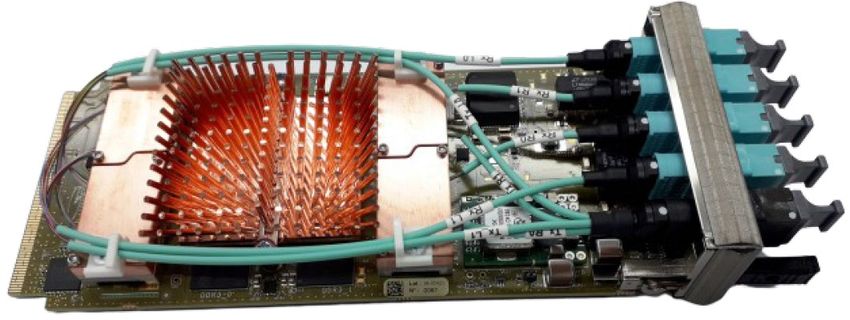
Evolution récente (5 dernières années)
Chercheurs permanents : +4                                                    HDR obtenues : 5
            ●
                + Claire Adam-Bourdarios, arrivée en 2019                                ●
                                                                                             Marco Delmastro, 23 mars 2016
            ●
                +Thibault Guillemin, arrivé en 2015                                      ●
                                                                                             Tetiana Hryn'ova-Berger, 3 juin 2016
            ●
                + Corinne Goy, revenue en 2016                                           ●
                                                                                             Nicolas Berger, 5 juillet 2016
            ●
                + Narei Lorenzo Martinez, arrivée en 2016                                ●
                                                                                             Thibault Guillemin, 1er juin 2018
            ●
                - Teddy Todorov, décès en 2014                                           ●
                                                                                             Jessica Levêque, 15 octobre 2018

Post-doctorants : 8
       ●
           Olivier Simard, LAr on-line, CDD IN2P3, 2013 – 2015
       ●
           André Rummler, Pixels Phase 2, CDD labex ENIGMASS, 07/2014 – 06/2017
       ●
           Elena Yatsenko, dibosons WZ, CDD ENIGMASS, 02/2015 - 01/2018
       ●
           Paolo Mastrandrea, résonances diélectrons, CDD ENIGMASS, 07/2015 – 06/2018
       ●
           Ben Smart, Pixels Phase 2, CDD ENIGMASS, 11/2015 – 10/2018
       ●
           Alexis Vallier, LAr on-line et diphotons, CDD IN2P3, 10/2015 – 09/2018
       ●
           Sarka Todorova, Pixels Phase 2 simulations, CDD IN2P3, 09/2016 – 08/2019
       ●
           Oleh Kivernyk, calibration photons et couplages H, CDD ENIGMASS, 10/2016 – 09/2019

Thèses soutenues : 9

 ●
     Houry Keoshkerian, dibosons WZ, dir. E. Sauvan, 10/2011 – 09/2014
 ●
     Zuzanna Barnovska, mesures diphotons, dir. M. Delmastro, 10/2012 – 09/2015
 ●
     Zhan Zhang, Optimization of the thermo-mechanical performance of the alpine stave-based pixel detector, dir. L. Di Ciaccio,
     thèse soutenue le 12/2015
 ●
     Kirill Grevtsov, résonances diphotons (H, X), financement ENIGMASS, dir. I. Wingerter-Seez, 10/2014 – 09/2017
 ●
     Angela Burger, dibosons WZ, financement ENIGMASS, dir. E. Sauvan, 09/2015 – 08/2018
 ●
     Olympia Dartsi, dibosons Zy, financement ENIGMASS, dir. L. Di Ciaccio, 10/2016 – 09/2019
 ●
     Peter Falke, résonances diélectrons, LAr phase 1, financement ENIGMASS, dir. T. Hryn'ova, 11/2016 – 10/2019
 ●
     Saskia Falke, calibration photons et couplages H, financement école doctorale, dir. T. Guillemin, 11/2016 – 10/2019
 ●
     Pierre Barroca, Refroidissement pixels, financement IN2P3+USMB, dir. J. Levêque, S. Jézéquel, 10/2016 – 09/2019

                                                                                                                                    3
Organisation et fonctionnement
[statut mi-2019]

                   Communication
               Claire Adam-Bourdarios
                   Jessica Levêque
               Narei Lorenzo Martinez
                  (correspondantes)

                                                    4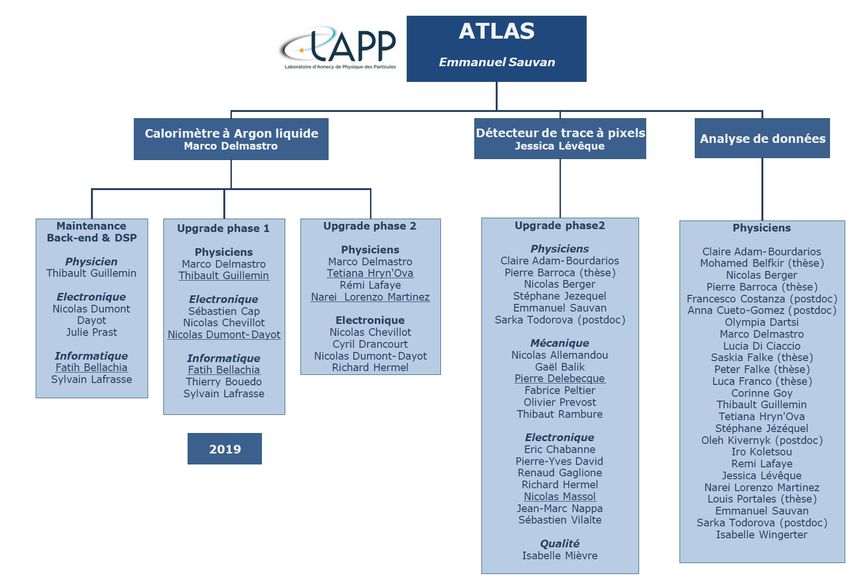
Organisation et fonctionnement

●   Réunions de groupe (physiciens + éventuellement ingénieurs, selon le sujet)
          ➔ ~2h , ~2 fois par mois
          ➔ Présentations des sujets en cours dans le groupe (physique, projets techniques)
          ➔ Informations de l'IN2P3, direction du LAPP, ATLAS, ...

●   Réunions des physiciens permanents
          ➔ 1h, 1 fois par mois
          ➔ Echanger, informations de l'IN2P3, de la direction du LAPP
          ➔ Evolution des activités dans le groupe
          ➔ Budget
          ➔ Réponses aux divers appels à financement

●   Réunions de coordination physiciens - ingénieurs

          ➔ 1 par projet technique
          ➔ 1 fois par semaine, courtes
          ➔ Avancement des projets, problèmes éventuels

                                                                                              5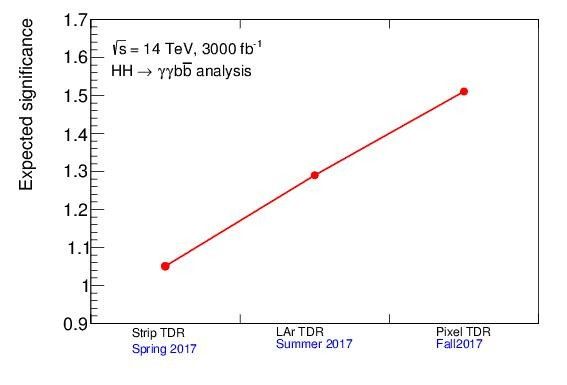
Faits marquants 1/5
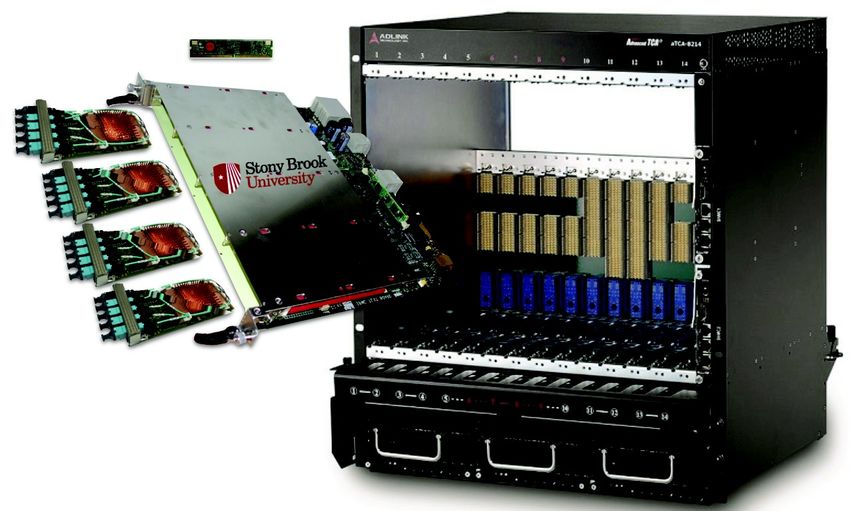
Système de lecture du calorimètre LAr, upgrade phase-1
                     ➔ Augmenter la granularité du trigger LAr

●   LAPP responsable du design et construction
    des cartes mezannine de processing back-end
           ➔ 150 cartes produites en 2019
           ➔ Integration sur les cartes mères et tests en
              cours, au LAPP
●   Carte IPMC, controleur ATCA : production + firmware

●   Intégration sur les
    cartes mère et
    tests au LAPP

                                [img. : S. Lafrasse]

    ●   LAPP responsable de la coordination du firmware
                                                                 6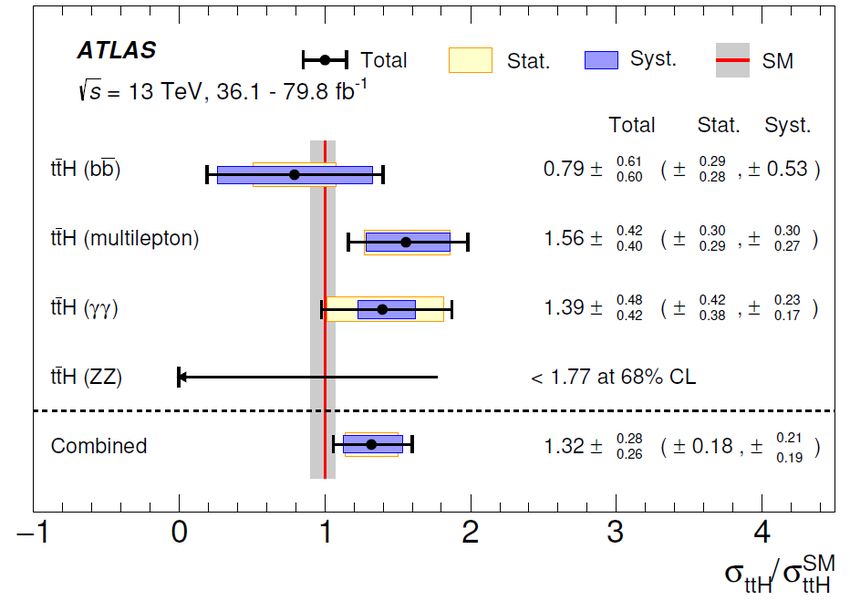
Faits marquants 2/5
Recherche de résonances dileptons et diphotons
                                                                             [PLB 796(2019)68]
 ●   Dileptons search using full run 2 data

       ➔ Implication of the group since 2009                       Moriond 2019
       ➔ First paper using full run 2
       ➔ LAPP editor of the paper
       ➔ New analysis method based on
          diphoton search (group synergy)

      [ATLAS-CONF-2018-025]

                                               ●   Diphotons resonance searches, high
                                                   and low mass

                                                     ➔ Implication of the group since 2013

                                                     ➔ LAPP editor of the papers
        ICHEP 2018

                                                                                                 7
Faits marquants 3/5
[PLB 784(2018)173]
Propriétés du boson de Higgs
● Observation of ttH production
➔ Fondamental contributions of LAPP to
ttH/H →
➔ LAPP editor of the support note
➔ LAPP editor of the paper
LHCP 2018
[ATLAS-CONF-2019-005]
● Higgs couplings measurements in
H → , 80 fb-1
➔ LAPP editor of the support note
➔ Official results produced by LAPP
ICHEP 2018
8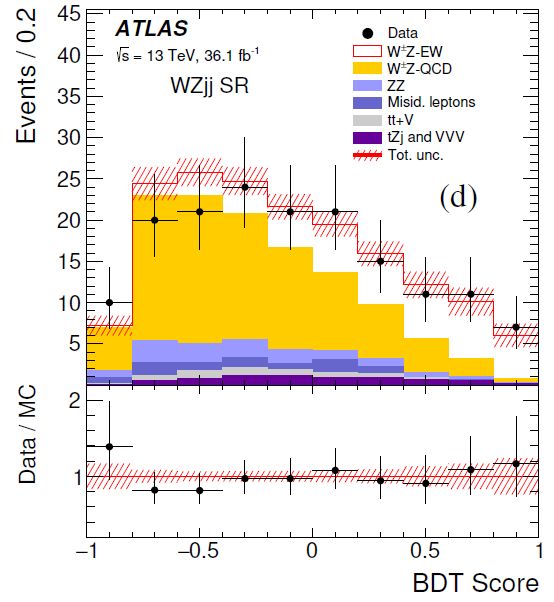
Faits marquants 4/5
Physique électrofaible du modèle standard
[PLB 793(2019)469]
● First observation (5.3 ) of electroweak WZjj
production
➔ Analysis 100% done by LAPP
ICHEP 2018
[arxiv:1910.09503]
● Evidence of electroweak Zyjj production
➔ LAPP co-éditeur de l'article
Lepton-Photon 2019
9Faits marquants 5/5
Upgrades du trajectographe à pixel
➔ No leak since
● Installation of IBL CO2 fittings and ➔ Partnership with local
cooling lines in 2014 companies
➘ Institutional responsibility on that detector part
● Strong involvement in
simulations, layout
optimisations
● Solution with Inclined sensors retained as
baseline for ITk detector
➔ Proposed and pushed by LAPP
➔ Best expected performances
➔ Reduced material
● Implications in HL-LHC physics studies ➔ in ATLAS TDRs
➔ in CERN Yellow Report
➔ ATLAS Higgs prospects coordination
10Contributions techniques
Upgrade LAr phase 1
● Responsable de la conception et production des cartes de calcul back-end
● Production de 150 cartes LATOME + intégration sur les cartes mères
● Coordination du firmware
● Collaboration avec CPPM, Stony Brook University
● Développement, fabrication, firmware des cartes IPMC (contrôleurs pour chassis ATCA)
Upgrade LAr phase 2
● Carte calibration : responsable conception et production des cartes, en collaboration avec
OMEGA (conception ASIC)
● Carte distribution horloge, controle : responsable conception et production des cartes +
firmware
Upgrade ITk-pixels phase 2
● Services électriques du tonneau externe : conception et production
● Etudes, modélisation de refroidissement CO2 des structures (1 PhD 2019)
● Site d’intégration des sous-structures du détecteur
● Simulation
11Contributions techniques
Fonctionnement ATLAS
● Responsabilité institutionnelle sur le software LAr online + processeur backend LAr
● Participation aux shifts
Computing
● Operation T2 MUST du LAPP pour ATLAS
● R&D stockage pour le HL-LHC
Implications IT 2019-2020
7 ETP IT électronique [7 en 2019]
Sébastien Cap*, Eric Chabanne, Nicolas Chevillot, Pierre-Yves David*, C. Drancourt,
Nicolas Dumont-Dayot, Renaud Gaglione, Richard Hermel, Nicolas Massol, Jean-Marc Nappa,
Sébastien Villalte +1 CDD TGIR
*Départs en 2020. Remplacements demandés.
3.8 ETP IT mécanique [3.2 en 2019]
Nicolas Allemandou, Pierre Delebecque, Andrea Jeremie, Olivier Prevost, Thibaut Rambure
2 ETP IT informatique [2 en 2019] 0.7 ETP IT qualité [0.3 en 2019]
Fatih Bellachia, Sylvain Lafrasse Isabelle Mièvre
12Bilan des publications 2014-2019
➔ Uniquement les plus récentes et les plus représentatives,
avec contribution principale du LAPP
[sur un total de 625, soit 54% des publications du LAPP]
Performance du détecteur
1. ATLAS Collaboration, Performance of the electron and photon triggers of the ATLAS experiment during LHC Run-2, Submitted to
EPJC, https://arxiv.org/abs/1909.00761
2. ATLAS Collaboration, Photon efficiency measurements with the ATLAS detector using 2015-2016 LHC proton-proton collision data,
Eur. Phys. J. C 79 (2019) 205
3. ATLAS Collaboration, ATLAS electron and photon reconstruction and energy calibration with 2015-2017 data, Accepted by JINST
https://arxiv.org/abs/1908.00005
4. ATLAS Collaboration, Electron and photon energy calibration with the ATLAS detector using 2015-2016 LHC proton-proton collision
data, JINST 14 (2019) P03017
Recherche de nouvelle physique
5. ATLAS Collaboration, Combination of searches for heavy resonances decaying into bosonic and leptonic final states using 36 fb−1 of
proton-proton collision data at √s = 13 TeV with the ATLAS detector, Physical Review D 98 (2018) 052008
6. ATLAS Collaboration, Search for high-mass dilepton resonances using 139 fb-1 of pp collision data collected at \sqrt{s}=13 TeV with
the ATLAS detector, Phys Lett. B 796 (2019) 68
7. ATLAS Collaboration, Search for resonances in the 65 to 110 GeV diphoton invariant mass range using 80 fb-1 of pp collisions
collected at \sqrt{s}=13 TeV with the ATLAS detector, ATLAS-CONF-2018-025
8. ATLAS Collaboration, Search for new phenomena in high-mass diphoton final states using 37 fb-1 of proton-proton collisions
collected at \sqrt{s}=13 TeV with the ATLAS detector, Phys. Lett. B 775 (2017) 105
9. ATLAS Collaboration, Search for Scalar Diphoton Resonances in the Mass Range 65-600 GeV with the ATLAS Detector in pp
Collision Data at \sqrt{s} = 8 TeV, Phys. Rev. Lett. 113 (2014) 171801
13Bilan des publications 2014-2019
Higgs
10. ATLAS Collaboration, Combined measurements of Higgs boson production and decay using up to 80 fb−1 of proton-proton collision
data at s√= 13 TeV collected with the ATLAS experiment, Accepted by Phys. Rev. D, arxiv:1909.02845
11. ATLAS Collaboration, Measurements of Higgs boson properties in the diphoton decay channel with 36 fb-1 of pp collision data at √s
= 13 TeV with the ATLAS detector, Physical Review D 98 (2018) 052005
12. ATLAS Collaboration, Observation of Higgs boson production in association with a top quark pair at the LHC with the ATLAS
detector, Physics Letters B 784 (2018) 173
13. ATLAS Collaboration, Measurement of the Higgs boson mass in the H→ZZ*→4l and H→γγ channels with sqrt{s}=13 TeV pp
collisions using the ATLAS detector, Physics Letters B 784 (2018) 345
Physique électrofaible
14. ATLAS Collaboration, Evidence for electroweak production of two jets in association with a Zγ pair in pp collisions at s√=13 TeV
with the ATLAS detector, Submitted to Phys. Lett. B, arxiv:1910.09503
15. ATLAS Collaboration, Measurement of W± Z production cross sections and gauge boson polarisation in pp collisions at √s = 13TeV
with the ATLAS detector, Eur. Phys. J C 79 (2019) 535
16. ATLAS Collaboration, Observation of electroweak W± Z boson pair production in association with two jets in pp collisions at √s =
13TeV with the ATLAS Detector, Phys. Lett. B 793 (2019) 469
17. ATLAS Collaboration, Measurements of W±Z production cross sections in pp collisions at s√=8 TeV with the ATLAS detector and
limits on anomalous gauge boson self-couplings, Physical Review D 93 (2016) 092004
18. ATLAS Collaboration, Measurement of the WZ boson pair-production cross section in pp collisions at sqrt(s) = 13 TeV with the
ATLAS Detector, Phys. Lett. B 762 (2016) 11
Technical Design reports ATLAS, upgrades Phase 2
19. ATLAS Collaboration, Technical Design Report for the Phase-II Upgrade of the ATLAS LAr Calorimeter, CERN-LHCC-2017-018,
ATLAS-TDR-027
20. ATLAS Collaboration, Technical Design Report for the ATLAS Inner Tracker Pixel Detector, CERN-LHCC-2017-021, ATLAS-TDR-030
14Visibilité et rayonnement
Présentations en conférences [65 entre 2014-2019, 4 pléniers invités]
(liste complète en annexe)
[PhDs, postdoctorants, permanents]
● 2019 : DIS2019 (Ana Rosario), QCD2019 (Saskia Falke), Blois 2019 (plénier invité, Marco
Delmastro), Blois 2019 (Narei Lorenzo Martinez), EPS-HEP 2019 (plénier invité, Lucia Di-
Ciaccio), Higgs Couplings (Nicolas Berger), CHEP 2019 (Stéphane Jézequel)
● 2018 : LISHEP2018 (Isabelle Wingerter-Seez), SUSY2018 (Peter Falke), ICHEP2018
(Francesco Costanza), LHCP2018 (Oleh Kivernyk), Blois 2018 (Rémi Lafaye)
● 2017 : SUSY2017 (Alexis Vallier), Higgs Hunting 2017 (Ben Smart), EPS-HEP2017 (Paolo
Mastrandrea), ANIMMA2017 (Alexis Vallier), LHCP2017 (plénier invité, Sharka Todorova),
LHCP2017 (Elena Yatsenko), LHCP2017 (Narei Lorenzo Martinez), DIS2017 (Stéphane
Jézéquel, Angela Burger), ICNFP2017 (Nicolas Berger)
● 2016 : SEARCH2016 (Thibault Guillemin), Higgs Hunting 2016 (Kirill Grevtsov), Real Time
Conference RT2016 (Nicolas Chevillot, ingénieur), Moriond-EW2016 (Marco Delmastro),
Rencontres du Vietnam 2016 (Remi Lafaye)
● 2015 : Higgs Hunting 2015 (Jessica Levêque), Blois 2015 (plénier invité, Emmanuel Sauvan),
SM@LHC (Elena Yatsenko)
● 2014 : LHCDays Split (Nicolas Berger), Phenomenology Symposium 2014 (Houry
Keoshkerian), CALOR 2014 (Olivier Simard), Moriond-QCD 2014 (Tetiana Hyrn'ova-Berger)
15Visibilité et rayonnement
● Outreach: ➔ Organisation des MasterClasses CERN
➔ Visites d'écoles au LAPP, CERN
➔ Visites officielles d'ATLAS, CERN guides
➔ Présentations dans des écoles
➔ Exposition permanente at LAPP (EUTOPIA)
➔ Fêtes de la science
● Organisation workshop, écoles, conférences:
➔ Workshop ATLAS Standard Model, février 2015
➔ Workshop ATLAS e/y, novembre 2015
➔ Workshop ATLAS Higgs Beyond the Standard Model, novembre 2017
➔ Journées Upgrade ATLAS-IN2P3, avril 2018
➔ Workshop IRN Terascale, mai 2019
➔ Workshop ATLAS ITk pixel QA/QC, décembre 2019
● Collaborations internationales:
➔ Accords de coopération avec la Pologne
➔ Participation au réseau européen VBSCan (action COST)
➔ Accueil de 15 visiteurs étrangers sur la période
16Responsabilités scientifiques
● Management collaboration ATLAS
Responsabilité Personne Période
Deputy spokesperson Isabelle Wingerter-Seez 03/2017 – 02/2019
Publication committee chair Lucia Di Ciaccio 03/2018 – 03/2019
● Co-direction de groupes de travail ATLAS
Responsabilité Personne Période
e/gamma upgrade convener Stéphane Jézéquel 06/2019 –
Photon/electron calibration sub-group co-convener Narei Lorenzo Martinez 04/2019 –
LHC Higgs cross-section working group 2 (Higgs properties) co-coordinator Marco Delmastro 12/2018 –
ATLAS statistics committee chair Nicolas Berger 10/2018 – 09/2020
Photon identification sub-group co-convener Oleh Kyvernyk 04/2018 – 03/2020
Trigger e/gamma signature coordinator Tetiana Hryn’ova - Berger 01/2018 – 12/2019
Statistics forum co-convener Nicolas Berger 10/2017 – 09/2019
Higgs prospects sub-group co-convener Stéphane Jézéquel 10/2017 – 09/2019
ITk simulation and performance co-convener Ben Smart 05/2017 – 10/2018
LAr backend phase 2 co-convener Tetiana Hryn’ova - Berger 2018 –
LAr backend phase 2 co-convener Narei Lorenzo Martinez 2017 – 2018
LAr calibration phase 2 co-convener Narei Lorenzo Martinez 2018 – 2019
LAr calibration phase 2 co-convener Marco Delmastro 2017 –
17Responsabilités scientifiques
Higgs combinations sub-group Nicolas Berger 04/2016 – 03/2017
co-convener
Higgs in di-photon sub-group Marco Delmastro 04/2016 – 03/2017
co-convener
Photon/electron calibration sub- Thibault Guillemin 10/2016 – 09/2017
group co-convener
Jet and photons physics sub- Narei Lorenzo Martinez 10/2015 – 04/2017
group co-convener
LAr back-end phase 1 upgrade Isabelle Wingerter-Seez 2013 – 2017
coordinator
Photon/electron calibration sub- Paolo Mastrandrea 05/2014– 10/2016
group co-convener
Photon identification sub-group Nicolas Berger 2014 – 2016
co-convener
Trigger menu signature Tetiana Hryn’ova-Berger 10/2013 – 06/2015
performance coordinator
Higgs in di-photon sub-group Nicolas Berger 04/2013 – 03/2014
co-convener
e/gamma performance group Marco Delmastro 10/2012 – 09/2014
co-convener
18Responsabilités scientifiques
● Membres de comités ATLAS
CB chair advisory group Jessica Levêque 01/2020 – 12/2021
member
Speakers committee Isabelle Wingerter-Seez 03/2015 – 02/2016
advisory board Member
ATLAS executive board Isabelle Wingerter-Seez 03/2013 – 02/2015
member
CB chair advisory group Tetiana Hryn’ova-Berger 01/2014 – 12/2015
member
19Enseignement, animation, gestion
● 25 étudiants (IUT en électronique, mécanique, L3 à M2 en physique)
● Enseignement : ➔ ESIPAP
➔ Graspa (y compris organisation)
➔ Cours d'hivers du LAL
➔ CERN summer school
➔ Ukrainian teacher program au CERN
Responsabilités nationales, laboratoire
● Membre section 01 CoCNRS
● Membre élu suppléant CNU29
● Membre comité pole PAGE (Idex)
● Membres au conseil du laboratoire
● Membre comité scientifique du laboratoire
● Représentant LAPP à l'école doctorale Grenoble
● Membre comité français de sélection fellowships CERN
● Contact national ATLAS-IN2P3 (2013 - 2017)
● Membre élu du conseil d'administration de l'Université de Savoie Mont Blanc (USMB)
(2012 - 2016)
● Membre élu conseil académique de la commission de recherche USMB (2016 - 2020)
20Projets scientifiques (à 5 ans)
Activités
● Suivi prise de données Run 3
● Construction, commissioning LAr phase 1
● R&D puis construction LAr phase 2
● Construction ITk : centre d’intégration et de test des échelles
● Performances
➔ Garder une forte implication sur les performances photons
➔ Développer notre contribution aux performances jets
➔ Développer une expertise tracking et/ou b-tagging
● Analyses de Physique Démarrer une
➔ Higgs et diphotons : maintenir une forte implication. Evolution vers
implication FCC dans
les interprétations en terme d'EFT les 5 ans pour
➔ Electroweak, VBS : maintenir une forte implication, avec certains membres du
interprétations EFT
➔ dileptons exotiques : analyse Run2 et combinaisons
groupe ?
➔ Développement analyses HH
21Evolution prévue (en personnel)
● 1 départ en retraite dans 5 ans
● autres départs probables dans les 2 ans à venir (changements thématiques)
● Forte baisse du nombre de postdoctorants : 7 en 2018, 5 en 2019, 2 en 2020,
→ 0 en mai 2021
● Difficulté constante à recruter plus de 1-2 étudiants en thèse par an
● Renfort nécessaire dans les 5 ans à venir : demande actuelle de
1 postdoctorant IN2P3 + 1 CR CNRS pour pouvoir mener de
front analyses Run 2/3 et constructions Phase 1/2
● Nécessité d'autres renforts en postdocs. Tous les financements possibles sont
prospectés, mais les possibilités sont faibles (labex ? Idex?)
22Auto-Analyse SWOT
● Points forts
1.- The group benefits from a past recognised expertise in detector construction,
electronics and on-line data acquisition software, from his engagements on the LAr
calorimeter and later on the Insertable B-Layer (IBL) detector. The group during the past
five years managed to obtain important responsibilities in the design and construction of
the next ATLAS pixel detector for HL-LHC.
2.- The group has demonstrated a long standing expertise in electron and photon
reconstruction and calibration;
3.- The group has already strong implications and responsibilities in flagship physics
subjects: physics of the Higgs boson and of the SM electroweak sector and direct
resonance searches;
4.- The group has demonstrated his leadership potential at the highest levels of the ATLAS
Collaboration, by taking in the past years the responsibilities of deputy spokesperson and
publication committee chair of the ATLAS collaboration;
5.- All detector upgrades in which the group is engaged are approved and already
financed.
23Auto-Analyse SWOT
● Points à améliorer
1.- The mean age of permanent physicists of the group is increasing, while the group will need to meet his
engagements on detector constructions until 2025, and later for their exploitation. In parallel the group
needs to maintain his visibility in physics analyses and operate the detector during Run 3. Reinforcement
and renewal of the group is therefore desirable to ensure a long term participation to the full HL-LHC
program;
2.- The engagements of the group for the HL-LHC construction that need to be done within a short period
will employ a large fraction of human resources of the group. A reinforcement of the group by young
postdocs will be needed for this period of heavy work-load;
3.- Potentially, the analysis of Run 3 data, with only a doubling of the data statistics and no big step in
collision energy, could present a lower attractiveness for PhD students or young postdocs. This could be
mitigated by the development of new analysis methods and an evolution in physics subjects covered by the
group;
4.- The support from local administration needs to be maintained at an high level. Otherwise, this could
develop in a serious problems during the HL-LHC construction phase, with a large amount of orders to
suppliers, transports, missions, to be handled.
24Auto-Analyse SWOT
● Opportunités (liées au contexte)
1.- The favorable geographical proximity from CERN, open opportunities to take an active part in detector
integration and operation at CERN, gaining in visibility;
2.- In order to extract the best physics potential from Run 3 data, it will be mandatory to improve particle
reconstruction and analysis methods. This represents opportunities to bring forward new ideas based
possibly on cutting edge machine learning technologies, to potentially attract new competences and
financing resources. Trans-domain synergies could thus be developed with computer science;
3.- The presence at LAPP of the MUST Tier 2 computing infrastructure, and of the local technical
expertise associated in the laboratory and in the ATLAS group, provides advantages to the group to take
part in coming computing R&D developments needed for the HL-LHC horizon, and in particular for the
development of new data management technologies;
4.- The group possesses technical instrumentation expertise on some of the strategic R&D points for the
development of detectors for future particle physics colliders, like e.g. diphasic CO2 cooling, low mass
mechanical structures, high performance FPGAs, high speed data transmissions. The group could
capitalise on this expertise to engage in the coming years new R&D projects, possibly in strong
partnership with the strategic R&D program on technologies for future experiments promoted by CERN [
CERN-OPEN-2018-006].
25Auto-Analyse SWOT
● Risques liés au contexte
1.- Critically low level of CNRS recruitments (CRs and ITAs);
2.- LAPP is presently isolated in the landscape of French university and research centres, with the
tendency to develop larger research poles linked to merged universities. The laboratory is presently
part of the COMUE UGA (through CNRS that is member of COMUE and IDEX) and therefore eligible
to the IDEX current fundings of UGA. In 2020 the COMUE will be replaced by the UGA- Université
Integrée and if the IDEX will be confirmed, only UGA laboratories would have access to IDEX
dedicated funding. The impact of this situation on the longer term future needs to be assessed,
especially on fluxes to the laboratory of students, researchers and financing sources, as an example
to possibly finance additional PhD or postdoc positions for the LAPP ATLAS activities, while the
ATLAS group of LPSC will have this opportunity;
3.- Being geographically isolated from larger French university centres, the group has difficulties to
attract the best students for PhDs.
26Annexes
27Activités Scientifiques
Principales activités scientifiques de l'équipe en 2019 : [% du temps de recherche, estimés pour 2019]
Responsabilité sur l'électronique backend et software online LAr :
●
Responsabilité lors de la prise de données : reconstruction online de l'énergie des 182k cellules
●
Efficacité de 100% pour le software online au run 2
●
“Institutional commitment”
●
F. Belachia (10%), S. Lafrasse (10%), T. Guillemin (40%), I. Wingerter-Seez (10%)
+ participation au fonctionnement de l'expérience
Computing :
LAPP T2 Nucleus, R&D DOMA (Responsable data access) et ESCAPE
Claire Adam-Bourdarios (60%), S. Jézéquel (20%)
Reconstruction et identification électrons et photons :
●
Co-responsables des sous-groupes calibrations électrons/photons et identification photons
●
Co-responsables du trigger électrons/photons
●
M. Belfkir (40%), N. Berger (20%), M. Delmastro (10%), L. Franco (70%), T. Hryn'ova (40%), O. Kivernyk
(50%), N. Lorenzo Martinez (20%)
Rejection jets de pile-up :
●
I. Koletsou (10%), L. Portales (60%), E. Sauvan (10%)
28Activités Scientifiques
Principales activités scientifiques de l'équipe en 2019 : [% du temps de recherche, estimés pour 2019]
Higgs, HH et diphotons :
●
H → , recherche de résonances supplémentaires, HH → bb propriétés du Higgs
●
M. Belfkir (60%), N. Berger (80%), F. Costanza (10%), M. Delmastro (50%), S. Falke (100%), Luca Franco
(30%), T. Guillemin (10%), S. Jézéquel (20%), O. Kivernyk (50%), R. Lafaye (70%), I. Wingerter-Seez (20%)
Physique électrofaible et dibosons :
●
Mesures de la production de dibosons WZ, polarisation, mesures de Vector Boson Scattering : WZ, Z
●
L. Di Ciaccio (30%), F. Costanza (60%), O. Dartsi (100%), C. Goy (60%), I. Koletsou (40%), N. Lorenzo Martinez (40%),
L. Portales (40%), E. Sauvan (30%)
Recherche de résonances dileptons :
●
Recherches de résonances diélectrons, combinaisons
●
P. Falke (100%), T. Hryn'ova (40%)
Prospectives HL-LHC :
●
HH et WZ VBS, co-coordination prospectives Higgs ATLAS
●
CERN Yellow report
●
L. Di Ciaccio (20 %) C. Goy (20%), S. Jézéquel (30%)
29Projets Techniques
Upgrade électronique backend LAr Phase 1
Responsable scientifique local : Thibault Guillemin
Responsable technique local : Nicolas Dumont-Dayot
Améliorer la granularité du trigger LAr pour le run 3 (installation en 2019-2020)
LAPP responsable de la carte pour la reconstruction E T et bunch-crossing à 40 MHz pour
30000 supercells de trigger + software online associé
Coordination du développement du firmware
Chercheurs participants : (dont CDD, étudiants)
I. Wingerter-Seez (5%), M. Delmastro (5%), T. Guillemin (80%)
IT participants :
• Nicolas Dumont-Dayot, IR électronique, 100%
• Nicolas Chevillot, IR électronique, 90%
• Sébastien Cap, IE électronique, 35%
• Fatih Bellachia, IE ínformatique, 90%
• Thierry Bouedo, IR informatique, 25%
• Sylvain Lafrasse, IE informatique, 90%
30Projets Techniques
Upgrade électronique LAr Phase 2
Responsables scientifiques local : Marco Delmastro
Marco Delmastro (carte calibration)
Tetiana Hryn'ova-Berger (carte TTC)
Remplacement des cartes calibrations du calorimètre LAr : responsabilités PCB
et production, tests des cartes
Electronique back-end : développement carte de distribution Timing Trigger et Control (TTC)
Chercheurs participants : (dont CDD, étudiants)
M. Delmastro (35%), T. Hryn'ova (15%), R. Lafaye (30%), N. Lorenzo Martinez (45%), Isabelle
Wingerter-Seez (38%)
IT participants :
Carte calibration • Cyril Drancourt, IR électronique, 35%
• Richard Hermel, IR électronique, 30%
• Nicolas Dumont-Dayot, IR électronique
Carte TTC
• Nicolas Chevillot, IR électronique
• Sébastien Cap, IE électronique
• Jean-Marc Nappa, IE électronique
stagiaire : ●
Quentin Werle, DUT G2II 2ieme année, 3 mois, dir. N. Dumont-Dayot
31Projets Techniques
Upgrade détecteur à pixels pour HL-LHC (Phase 2)
Responsable scientifique local :Jessica Lévêque
Responsables technique local : Nicolas Massol / Pierre Delebecque
Transmission des données (flex, câbles actifs)
Refroidissement C02 des senseurs
Outils d’intégration, système de tests
Outils de simulation et performances selon la géométrie du détecteur à pixels
Chercheurs participants : (dont CDD, étudiants)
• C. Adam-Bourdarios (5%), J. Levêque (95%), S. Jézéquel (20%), E. Sauvan (30%), S.
Todorova (70%), F. Costanza (35%), P. Barroca (100%)
IT participants :
●
Pierre Delebecque, IR mécanique, 90% ●
Nicolas Massol, IR électronique, 90%
●
Nicolas Allemandou, IE mécanique, 90% ●
Pierre-Yves David, AI électronique, 70%
●
Thibaut Rambure, AI mécanique, 70% ●
Renaud Gaglione, IR électronique, 80 %
●
Olivier Prevost, T mécanique, 90% ●
Jean-Marc Nappa, IE électronique, 75%
●
Gael Balik, IR mécanique, 15% ●
Sébastien Vilalte, IR électronique, 40%
●
Eric Chabanne, IR électronique, 62%
●
Isabelle Mievre, IR qualité, 30%
stagiaires : ●
Niels Faucher, refroidissement CO2, IUT mesures physique, 2.5 mois, dir. P. Delebecque
●
Léo Chapelet, qualité, IUT, 2.5 mois, dir. I. Mievre
32Présentations en conférence : liste complète
1. Tetiana Hryn'ova, Searches for Heavy Resonances at the LHC, XLIXth Rencontres de Moriond QCD and High Energy
Interactions, 2014, 22-29 mars 2014, La Thuile (Italie). Réf. HAL: in2p3-00978470, plenary talk
2. Olivier Simard, The monitoring and data quality assessment of the ATLAS liquid argon calorimeter, CALOR 2014, 7-11 avril 2014,
Giessen (Allemagne). Journal of Physics: Conference Series, 587 012008. Réf. HAL: in2p3-01002759, Talk
3. Houry Keoshkerian, Recent QCD results from ATLAS, Phenomenology 2014 Symposium, 5-7 mai 2014, Pittsburgh (États-Unis).
Réf. HAL: in2p3-01002761,Talk
4. Zuzana Blenessy, Search for Higgs-like diphoton resonances in the 65-600 GeV mass range with the ATLAS detector at a centre
of mass energy of 8 TeV, 37th International Conference on High Energy Physics (ICHEP 2014), 2-9 juillet 2014, Valencia (Espagne).
Réf. HAL: in2p3-01053025, Poster
5. Jasmin Fragnaud, Demonstrator System for the Phase-I Upgrade of the Trigger Readout Electronics of the ATLAS Liquid Argon
Calorimeters, Topical Workshop on Electronic for Particle Physics TWEPP 2014, 22-26 septembre 2014, Aix en Provence (France).
Réf. HAL: in2p3-01185774, Poster
6. Nicolas Berger, Higgs production and decay ch. specific ATLAS, LHC Days in Split, 29 septembre-4 octobre 2014, Split (Croatie).
Réf. HAL: in2p3-01076789,Talk
7. Wingerter-Seez I. (2014). « Particle Physics Instrumentation », 2nd Asia-Europe-Pacific School of High-Energy Physics, 4-17
novembre 2014, Puri (Inde). 295-314. Réf. HAL: hal-01792259
8. Elena Yatsenko, Measurements used to tune MC generators: Multijets (event shapes), Color Coherence, cross section ratio with
different cone-sizes, Standard Model at LHC (SM@LHC), 21-24 avril 2015, Florence (Italie). Réf. HAL: in2p3-01244032,Talk
9. Emmanuel Sauvan, Status of electroweak physics, 27th Rencontres de Blois on Particle Physics and Cosmology, 31 mai-5
juin 2015, Blois (France). Réf. HAL: in2p3-01160147, Invited plenary talk
10. Kirill Grevtsov, Electron and Photon performance in ATLAS at the LHC, Conference on High Energy Physics 2015 - HEP2015,
22-29 juillet 2015, Vienna (Autriche). Réf. HAL: in2p3-01186362, Poster
11. Jessica Leveque, « ATLAS run 2 - Higgs prospects », Higgs Hunting 2015, 30 juillet-1 août 2015, Orsay (France). Réf.
HAL: in2p3-01241924,Talk
12. Paolo Mastrandrea, Searches for new physics in diboson resonances with the ATLAS detector at the LHC, 23rd International
Conference on Supersymmetry and Unification of Fundamental Interaction (SUSY 2015), 23-29 août 2015, Lake Tahoe
(États-Unis). Réf. HAL: in2p3-01244016, Talk
33Présentations en conférence : liste complète
13. Nicolas Dumont Dayot, Performance of the Demonstrator System for the Phase-I Upgrade of the Trigger Readout Electronics of the
ATLAS Liquid-Argon Calorimeters, TWEPP 2015 - Topical Workshop on Electronics for Particle Physics, 28 septembre-2 octobre
2015, Lisbon (Portugal). Journal of Instrumentation, 11 C01026. Réf. HAL: in2p3-01214000,Talk
14. Kimurav K., Rummler A. (2015). « Test beam evaluation of newly developed n-in-p planar pixel sensors for use in a high
radiation environment », 10th International “Hiroshima” Symposium on the Development and Application of Semiconductor
Tracking Detectors, 25-29 septembre 2015, Xi'an (Chine). 831 140–146. url: https://indico.cern.ch/event/340417/. Réf. HAL:
in2p3-01448135
15. Wingerter-Seez I. (2015). « Physique au LHC: passé, présent, futur », XXIIIe Congrès Général de la SFP, 24-28 août 2015,
Strasbourg (France). url: https://sfp2015.sciencesconf.org/. Réf. HAL: in2p3-01241911
16. Marco Delmastro, Diphoton searches in ATLAS, 51th Rencontres de Moriond - Electroweak Interactions and Unified Theories, 12-19
mars 2016, La Thuile (Italie). url: https://indico.in2p3.fr/event/12279/overview. Réf. HAL: in2p3-01309321, plenary Talk
17. Tetiana Hryn'ova, Exotica: Speaking Up for Minorities, », LHC SKI 2016, A first discussion of 13 TeV results, 10-15 avril 2016, Tirol
(Autriche). url: https://indico.cern.ch/event/351843/. Réf. HAL: in2p3-01417246, Talk
18. Elena Yatsenko, Measurements of inclusive and differential Drell-Yan cross sections with the ATLAS detector, 24th International
Workshop on Deep-Inelastic Scattering and Related Subjects (DIS2016), 11-15 avril 2016, Hamburg (Allemagne). url:
https://dis2016.desy.de/. Réf. HAL: in2p3-01309303, Talk
19. Nicolas Chevillot, Phase-I Trigger Readout Electronics Upgrade for the ATLAS Liquid-Argon Calorimeters, 20th Real Time conference
RT 2016, 5-10 June 2016, Padova, Italy, Talk
20. Lucia Di Ciaccio, Recent di-boson measurements from ATLAS, QCD@LHC 2016, 22-26 August 2016, Zurich, Switzerland, Talk
21. Kirill Grevtsov, Search for high-mass diphoton resonances with the ATLAS detector, Higgs Hunting 2016, August 31 - September 2,
Paris, France, Talk
22. Thibault Guillemin, Higgs Physics, SEARCH 2016 Workshop, 31 August - 2 September 2016, Oxford, United Kingdom, Talk
23. Ben Smart, Pixel Detector design of the ATLAS experiment for HL-LHC, 8th International Workshop on Semiconductor Pixel
Detectors for Particles and Imaging (PIXEL 2016), 5-9 septembre 2016, Sestri Levante (Italie). Journal of Instrumentation,
12(02):C02011. url: https://agenda.infn.it/conferenceDisplay.py?confId=10190. Réf. HAL: in2p3-01472084, Talk
24. Remi Lafaye, Status of Higgs boson physics at LHC, Precision theory for precise measurements at the LHC and future colliders,
Quy-Nhon, Vietnam, 25 September - 1 October 2016, Talk
25. Demaria N., Barbero M., Fougeron D., Gensolen F., Godiot S. et al. (2016). « Recent progress of RD53 Collaboration towards next
generation Pixel Read-Out Chip for HL-LHC », 8th International Workshop on Semiconductor Pixel Detectors for Particles and Imaging
(PIXEL 2016), 5-9 septembre 2016, Sestri Levante (Italie). Journal of Instrumentation, 11(12):C12058. url:
https://agenda.infn.it/conferenceDisplay.py?confId=10190. Réf. HAL: in2p3-01421864
34Présentations en conférence : liste complète
26. Angela Burger, Measurement of the diboson production cross section at 8 TeV and 13 TeV and limits on anomalous triple gauge
couplings with the ATLAS detector,25th International Workshop on deep Inelastic Scattering and Related Topics DIS 2017, 3-7 April 2017,
Birmingham, United Kingdom, PoS, DIS2017 155. Réf. HAL: hal-01703625, Talk
27. Stephane Jezequel, Higgs physics programme at the High-Luminosity LHC with ATLAS, 25th International Workshop on deep Inelastic
Scattering and Related Topics DIS 2017, 3-7 April 2017, Birmingham, United Kingdom, Talk
28. Elena Yatsenko, Di- and multiboson measurements in ATLAS, 5th annual conference on Large Hadron Collider Physics LHCP 2017, 15-
20 May 2017, Shangai, China, Talk
29. Narei Lorenzo Martinez, Recent VBF and VBS measurements in ATLAS LHCP 2017, 5th annual conference on Large Hadron Collider
Physics LHCP 2017, 15-20 May 2017, Shangai, China, Talk
30. Sharka Todorova-Nova, Soft QCD, 5th annual conference on Large Hadron Collider Physics LHCP 2017, 15-20 May 2017, Shangai,
China, invited plenary talk
31. Alexis Vallier, Phase-I Trigger Readout Electronics Upgrade for the ATLAS Liquid-Argon Calorimeters, Internatioal Conference on
Advancements in Nuclear Instrumentation Measurements Methods and their Applications, ANIMMA 2017, 17-21 June 2017, Portoroz,
Slovenia, Talk
32. Paolo Mastrandrea, Searches for new phenomena in final states involving leptons and jets using the ATLAS detector, EPS Conference on
High Energy Physics, EPS-HEP 2017, 5-12 July 2017, Venice, Italy,Talk
33. Saskia Falke, Electron and photon energy measurement calibration with the ATLAS detector, EPS Conference on High Energy Physics,
EPS-HEP 2017, 5-12 July 2017, Venice, Italy, Poster
34. Ben Smart, ATLAS Higgs boson future, Higgs Hunting 2017, 24-26 July 2017, Orsay-Paris, France, Talk
35. Nicolas Berger, Lecture on Statistical analysis methods by ATLAS, 6th International Conference on New Frontiers in Physics ICNFP
2017, 17-29 August 2017, Crete, Grece, Talk
36. Tetiana Hryn'ova, Electron and Photon ID Photon, 6th International Conference on New Frontiers in Physics ICNFP 2017, 17-29 August
2017, Crete, Grece, Talk
37. Oleh Kivernyk, Measurement of the W-boson mass at the ATLAS experiment, 17th Hellenic School and Workshops on Elementary
Particle Physics and Gravity,Corfu 2017, Corfu, Greece, 2-28 September 2017, PoS, CORFU2017 030. Réf. HAL: hal-01871992, Talk
38. Elena Yatsenko, ATLAS LAr Calorimeter Performance in LHC Run-2, Calorimetry for the High Energy Frontier, Lyon, France, CHEF
2017, 2-6 October 2017,Talk
35Présentations en conférence : liste complète
39. Andersen J., Bellm J., Bendavid J., Berger N., Bhatia D. et al. (2017). « Les Houches 2017: Physics at TeV Colliders Standard Model
Working Group Report », 10th Les Houches Workshop on Physics at TeV Colliders, 5-23 juin 2017, Les Houches (France). Réf. HAL:
hal-01839683
40. Alexis Vallier, Search for high mass bosonic resonances with the ATLAS detector, 25th International Conference on Supersymmetry and
Unification of Fundamental Interactions, SUSY 2017, Mumbai (India), Talk
41. Stephane Jezequel, Higgs @ HL/HE LHC, HL/HE-LHC Meeting, 4-6 April 2108, Fermilab (US), Talk
42. Remi Lafaye, Measurement of cross sections and couplings of the Higgs Boson in bosonic decay channels with the ATLAS detector,
30th rencontres de Blois, 3-8 June 2018, Blois, France, Talk
43. Oleh Kivernyk, Latest results on single electroweak boson production from ATLAS experiment, Large Hadron Collider Physics 2018,
LHCP 2018, 4-9 June 2018, Bologna (Italy), PoS, LHCP2018 295. Réf. HAL: hal-01990983,Talk
44. Francesco Costanza, The design and layout of the Phase-II upgrade of the Inner tracker of the ATLAS experiment, XXXIX International
Conference on High Energy Physics, 4-11 July 2018, Seoul (Corea), ICHEP 2018), Talk
45. Peter Falke, Searches for high-mass resonances in fully leptonic final states, 26th International Conference on Supersymmetry and
Unification of Fundamental Interactions, Barcelona, Spain, July 23-27, 2018, SUSY 2018
46. Isabelle Wingerter-Seez, ATLAS Status and Highlights, LISHEP International School of High Energy Physics 2018, Bahia-salvador
(Brazil) 9-14 September 2018, 10 / 09 / 18 Talk
47. Tetiana Hryn'ova, Overview of ATLAS BSM searches, Workshop on high-energy implications of flavor anomalies, CERN, 22-24 October
2018, Talk
48. Sharka Todorova-Nova, Measurements of correlated hadron production with the ATLAS detector,10th International Workshop on
Multiple Partonic Interactions at the LHC, MPI@LHC 2018, Perudia (Italy),10-14 December 2018, Talk
36Présentations en conférence : liste complète
49. Narei Lorenzo Martinez VBScan 2019 Observation of electroweak W±Z boson pair production in association with two jets in pp
collisions at sqrt(s)= 13 TeV with the ATLAS detector
50. Olympia Dartsi, Moscow School 2019, Voronovo, Russia, Z(n unu)gamma measurement and neutral aTGC limits at 13 TeV
51. Ana Rosario Cueto Gomez, DIS2019, Measurement of photon production at ATLAS
52. Marco Delmastro, Blois 2019, Higgs couplings and properties measurements
53. Narei Lorenzo Martinez, Blois 2019,ATLAS measurements of vector-boson scattering
54. Ana Rosario Cueto Gomez, PhoPh 2019, Frascati, Italy, Inclusive gamma, gamma+jet(s), diphoton
55. Saskia Falke, QCD 2019, Montpellier, France, Measurement of differential cross sections in Higgs boson decays to bosons using the
ATLAS detector
56. Francesco Costanza, EPS-HEP2019, Ghent , Belgium, Search for di-Higgs production at 13 TeV and prospects for HL-LHC
57. Lucia Di Ciaccio, EPS-HEP2019, Ghent , Belgium, Standard Model measurements
58. Corinne Goy, MBI2019, Thessaloniki, Greece, Measurements of gauge boson polarization in diboson production
59. Narei Lorenzo Martinez, MBI2019, Thessaloniki, Greece, (EWK) diboson production involving photons and aQGCs
60. Nicolas Berger, HC2019, Oxford, UK, ATLAS Higgs cross section combination and EFT interpretations
61. Corinne Goy, IRN Terascale 2019, Bruxelles, Belgium, Review of di-bosons studies @ LHC
62. Tetiana Hryn'ova, BLV2019, Madrid, Spain, Searches for new heavy gauge bosons at the LHC
63. Stephane Jezeque, CHEP2019, Adelaide, Australia, Implementation and performances of a DPM federated storage and integration
within the ATLAS environment
64. Tetiana Hryn'ova, CHEF2019, Fukuoka, Japan, Development of the ATLAS Liquid Argon Calorimeter Readout Electronics for the HL-
LHC
65. Corinne Goy, UPHC2019, Paris, France, VBS and VBF measurements at the HL/HE-LHC
37Faits marquants 6/5
Performance électrons, photons
● Long standing implication of the group in e/ performance studies
➔ LAr energy calibration
➔ electron and photon trigger [LAPP co-coordinator], paper in
preparation
➔ e/ calibration [LAPP co-editor]
➔ photon identification [LAPP both co-editors]
➔ Electron identification efficiencies
38Etudes prospectives HL-LHC
● Implications dans les études prospective HL-LHC: CERN Yellow Report
● HH → bbyy ➔ Collaboration avec LPSC
➔ Contributions pour TDRs ITk strips, ITk pixels et LAr
➔ Coordination ATLAS Higgs prospects
● Vector Boson Scattering : WZjj
39Vous pouvez aussi lire


