THROMBOSE ET CANCER - Antoine ACHKAR Service de Pneumologie CHES Hôpital Evreux-Vernon
←
→
Transcription du contenu de la page
Si votre navigateur ne rend pas la page correctement, lisez s'il vous plaît le contenu de la page ci-dessous

THROMBOSE ET CANCER

   • Antoine ACHKAR
   • Service de Pneumologie
   • CHES Hôpital Evreux-Vernon

           AFMP BEUROUTH 2019
Déclaration de Relations Professionnelles
             Disclosure Statement of Financial Interest

J'ai actuellement, ou j'ai eu au cours des trois dernières années, une affiliation ou des intérêts
financiers ou intérêts de tout ordre avec une société commerciale ou je reçois une rémunération ou
des redevances ou des octrois de recherche d'une société commerciale :

 I currently have, or have had over the last three years, an affiliation or financial interests or interests
 of any order with a company or I receive compensation or fees or research grants with a commercial
 company :

Affiliation/Financial Relationship                      Company

 •    Honoraires, invitations                           •    BMS-Pfizer, Boehringer Ingelheim,
 •    Consulting Fees/Honoraria                              Elivie, Vivisol France, Aria, Isis Medical,
                                                             Menarini, Novartis, AstraZeneca, ADIR
                                                             Assistance, Roche

                                      AFMP BEUROUTH 2019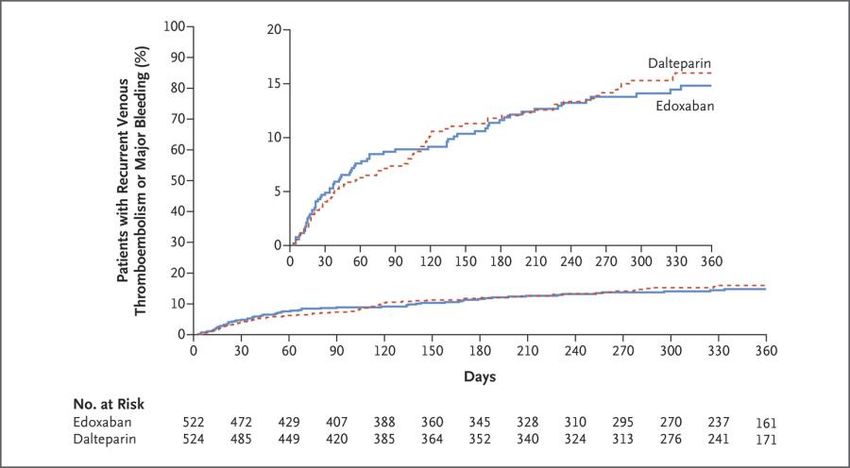
PREAMBULE
 Patient avec thrombose et cancer
 Raisons de la vulnérabilité

  •   Patients avec thrombose et cancer : Caractéristiques

  •   Patients avec thrombose et cancer : Fragilité, vulnérabilité
           Récidives et hémorragies sous traitement anticoagulant

  •   Patients avec thrombose et cancer
           Médicaments

  •   Patients avec thrombose et cancer : vulnérabilité
           Enjeu pour l’oncologue
           Besoin d’une collaboration oncologue/spécialiste thrombose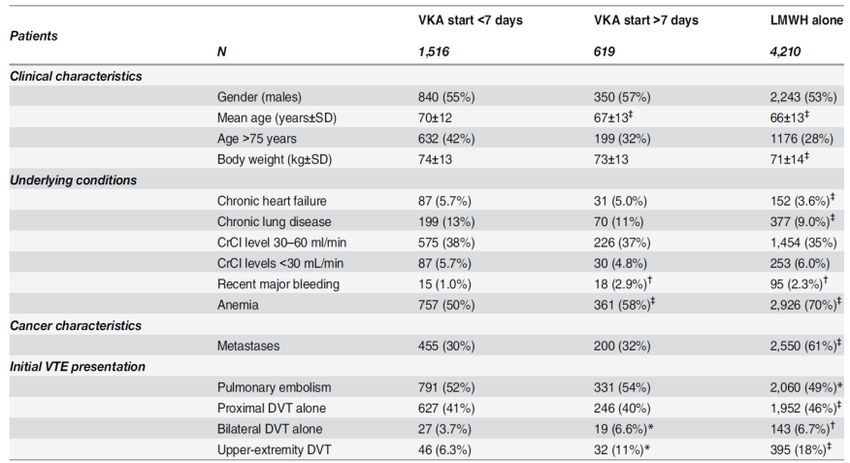
Patients avec thrombose et cancer
           Les essais thérapeutiques

                                       Lee A, et al. NEJM 2003
Copyrights apply
                                       Lee A, et al. JAMA 2015
Patients avec thrombose et cancer:
        RIETE Registry

Copyrights apply
                         Mahé I, Sterpu R, Bertoletti L, et al. Plos One 2015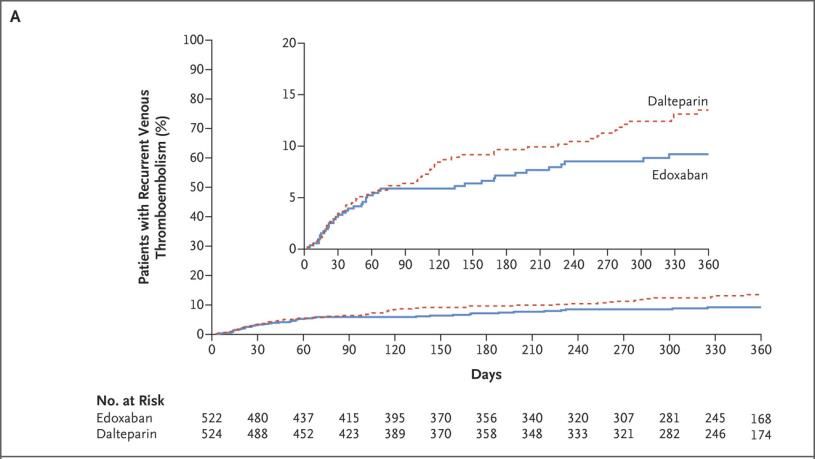
Cancer et IR: association fréquente
   n      Renal Insufficiency and Anticancer Medications (IRMA) study group (4684 pts)
            ¨      RI in 50–60 % of patients with solid tumours, whereas SCR were normal in most patients
            ¨      Of the 7181 prescriptions : 80% received potentially nephrotoxic drugs
            ¨      Nephrotoxicity of chemotherapeutic agents tends to increase with decreasing renal function

Copyrights apply
                                                                            Launay Vacher V, et al. Cancer 2007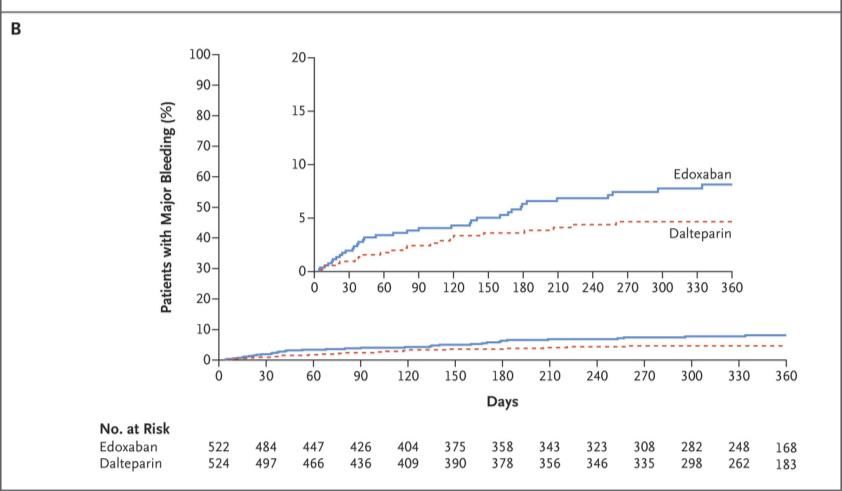
The CLOT Study

                               Lee A. et al. N Engl J Med 2003; 349: 146-153
                 AFMP SORRENTE 2018
CATCH. Récidives thromboemboliques
                                    14
                                                                   HR 0.65 (95% CI 0.41–1.03) p = 0.07
                                    12
 Probability of recurrent VTE (%)

                                    10       warfarin, n = 450: 10.5% (TTR 47%)

                                     8

                                     6
                                                                          tinzaparin, n = 450: 7.2%
                                     4

                                     2

                                     0
                                         0         30       60        90      120        150       180
                                                            Days post-randomization
                                                                            Lee A. et al. JAMA 2015; 314: 677-86
HBPM vs AVK après CATCH: efficacité

                       Posh F. et al. Thromb Res 2015;136: 582-89.
HBPM vs AVK après CATCH: sécurité
Posh F. et al. Thromb Res 2015;136: 582-89.Les médecins ne suivent pas les recommandations
VKA
Imberti (Italy); n = 424 64%
Gussoni (RIETE) n = 5483 32%
Spirk (Switzeland) n = 315 51%
Belhadj Chaidi (France) n = 145 23%
Kleinjan (International)* n = 141 18%
* Survey on 141 doctors Imberti D. et al. Haematologica 2008 ; 93: 273-278.
Gussoni G. et al. Thromb Res 2013; 131: 24-30
Spirk D. et al. Thromb Haemost 2011; 105: 962–967
Belhadj Chaidi et al. J Mal Vasc 2013; 38: 185-92
Kleinjan A. et al. Thromb Haemost 2013 August 15Problèmes liés au traitement prolongé par HBPM • Injections • Plaquettes • Coût: 8.60 euros to 16.90 euros • Infirmière • Hématomes • Récidives: 7% • Hémorragies: 3-7%
Patients atteints de cancer dans les essais de
phase III AOD

             Essai         HBPM-AVK                AOD
       Einstein (DVT-PE)       198                  232
       RECOVER-I-II            107                  114
       Amplify                 77                    66
       Hokusai                 99                   100

                                 Prins M. et al. Thromb Journal 2013; 11: 21
                                  Schulman S. et al. Circulation 2013; Dec 16
                            Agnelli G. et al. N Engl J Med 2013; 369:799-808
                             Buller H. et al. N Engl J Med 2013; 369:1406-15
AOD MTEV et cancer : méta-analyse
Rec ETE AOD enox/AVK RR [CI95%]
EINSTEIN 6/232 8/198 0.64 [0.23 ; 1.81]
HOKUSAI 4/109 7/99 0.52 [0.16 ; 1.72]
RECOVER 10/173 12/102 0.78 [0.35 ; 1.76]
AMPLIFY 3/81 5/78 0.58 [0.14 ; 2.34]
total 25/595 32/537 0.66 [0.39 ; 1.11]
0.1 1.0 10
Hgie majeure AOD enox/VKA
EINSTEIN 6/232 8/196 0.63 [0.22 ; 1.79]
HOKUSAI 5/109 3/99 1.51 [0.37 ; 6.17]
RECOVER 6/159 7/152 0.82 [0.28 ; 2.36]
AMPLIFY 2/87 4/80 0.46 [0.09 ; 2.44]
total 19/587 22/527 0.78 [0.42 ; 1.44]
0.1 1.0 10
Carrier M. et al. Thromb Res 2014;134:1214-9.Einstein, Hokusai, Amplify CLOT, CATCH
Einstein Hokusai Amplify CLOT CATCH
(n = 655) (n = 208) (n = 169 ) (n = 672) (n = 900)
Cancer
récidivant ou 22% 20.7% Approx 1/3 67.3% 54.7%
métastatique
TT
13%* 30.8% NA 77.7%** 42.4%***
anticancéreux
% INR 2-3 57%-59% 63%% 57.5% 46% 47%
*: chimiothérapie,
**: tous traitements,
***: traitement systémique(chimio thérapeutique ciblée ou hormonothérapie)
Lee A. et al. N Engl J Med 2003; 349: 146-153
Prins M H. et al. Lancet Haematol. 2014; 1: e37–46
Lee A. et al. JAMA 2015; 314: 677-86
Agnelli G. et al. J Thromb Haemost 2015; 13: 2187–91AOD vs HBPM: HOKUSAI CANCER
Prospective, randomised, open-label, multicentre study comparing dalteparin
with LMWH-edoxaban for 12 months
Treatment period > 6 months*
Study period: 12 months
LMWH-edoxaban (n = 500)
Patients with symptomatic N=1000
LMWH 5 days followed by edoxaban
or incidental proximal DVT 60 mg OD**
or PE and active cancer or R
previous cancer within 2
years dalteparin (n = 500)
200 IU/kg daily for 1 month,
followed by 150 IU/kg
Primary outcome: Recurrent VTE (symptomatic VTE, incidental VTE or death
due to PE) or Major bleeding
* Intention is to treat patients for 12 months with the study treatment, but continuation of anticoagulation beyond six months will be based on
the risk-benefit assessment of the treating physician and/or the patient preference
**Dose adjustment to 30 mg od in patients with body weight ≤ 60 kg, creatinin clearance between 30 and 50 ml/min or concomitant use of P-
glycoprotein inhibitors
Van Es N. et al. Thromb Haemost 2015; 114: 1268-76AOD vs HBPM: HOKUSAI CANCER
Edoxaban Dalteparin
N = 522 N = 524
Age 64.3±11.0 63.7±11.7
Pulmonary Embolism 328 (62.8) 329 (62.8)
Active cancer 513 (98.3) 511 (97.5)
Metastasis 274 (52.5) 280 (53.4)
ECOG 2 123 (23.6) 124 (23.7)
Raskob, GE. et al. N Engl J Med 2018; 378:615-624AOD vs HBPM: HOKUSAI CANCER
Raskob, GE. et al. N Engl J Med 2018; 378:615-624AOD vs HBPM: HOKUSAI CANCER
Raskob, GE. et al. N Engl J Med 2018; 378:615-624AOD vs HBPM: HOKUSAI CANCER
Edoxaban Dalteparin Hazard Ratio
N = 522 N = 524
Recurrent DVT 19 (3.6) 35 (6.7) 0.56 (0.32–0.97)
Recurrent PE 27 (5.2) 28 (5.3) 1.00 (0.59–1.69)
Major bleeding 36 (6.9) 21 (4.0) 1.77 (1.03–3.04)
CRNMB 76 (14.6) 58 (11.1) 1.38 (0.98–1.94)
Mortality 206 (39.5) 192 (36.6) 1.12 (0.92–1.37)
Raskob, GE. et al. N Engl J Med 2018; 378:615-624AOD vs HBPM: HOKUSAI CANCER
Quelques éléments supplémentaires
• Durée de traitement plus longue avec l’edoxaban (211 vs 184 j)
• Première cause d’arrêt (apres le déces): inconvénient du mode d’administration
(dalteparine > edoxaban)
• La différence dans le taux de saignement majeur est liée aux saignements digestifs
• La différence dans le taux de saignements est marquée dans les cancers digestifs
Raskob, GE. et al. N Engl J Med 2018; 378:615-624AOD vs HBPM: HOKUSAI CANCER
Données à six mois
Edoxaban Dalteparine Hazard Ratio
Composite 10.5 10.7 1.01 (0.69-1.46)
Récidives TE 6.5 8.8 0.75 (0.48-1.17)
Saignements 5.6 3.2 1.74 (0.95-3.18)
majeurs
Saignements 15.9 10.7 1.54 (1.10-2.16)
majeurs et
cliniquement
significatifs
Raskob, GE. et al. N Engl J Med 2018; 378:615-624select-d (IIR): Study Design
• Rationale: To assess the efficacy and safety of rivaroxaban versus dalteparin for the treatment
of VTE in patients with cancer
Rivaroxaban
Rivaroxaban* PE index event or
N~530 RVT positive before R
Follow-up
Cancer patients 6 months N~300
with
R Placebo
symptomatic
DVT and/or PE RVT negative before
6 months N~130
Dalteparin# No treatment
6 months 12 months
Short design: Prospective, randomized, Indication: VTE treatment in patients FPFV: Q4-13
open-label, multicentre pilot phase III study with cancer LPLV: Q2-17
*15 mg bid for 21 days followed by 20 mg od; for patients with CrCl 30–49 ml/min dosing recommendations as in rivaroxaban SmPC; #200 IU/kg od for the first 30 days of treatment followed by 150
IU/kg od
Young A et al, Thromb Res 2016;140 Suppl 1:S172–173: Abstract OC-11; EudraCT number: 2012-005589-37; Bach M et al, Thromb Haemost 2016;116:S24–S32select-d (IIR)
Données à six mois
Rivaroxaban Dalteparine Hazard Ratio
Composite 10 15 1.01 (0.69-1.46)
Récidives TE 4 11 0.75 (0.48-1.17)
Saignements majeurs 6 4 1.74 (0.95-3.18)
Saignements non 13 4 1.54 (1.10-2.16)
majeurs et
cliniquement
significatifs (GI)
Young A. et al. J Clin Oncol May 10, 2018select-d (IIR)
• Etude pilote
• Plus grande efficacité du rivaroxaban
• Evenements adjudiqués secondairement
• Taux élevé de récidive sous dalteparine (11%)
• Augmentation non-significative des hémorragies
majeures
• Augmentation significative des hémorragies
majeures et cliniquement significatives
Young A. et al. J Clin Oncol May 10, 2018CARAVAGGIO− Study Design
• Prospective, randomized, open-label, multicentre pilot study comparing dalteparin with
apixaban for 6 months
Treatment period 6 months
Apixaban
N~1170
Patients with symptomatic or 10 mg bid for 1 weeks followed by
unsuspected proximal DVT or PE R 5 mg bid for 6 months
and cancer
Dalteparin
200 IU/kg daily for 1 month,
followed by 150 IU/kg for 5 months*
• Primary outcome: objectively confirmed recurrent VTE occurring during the study period,
defined as the composite of: proximal DVT of the lower limbs (symptomatic or unsuspected),
DVT of the upper limb (symptomatic), PE (symptomatic or unsuspected)
https://clinicaltrials.gov/ct2/show/NCT03045406 [accessed 27 June 20]Recommandations
Tt Alternative Grade
préférence
Cancer sans IR HBPM AOD 2C
Cancer avec IR HNF HBPM / anti 2B
Xa
Cancer sans IR HBPM AVK 2B
Durée
Cancer sans IR au long AOD
cours
Si saignement GI AVK ApixabanConclusion (?) • Les premiers essais semblent indiquer un profil des AOD différent de celui des HBPM: meilleure efficacité (?) mais risque de saignement accru • Vraisemblablement pas pour les cancers digestifs • Vers une personnalisation du traitement en fonction du risque hémorragique et du risque de récidive? (mais manque d’outils) • Attention, les données ne sont peut-être pas généralisables à tous les AOD
Vous pouvez aussi lire


