IB COURSE DESCRIPTIONS 2023-2025 - Le Rosey
←
→
Transcription du contenu de la page
Si votre navigateur ne rend pas la page correctement, lisez s'il vous plaît le contenu de la page ci-dessous
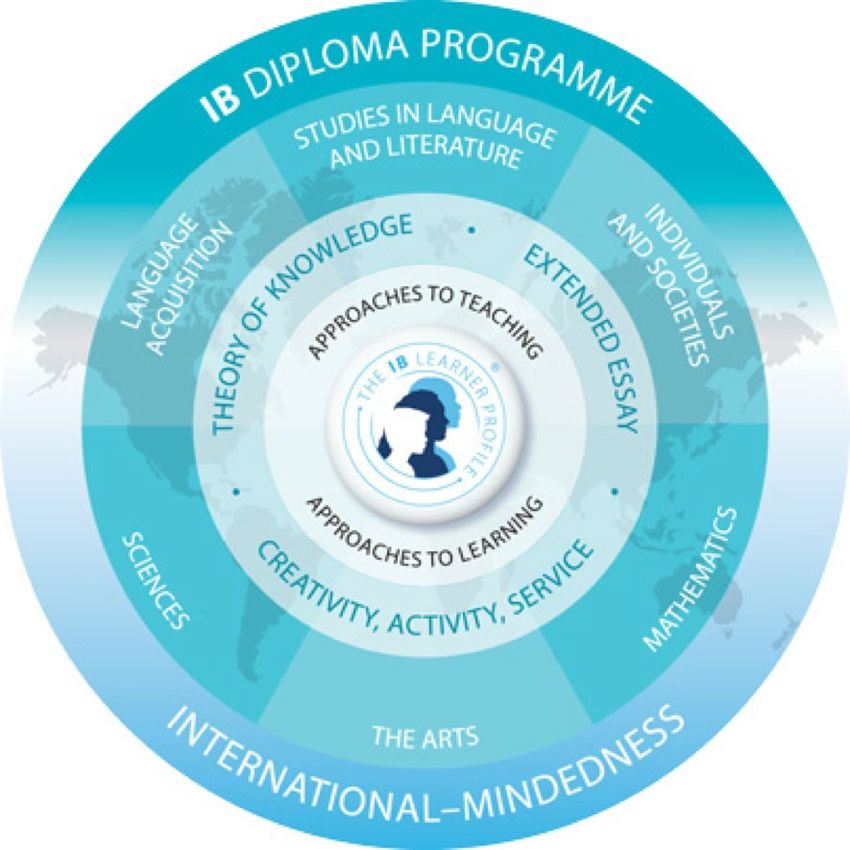
IB COURSE DESCRIPTIONS
2023-2025
THE IB STRUCTURE

Le Rosey • IB Course descriptions 2023-2025          2
IB Courses 2023-2025
SUMMARY
LANGUAGES Page
Language A: Literature / Littérature 4-5
Language A: Language & Literature / Langue A : Langue et Littérature 6-7
Language B / Langue B 8-9
Languages ab initio (SL) French 10
HUMANITIES
Global Politics 11
Geography 12
Economics 13
History / Histoire 14-15
SCIENCES
Biology / Biologie 16-17
Chemistry 18
Physics 19
Environmental Systems & Societies 20
Computer Science 21
MATHEMATICS
Mathematics / Mathématiques 22-23
THEORY OF KNOWLEDGE / THÉORIE DE LA CONNAISSANCE 24-25
ARTS
Visual Arts 26
Theatre 27
Music 28
CREATIVITY, ACTIVITY, SERVICE (CAS) 29
version Feb.24
Le Rosey • IB Course descriptions 2023-2025 3
Language A: Literature
Everyone is required to take Language A: Literature, either at Standard or Higher level, in their mother
tongue. Some students may choose to take this course in more than one language.

      Literature is concerned with our conception, interpretation and experience of the world, and we study
novels, plays, poems and non-fiction to explore how they can represent the complex pursuits, anxieties, joys
and fears to which human beings are exposed in their daily lives.

       Writing is one of the more enduring fields of human creativity, and this course encourages you to
engage in independent, original, critical and clear thinking. It also promotes respect for the imagination and a
critical approach to the understanding and interpretation of literary works.

Syllabus outline
Students will make comparisons and connections between texts, and the ways various literary forms and the
conventions of genres explore ideas.

We will also consider the relationship between a text, its author and its readership; crucially, we will
discover how literary works generate meaning, and how literature relates to the real world. We will consider
perspectives from the personal to the global, and how the cultural context of literature is tied to its meaning.

Texts
At Higher Level, thirteen works will be studied, containing all four genres (poetry, drama, fiction and non-
fiction). Three historical periods, four regions and two continents will be represented. At Standard Level, nine
works will be studied, containing three of the four genres, and representing three periods, three regions and
two continents.

Assessment outline
                                              Component                                                      Weighting
  External assessment                         Paper 1 Guided literary analysis                               35%
                                                                                                             SL: 1 hour 15 minutes
                                              Write an analysis of one text at SL; 2 texts at HL.            HL: 2 hours 15 mins

                                              Paper 2 Comparative essay (SL & HL – 30 marks)                 SL: 35%
                                              Respond to one question, based on two of the works studied.    HL: 25%
                                                                                                             1 hour 45 minutes

                                              Higher Level Essay (HL only – 20 marks) 1200-1500 words
                                                                                                             HL : 20%
                                              Coursework, based on one literary work.
  Internal assessment                         Individual oral
                                              Individual Oral A fifteen-minute oral response, based on       SL: 30%
                                              two extracts from works already studied (one of which is       HL: 20%
                                              translated) to the prompt: “Examine the ways in which the
                                                                                                             15 minutes
                                              global issue of your choice is presented through the content
                                              and form of two of the works that you have studied.”

The Learner Portfolio
This is an individual collection of student work compiled during the course, and is a mandatory and central
element of Language A: Literature. Although it is not assessed, it is a basis for assessment, a collection of
evidence of the student’s work, and a space to explore and reflect on the studied texts and the student’s
responses to them.

Le Rosey • IB Course descriptions 2023-2025                              4
Langue A : Littérature
Les élèves doivent choisir le cours Langue A : Littérature, au niveau moyen (NM) ou au niveau supérieur
(NS) dans leur langue maternelle. Certains élèves pourraient être amenés à choisir ce cours dans deux
langues.

La littérature renvoie et interroge notre vision, notre expérience du monde et dans le cadre de ce cours
nous étudierons des romans, pièces, poèmes et essais susceptibles d’interroger les quêtes et recherches
complexes, les angoisses, les joies, les peurs auxquelles nous sommes exposés dans notre quotidien.

L’écriture est l’une des expressions de la créativité humaine, et ce cours vous encourage les élèves à s’engager
dans une réflexion indépendante, originale et critique. Elle encourage également le respect de l’imagination
et une approche critique des œuvres littéraires.

Aperçu du programme
Les élèves établiront des comparaisons et des liens entre les textes. Ils examineront également la façon
dont les différentes formes littéraires et conventions de genres explorent les idées. Nous nous intéresserons
également à la relation entre un texte, son auteur et son lectorat ; et finalement nous nous interrogerons
sur la manière dont les œuvres littéraires génèrent du sens en étroite relation avec le monde réel. Nous
adopterons des perspectives allant du personnel au global et verrons combien le contexte culturel influence
voire détermine la signification d’une œuvre.

Textes
Au niveau supérieur, treize œuvres seront étudiées (poésie, théâtre, roman, essai). Le programme devra
couvrir trois périodes historiques, 4 régions et 2 continents.
Au niveau moyen, neuf œuvres seront étudiées, réparties à travers les quatre genres, représentant trois
périodes historiques et deux continents.

Aperçu de l’évaluation
                                              Contenu                                                          Pondération
  Évaluation Externe                          Papier 1 : Analyse littéraire                                    35%
                                                                                                               NM : 1heure 15 minutes
                                              Écrire l’analyse d’1 texte (MN) de 2 textes (NS).                NS : 2heures 15 minutes

                                              Papier 2 : Essai comparatif (NM et NS- 30 points)                NM : 35%
                                              Essai basé sur 2 œuvres au programme.                            NS : 25%
                                                                                                               1heures 45 minutes

                                              Essai en temps illimité (NS : 20 points) 1200-1500 mots.
                                                                                                               NS : 20%
                                              Essai basé sur une œuvre au programme.
  Évaluation Interne                          Oral individuel                                                  NM : 30%
                                              Oral de 15 minutes basé sur 2 extraits de 2 œuvres différentes   NS : 20%
                                              afin d’analyser la manière dont une question globale choisie
                                                                                                               15 minutes
                                              par le candidat est traitée.

Le carnet personnel ou portfolio de l’élève
Il constitue une collection individuelle de travaux produits tout au long du cours. Obligatoire, il constitue un
élément central du cours de Langue A. Bien qu’il ne soit pas évalué, il représente une collection de tâches
écrites de l’élève, un espace pour explorer, approfondir et interroger les œuvres étudiées.

Le Rosey • IB Course descriptions 2023-2025                              5
Language A:
Language & Literature
Language A: Language & Literature can be taken at Standard or Higher Level by students at near-native
level whose Language A: Literature course is in another language.

Language A: Language & Literature comprises the study of a range of texts and text-types, literary and
otherwise, in various media. It involves the close study of language itself as well as the ways whereby it
defines culture and identity, and is defined by them. Diverse approaches will be taken: literary theory,
sociolinguistics, media studies and the analysis of critical discourse, to name a few.

Students study a range of non-literary texts, plus four or six literary works, at SL and HL respectively. Time
spent teaching and learning at each level are in a similar ratio. In line with the international flavour of the IB,
these texts are drawn not only from the target language but promote understanding of a range of cultures by
including some in translation.

The course offers interesting possibilities to help complete the CAS programme: through learning about
characters in such a range of texts, students can enhance their aptitude for empathy for real people, thus
helping them to plan and reflect on the experiences and effects of their projects. The TOK course encourages
IB students to reflect on their general learning, and the ways whereby knowledge is constructed, and the
Language & Literature course similarly encourages them to think about the nature of human experience and
the ways that one’s personal vision is created and conveyed to others.

  Section                                     Assessment Component                                             Weighting
  External assessment                         Paper 1
                                              One guided analysis (SL – 20 marks, HL – 40 marks)               35%
                                                                                                               SL: 1 hour 15 minutes
                                              Choose one non-literary text at SL; write about 2 texts at HL.   HL: 2 hours 15 mins

                                              Paper 2
                                              Comparative essay (SL & HL – 20 marks)                           SL: 35%
                                              Respond to one question chosen from 4 topics, based on two       HL: 25%
                                                                                                               1 hour 45 minutes
                                              of the works studied.
                                              Higher Level Essay (HL only – 20 marks) 1200-1500 words
                                                                                                               HL : 20%
                                              Based on a collection of texts, or one literary work.
  Internal assessment                         Individual oral
                                                                                                               SL: 30%
                                              SL and HL : Referring to extracts from one literary and one
                                              non-literary work, explore the global issue of your choice (40   HL: 20%
                                                                                                               15 minutes
                                              marks).

Le Rosey • IB Course descriptions 2023-2025                             6
Langue A : Langue et Littérature
Le cours de Langue A : Langue et Littérature, au niveau moyen (NM) ou niveau supérieur (NS) peut être
choisi par des élèves de langue maternelle ou proches d’un niveau langue maternelle qui étudieraient
Langue A : Littérature dans une autre langue.

Ce cours repose sur l’étude d’un large éventail de textes littéraires et non littéraires. L’objectif est à la fois
de montrer à travers l’étude approfondie de ces textes combien la langue définit la culture et l’identité, et
combien l’identité et la culture sont définies par la langue. Divers approches seront adoptées : la théorie
littéraire, la sociolinguistique, l’étude des médias et l’analyse du discours critique, pour n’en citer que
quelques-unes.

Les élèves étudient une série de textes non littéraires, plus quatre (NM) ou six œuvres littéraires (NS).
Conformément à la dimension internationale de l’IB, ces textes sont non seulement tirés de la langue cible
mais favorisent aussi la compréhension d’autres cultures à travers des traductions.

Le cours offre des possibilités intéressantes pour aider à compléter le programme CAS : en apprenant à
travers une telle gamme de textes, de variétés de situations dans différents contextes culturels, les élèves
peuvent renforcer leur aptitude à l’empathie les aidant ainsi à planifier et à réfléchir sur les expériences
menées et sur les effets de leurs projets.

Le cours Théorie de la connaissance encourage, les élèves de l’IB à réfléchir sur leur processus d’apprentis-
sage et sur les façons dont les connaissances sont construites. De la même manière, le cours de langue et de
littérature les encourage à réfléchir sur la nature de l’expérience humaine et la manière dont sa vision
personnelle est créée et transmise aux autres.

  Section                                     Contenu                                                         Pondération
  Évaluation Externe                          Papier 1 : analyse littéraire                                   35%
                                              (NM : 20 points – NS : 40 points) Ecrire l’analyse d’un texte   NM : 1heure 15 minutes
                                              non-littéraire (MN) de deux textes (NS).                        NS : 2heures 15 minutes

                                              Papier 2 : Essai comparatif                                     NM : 35%
                                              (NM et NS- 30 points)                                           NS : 25%
                                              Essai basé sur 2 œuvres au programme.                           1heures 45 minutes

                                              Essai en Niveau Supérieur (Seulement NS : 20 points)
                                              1200-1500 mots) Essai basé sur un ensemble de textes ou sur     NS : 20%
                                              une œuvre au programme.
  Évaluation Interne                          Individual oral
                                                                                                              NM : 30%
                                              Oral de 15 minutes basé sur deux extraits de deux œuvres
                                              différentes afin d’analyser la manière dont une question        NS : 20%
                                                                                                              15 minutes
                                              globale choisie par le candidat est traitée.

Le carnet personnel ou portfolio de l’élève
Il constitue une collection individuelle de travaux produits tout au long du cours. Obligatoire, il constitue un
élément central du cours de Langue A. Bien qu’il ne soit pas évalué, il représente une collection de tâches
écrites de l’élève, un espace pour explorer, approfondir et interroger les œuvres étudiées.

Le Rosey • IB Course descriptions 2023-2025                              7
Language B
Everyone is required to take a subject in group 2: Language B, either at Standard or Higher level, (or
language ab initio, offered only at Standard level) in a foreign language. Some students may choose to take
this course in more than one language.
Group 2 consists of two modern language courses—Language ab initio and Language B—that are offered
in a number of languages. Language ab initio and language B are language acquisition courses designed to
provide students with the necessary skills and intercultural understanding to enable them to communicate
successfully in an environment where the language studied is spoken.
The degree to which students are already competent in the language and the degree of proficiency they
wish to attain by the end of the period of study are the most important factors in identifying the appropriate
course.
Language B is an additional language-learning course designed for students with some previous learning of
that language. In the language B course, students develop the ability to communicate in the target language
through the study of language, themes and texts. In doing so, they also develop conceptual understandings
of how language works.
All language acquisition courses will provide the opportunity to engage with a broad range of texts, stimuli
and scenarios that address topics of personal, local or national and global significance. Five prescribed
themes are common to the syllabuses of language B and language ab initio. The five prescribed themes are:
identities, experiences, human ingenuity, social organization and sharing the planet. In addition, the study of
two literary works is required at HL.
Programme of study:
Section Skills Assessment
Productive skills – writing (30 marks) Paper 1
One writing task of 250–400 words (SL) or 450–600 words (HL) 25%
from a choice of three, each from a different theme, choosing a SL: 1 hour 15
text type from among those listed in the examination instructions. minutes
HL: 1 hour and 30
minutes
External assessment
Receptive skills – separate sections for listening and reading (65
SL: 3 hours marks)
Paper 2
HL: 3 hours and 30 minutes Listening comprehension (SL: 45 minutes, HL: 1 hour) 50%
(25 marks)
SL: 1 hour 45
Reading comprehension (1 hour) (40 marks) minutes
HL: 2 hours
Comprehension exercises on three audio passages and three
written texts, drawn from all five themes.
Internal assessment Individual oral assessment
Oral 25%
This component is internally SL: a conversation with the teacher, based on a visual stimulus, SL: 12-15 minutes
assessed by the teacher and followed by discussion based on an additional theme. (30 marks) (plus 15 minutes for
externally moderated by the preparation)
IB at the end of the course. HL: a conversation with the teacher, based on an extract from one HL: 12-15 minutes
of the literary works studied in class, followed by discussion based (plus 20 minutes for
preparation)
on one or more of the themes from the syllabus. (30 marks)
Le Rosey • IB Course descriptions 2023-2025 8Langue B
Tous les élèves doivent choisir une matière du groupe 2 : soit une langue B, au niveau moyen ou supérieur,
soit une langue ab initio (seulement au niveau moyen). Il est possible de choisir ce cours en plusieurs
langues.
Le cours de langue B s’adresse aux élèves qui ont une connaissance préalable de la langue cible. En apprenant
une langue, les élèves découvrent la ou les cultures qui y sont associées. L’objectif de ce cours est l’acquisition
de la langue et le développement de la compréhension interculturelle. Le programme du cours de langue
B aborde l’apprentissage de la langue à travers le sens et développe la sensibilité internationale à travers
l’étude de langues, de cultures, d’idées et de problèmes d’importance mondiale. Les élèves acquièrent les
compétences nécessaires pour atteindre les objectifs d’évaluation du cours de langue B, tout en développant
leurs compétences réceptives, productives et interactives. La connaissance du vocabulaire et de la grammaire
– la nature de la langue – est approfondie et élargie grâce à la compréhension de la raison d’être et du
fonctionnement de cette même langue : le destinataire, le contexte, le but et le sens.
Le niveau moyen et le niveau supérieur se différencient par le nombre d’heures d’enseignement
recommandé, la couverture plus ou moins approfondie du programme, l’étude de la littérature au niveau
supérieur, le niveau de difficulté et les exigences de l’évaluation et des critères d’évaluation.
Cinq thèmes prescrits sont communs aux programmes de langue B et de langue ab initio. Ces thèmes
permettent aussi aux élèves de communiquer sur des questions ayant un intérêt au niveau personnel, local,
national ou mondial. Les cinq thèmes prescrits sont les suivants : identités, expériences, ingéniosité humaine,
organisation sociale et partage de la planète. De plus, les élèves doivent lire deux œuvres littéraires au
niveau supérieur.
Programme d’étude :
Section Compétences Evaluation
Évaluation externe Compétences productives : Expression écrite (30 points) Épreuve 1
25%
NM : 3 heures Une tâche d’expression écrite de 250 à 400 mots (NM) ou 450 à
600 mots (NS), au choix parmi trois possibilités, chacune reflétant NM : 1 heure et 45
minutes
NS : 3 heures et 30 minutes un thème différent, et demandant de choisir un type de texte dans NS : 1 heure et 30
la liste fournie dans les instructions de l’examen. minutes
Compétences réceptives : Compréhension orale et écrite en deux
sections distinctes (65 points) Épreuve 2
- Compréhension orale (NM : 45 minutes, NS : 1 heure) (25 points)
50%
- Compréhension écrite (1 heure) (40 points) NM : 1 heure et 45
minutes
Exercices de compréhension sur trois extraits audio et trois textes NS : 2 heures
écrits, portant sur l’ensemble des cinq thèmes du cours.
Évaluation interne Examen oral individuel
Oral 25%
Cette composante est évaluée NM : Conversation avec l’enseignant, reposant sur un stimulus
NM : 12–15
en interne par l’enseignant visuel, suivie d’une discussion abordant un autre thème du cours. minutes (avec
puis révisée en externe par (30 points) 15 minutes de
l’IB à la fin du programme. préparation)
NS : Conversation avec l’enseignant, reposant sur un extrait de NS : 12–15
l’une des œuvres littéraires étudiées en classe, suivie d’une minutes (avec
20 minutes de
discussion abordant un ou plusieurs thèmes du programme. (30 préparation)
points)
Le Rosey • IB Course descriptions 2023-2025 9Languages ab initio (SL) French
Why study French ab initio?
Group 2 consists of two modern language courses—language ab initio and language B—that are offered.
The language ab initio course is a language acquisition course for students with little or no experience
of the language. The course is organized into five themes: identities, experiences, human ingenuity,
social organization, sharing the planet. Each theme comprises a list of topics that provide students with
opportunities to practice and explore the language and to develop intercultural understanding. Through
the development of receptive, productive and interactive skills, students develop the ability to respond and
interact appropriately in a defined range of everyday situations.
Assessment for IB ab initio
Key features of the curriculum and
assessment Standard
Level
• Only available at standard level (SL).
External Assessment 75%
• Interactive, productive and receptive skills are
developed through contextualized study of
language, texts and themes. Paper 1 :
25%
Writing
• Intercultural understanding is a key goal of the
course. Paper 2 :
Reading and listening 50%
• S tudents are exposed to a variety of authentic comprehension
texts and they produce work in a variety of
Internal Assessment
communicative contexts. 25%
Individual Oral
• E xternal assessment consists of exercises to
demonstrate understanding of authentic print
texts (receptive skills, reading and listening),
short writing exercises (productive skills).
• Internal assessment tests students’ abilities in
listening and speaking in a genuine conversation
format (integrating receptive, productive and
interactive skills).
Le Rosey • IB Course descriptions 2023-2025 10Global Politics
Why study Global Politics?
The Global Politics course examines political concepts such as power, conflict, peace, and human rights, using
a combination of theory and case studies. The basic aim is for you to gain an understanding of how the world
works politically. Why do conflicts occur? How can we resolve conflicts? Is might always right or can we build
a global society based on the rule of law?
Once, only future world leaders and diplomats studied International Relations, but Global Politics is no longer
a remote discipline that educated men and women can afford to ignore. Students develop oral and written
communication, analytical and individual research skills, providing an excellent foundation for the world’s
most prestigious universities, and careers such as journalism, politics and law.
The course comprises:
Standard Level (Papers 1 and 2) Resources
• Power, Sovereignty and International Relations • Andrew Heywood, Global Politics
• Human Rights • Craig Foreman et al, Global Politics
• Development • Baylis, Smith and Owens, The Globalization
• Peace and Conflict of World Politics
• Murphy, Jefferies and Gadsby, Global
Higher Level (Paper 3) Politics
Students explore key global political challenges through
case studies in two of the following six topics:
• The environment and sustainability
• Poverty
• Health and disease
• Culture and identity
• Migration
• International security
Recommended reading
• Immanuel Kant, Perpetual Peace and other essays
• Lenin, V.I, Imperialism
• Jack Snyder, One World, Rival Theories
• Thucydides, The Peloponnesian War
• Francis Fukuyama, The End of History
•M ichael Doyle, Liberalism and World Politics
• J ohn Mearsheimer, The Tragedy of Great Power Politics
• Hans Morgenthau, Politics Among Nations
• Hedley Bull, The Anarchical Society
• S amuel Huntington, The Clash of Civilizations?
•H enry Kissinger, Does America Need a Foreign Policy?
•B en Valentino, Final Solutions: Mass Killings and Genocide in
the 20th Century
• Amartya Sen, Universal Truths
Le Rosey • IB Course descriptions 2023-2025 11Geography
Why study Geography?
IB Geography is an extremely important and dynamic subject in our modern globalized world where there
are many pressures upon different cultures and resources. Geography allows us to view contemporary issues
from a range of perspectives and economic circumstances and this is very valuable for working in many
different career paths as a global citizen. Geography deals with many of the world’s social, economic and
environmental problems and attempts to finds solutions. A variety of management schemes and policies at
different scales in the natural and human environment are evaluated. This develops skills in planning and
management, oral and written communication and analysis of data. IB Geography is a diverse subject with
many cross-curricular links and provides a firm base for life-long learning.
Standard Level and Higher Level Option (Paper 1) Assessment for IB Geography
• Freshwater. Standard Higher
• Geophysical hazards or Food and health. Level Level
• Leisure, tourism and sport.
Internal
‘Arguably the most important resource into the 25% 20%
Assessment
21st Century. How do we manage water resources
sustainably?’ Paper 1:
35% 35%
1 hour 30
1 hour 30 2 hours 15
Standard Level and Higher-Level Core (Paper 2) Paper 2:
40% 25%
•G lobal population - change, challenges and
opportunities. Paper 3:
- 20%
• Global climate – vulnerability and resilience. 1 hour
• Global resource consumption and security.
‘More and more people are moving around the world
but this movement increasingly seems to be forced, in Wider reading:
the form of political and environmental refugees and 10 books to find in the school library.
trafficked people.’
• Why Geography matters more than ever – Harm
de Bilj - 2012
Higher Level Extension (Paper 3) • Violent borders: Refugees and the right to move
• Power, place and network – Reece Jones - 2017
• Human development and diversity • Prisoners of Geography – Tim Marshall - 2016
• Global risks and resilience • Power of Geography – Tim Marshall - 2021
• Underland – Robert MacFarlane - 2020
Who lives in the global core and • Rivers of Power – Lawrence C. Smith - 2021
who lives in the global periphery and how are their lives • Let there be water – Seth M. Siegel - 2017
changing due to global interactions?’ • Full Circle – Ellen Mac Arthur - 2010
• High – Erika Fatland - 2023
• This changes everything – Naomi Klein - 2015
Internal Assessment - Standard Level and Higher
Level Magazines
2400-word data analysis from fieldwork data • The Guardian Weekly
‘How and why does a river change from source to • Geographical
mouth and does it fit the textbook models?’ • New Internationalist.
Le Rosey • IB Course descriptions 2023-2025 12Economics
Why study Economics?
Economics provides a fascinating insight into some of the most important forces that shape the modern
world. Economics is a dynamic social science that relates to every aspect of our lives. It is concerned with
the world around us - it’s about how we behave, how businesses behave and how the government behaves.
Economics is about choice and the impact of our choices on each other. The economic way of thinking can
help us make better choices. Economics is an intellectually demanding subject that requires and develops a
wide range of skills.
The course comprises: Assessment for IB Economics
Standard Higher
Unit 1: Introduction Level Level
•W
hat is Economics? How do Economists
approach the world? Internal
30% 20%
Assessment
How do consumers and producers make choices
Paper 1:
in trying to meet their economic objectives? 30% 20%
1hr 15 mins
Unit 2: Microeconomics Paper 2:
40% 30%
•C
ompetitive markets: demand and supply, 1hr 45 mins
Elasticity, Government intervention, Market
Failure, Economics of the Environment Paper 3:
- 30%
1hr 45 mins
When are markets unable to satisfy important
economic objectives —and does government
intervention help?
Academic Resources
Unit 3: Macroeconomics • Blink and Dorton, Economics Course Com-
•M
easuring Economic Activity, Aggregate panion, Oxford, 2011
Demand and Aggregate Supply, • Tragakes, Economics for the IB Diploma,
Macroeconomic objectives, Fiscal and Cambridge, 2009
monetary policy, Supply-side policies
Recommended reading
How do governments manage their economy • Robert Frank, Why Economics explains
and how effective are their policies? almost Everything
• Levitt & Dubner, Freakonomics
Unit 4: The Global Economy • Diane Coyle, The Economics of Enough
• International Trade & Protectionism, • Edmund Conway, 50 Economic Ideas
Exchange rates, Balance of Payments, • Tim Harford, The Undercover Economist
Economic Integration, Economic • John Kay, The Truth about Markets
development, Sustainable development, • E.F Schumacher, Small is Beautiful
Barriers to development • Jeffrey Sachs, The End of Poverty
Who are the winners and losers of the
integration of the world’s economies?
Le Rosey • IB Course descriptions 2023-2025 13History
Why study History?
By studying the past, History goes beyond what happened to explain why events happened and why these
events still matter today. History is rich in argument and debate. IB History explores how different historians
have competing views of key issues. Through critical study students form their own views and engage with
key historical debates. This develops both oral and written communication, analytical and individual research
skills, providing an excellent foundation for a range of popular careers such as journalism, politics, law and
business as well as a foundation for life-long learning.
The course comprises: Assessment for IB History
Standard Higher
Standard Level (Papers 1 and 2) Level Level
• The move to global war
• Cause and effects of twentieth century wars Internal
25% 20%
• Rise and rule of twentieth century authoritarian states Assessment
Paper 1:
Higher Level (Paper 3) 30% 20%
1 hour
• Imperial Russia, revolution and the establishment
of the Soviet Union (1855-1924) Paper 2:
45% 25%
• The Soviet Union and post-Soviet Russia (1924-2000) 1½ hours
Paper 3:
Internal Assessment - 35%
2½ hours
2200 word historical investigation
Resources
• Corin C and Fiehn T, Communist Russia under Lenin and Stalin, 2011
• Gray et al, Authoritarian States, 2015
• Hite & Hinton, Weimar & Nazi Germany, 2007
• Norman Lowe, Mastering Modern World History, 5th Ed., 2013
• Rodgers C, The Move to Global War, 2015
• Smith D, Causes and Effects of 20th Century Wars, 2015
• Todd A, The Soviet Union and post-Soviet Russia, 2022
• Waller S, Imperial Russia, Revolution and the Establishment of the Soviet Union, 2016
Le Rosey • IB Course descriptions 2023-2025 14Histoire
Pourquoi étudier l’Histoire ?
L’étude de l’histoire n’est pas une simple étude du passé. C’est un processus de consignation, de
reconstruction et d’interprétation du passé qui s’effectue par l’intermédiaire de recherches menées dans des
sources variées. C’est une discipline qui permet de se comprendre soi-même et de comprendre les autres,
et ce, par rapport au monde à la fois passé et présent. La perspective internationale du cours d’histoire
du Programme du diplôme fournit une plateforme solide pour la promotion de l’entente internationale et
favorise en soi la sensibilisation interculturelle requise pour préparer les à devenir des citoyens du monde.
Niveau moyen (Epreuves 1 et 2) Evaluation en Histoire
• L a progression vers une guerre mondiale Niveau Niveau
• Causes et effets des guerres du XXe siècle moyen supérieur
• États autoritaires (XXe siècle)
Evaluation
25% 20%
Niveau Supérieur (Epreuve 3) interne
• L a Russie impériale, les révolutions et Epreuve 1:
l’émergence de l’État soviétique (1853-1924) 30% 20%
1h
• L a diplomatie en Europe (1919-1945)
Epreuve 2:
45% 25%
Évaluation interne 1h30
• Recherche historique 2200 mots
Epreuve 3:
- 35%
2h30
Lectures recommandées
•M . Heller, Histoire de la Russie et de son Empire, Resources vidéos
Tempus Perrin 2015 • Clarke Isabelle, Apocalypse, la Seconde
• J .J Marie, La Russie 1856-1956 Hachette Supérieur, 1997 Guerre mondiale, France Télévision
•G . - Langlois, Histoire contemporaine de 1914 à nos jours, distribution 2009
Chenelière Éducation • Clarke Isabelle, Apocalypse Hitler,
• J .B. Durosselle Histoire des relations internationales France Télévision, Octobre 2011
de 1919 à 1945, Armand Colin 2017 • Kasten Ullrich, Hitler-Mussolini-Staline,
• J .-P. Viard, La Seconde guerre mondiale, Arte édition avril 2010
Larousse Histoire, Larousse 2012 • Maben Adrian, Mao, une histoire chinoise,
•H . Tertrais, L’Asie Pacifique au XXe siècle, Arte édition septembre 2006
Armand Colin 2015
Sites web
http://www.herodote.net
http ://www.lhistoire.fr
Le Rosey • IB Course descriptions 2023-2025 15Biology
Why study Biology?
We have a natural and sustained interest in the world around us: 40 million people viewed the Netflix nature
series ‘Our Planet’ in the first month of its release. Launched in 190 countries, it is predicted to reach one
billion people worldwide. This fascination with our environment and the species that enrich it is at the
heart of IB Biology: from their habitats and evolution, to the molecular biology and processes that govern
their physiology and behaviour. This attempt to understand the world at all levels underpins the scientific
study and skill acquisition in both the Standard and Higher Level courses, including the placement of this
knowledge within its historical, ethical and global contexts. At a time of unprecedented biological and
environmental challenges, from antibiotic resistance, to mass extinctions, food shortages and climate change,
the understanding and problem-solving skills gained through the study of science provide an unparalleled
and exciting avenue for positive change in all levels of society.
At Le Rosey both Standard Level (SL) and Higher Level (HL) may be available in English and French.
Syllabus content: Assessment for IB Biology
• Unit A - Unity and diversity Standard Higher
Common ancestry has given living Level Level
organisms many shared features while Internal Assessment:
evolution has resulted in the rich student’s independent
biodiversity of life on Earth. scientific investigation 20% 20%
• Unit B - Form and function marked by teacher and
Adaptations are forms that correspond moderated by the IB.
to function. These adaptations persist
Paper 1:
from generation to generation because multiple-choice questions 36% 36%
they increase the chances of survival. and data-based questions.
• Unit C - Interaction and
interdependence Paper 2:
Systems are based on interactions,
short-answer and extended- 44% 44%
response questions.
interdependence and integration
of components. Systems result in
emergence of new properties at each
level of biological organization. Resources
• Oxford IB Diploma Programme Biology Course Companion
• Unit D - Continuity and change (2014 Edition)
Living things have mechanisms for • Oxford IB Study Guides Biology for the IB Diploma (2014
maintaining equilibrium and for Edition)
bringing about transformation.
Environmental change is a driver of Background Reading
evolution by natural selection. • New Scientist
• Nature
Internet resources
https://ib.bioninja.com.au
Le Rosey • IB Course descriptions 2023-2025 16Biologie
Pourquoi choisir la biologie ?
La biologie touche pratiquement tous les aspects de notre vie quotidienne et le cours du BI traite de
nombreux thèmes relatifs à la biologie humaine et la santé. Même si vous pensez ne plus étudier la biologie
par la suite, vous apprendrez beaucoup de choses sur la façon dont votre corps fonctionne et des questions
générales comme l’utilisation des cellules souches, les OGM ou le clonage et les questions éthiques liées à
la science. Vous développerez votre pensée critique et votre capacité à résoudre des problèmes, acquerrez
une compréhension approfondie de la démarche scientifique. Vous serez alors en mesure de lire des articles
scientifiques, par exemple sur les nouvelles technologies de FIV ou les recherches sur l’embryon, et d’en
comprendre les enjeux essentiels.
Au Rosey, les niveaux moyen et supérieur sont proposés en français et en anglais.
The current course comprises: Evaluation en Biologie
Niveau Niveau
Niveau moyen moyen supérieur
• T ronc commun :
Biologie cellulaire, biologie moléculaire, génétique, Évaluation
20% 20%
écologie, evolution et biodiversité, physiologie interne
humaine.
Epreuve 1 20% 20%
•U
ne option à choisir parmi:
Neurobiologie et comportement ; biotechnologie Epreuve 2 40% 36%
et bio-informatique ; écologie et conservation ;
physiologie animale.
Epreuve 3 20% 24%
Niveau supérieur
•P
rogramme du niveau moyen et, en plus :
Internet resources
Acides nucléiques ; métabolisme ; respiration cellulaire www.ibo.org
et photosynthèse ; biologie végétale ; génétique et www.cllick4biology.org
évolution ; physiologie animale. http://www.iucn.org/fr
http://eol.org
Travaux pratiques et évaluation interne
40h (NM) ou 60h (NS) dont 10h consacrées à des
recherches personnelles évaluées en interne.
Groupe 4 - projet
Les élèves participeront à un projet collaboratif avec des
élèves d’une autre spécialité scientifique. La durée du
projet est de 10 heures.
Lectures recommandées (en anglais)
• Rebecca Skloot, The Immortal Life of Henrietta Lacks
• Matt Ridley, The Rational Optimist
• Adam Rutherford, The creation/The future of life
• Neil Shubin, Your Inner Fish
Le Rosey • IB Course descriptions 2023-2025 17Chemistry
Why study Chemistry?
Chemistry is an experimental science that combines academic study with the acquisition of practical and
investigational skills. It is called the central science, as chemical principles underpin both the physical
environment in which we live and all biological systems. Apart from being a subject worthy of study in its own
right, chemistry is a prerequisite for many other courses in higher education, such as medicine, biological
science and environmental science.
The course includes a significant emphasis on the Nature of Science in the 21st century.
Syllabus content: Assessment for IB Chemistry
Standard Higher
• Structure 1 Level Level
Models of the particulate nature of
matter Internal Assessment:
student’s independent
• Structure 2 scientific investigation 20% 20%
Models of bonding and structure marked by teacher and
moderated by the IB.
• Structure 3
Classification of matter Paper 1:
multiple-choice questions 36% 36%
and data-based questions.
• Reactivity 1
What drives chemical reactions? Paper 2:
short-answer and extended- 44% 44%
• Reactivity 2 response questions.
How much, how fast and how far?
• Reactivity 3
What are the mechanisms of chemical Resources
change? • Catrin Brown, Mike Ford. HL/SL Chemistry for the IB
Diploma, 2nd Edition (Pearson)
• Jacqueline Paris. Chemistry for the IB Diploma
Workbook (Cambridge University Press)
Background reading
• Oliver Sacks, Uncle Tungsten, 2002
• Primo Levi, The Periodic Table, 1985
Internet resources
http://www.newscientist.com
http://ibchem.com
http://chemblog.liakatas.org
Le Rosey • IB Course descriptions 2023-2025 18Physics
Why study Physics?
Physics is an experimental science which seeks to explain laws that govern the universe. The IB diploma
Physics course is fascinating and intellectually stimulating. It covers the traditional areas of mechanics,
thermal physics, waves, electricity and nuclear and quantum physics. Physics is an essential subject for the
study of many engineering courses. It would also be useful for any mathematically based course. Many
prestigious academic institutions value students that have studied Physics due to the academic rigour of the
course.
Syllabus content: Assessment for IB Physics
• A. Space, time and motion Standard Higher
• A.1 Kinematics • Level Level
• A.2 Forces and momentum •
• A.3 Work, energy and power • Internal Assessment:
• A.4 Rigid body mechanics ••• student’s independent
• A.5 Galilean and special relativity ••• scientific investigation 20% 20%
marked by teacher and
• B. The particulate nature of matter moderated by the IB.
• B.1 Thermal energy transfers •
• B.2 Greenhouse effect • Paper 1:
• B.3 Gas laws • multiple-choice questions 36% 36%
• B.4 Thermodynamics ••• and data-based questions.
• B.5 Current and circuits •
Paper 2:
• C. Wave behaviour short-answer and
44% 44%
• C.1 Simple harmonic motion •• extended-response
• C.2 Wave model • questions.
• C.3 Wave phenomena ••
• C.4 Standing waves and resonance • T he physics content of the class 3 course and the class 2
• C.5 Doppler effect •• physics course which follow the Cambridge International
Examinations (CIE) International Certificate of Secondary
• D. Fields
Education (IGCSE) course provides a sound preparation for
• D.1 Gravitational fields ••
the course.
• D.2 Electric and magnetic fields ••
• D.3 Motion in electromagnetic fields •
• D.4 Induction ••• The textbook used is Physics for the IB diploma:
Sixth edition by K.A: Tsokos ISBN 978-1-107-49575-3.
• E. Nuclear and quantum physics
• E.1 Structure of the atom ••
• E.2 Quantum physics •••
• E.3 Radioactive decay ••
• E.4 Fission •
• E.5 Fusion and stars •
• Topics with content that should be taught to all students
•• Topics with content that should be taught to all students plus additional HL content
••• Topics with content that should only be taught to HL students
Le Rosey • IB Course descriptions 2023-2025 19Environmental Systems &
Societies
Why study Environmental Systems and Societies?
Environmental Systems and Societies is a transdisciplinary course, which includes aspects of the
environmental sciences and humanities. It contains elements of biology, chemistry and physics, coupled with
a societal viewpoint, intertwined to help you understand the environment and its sustainability. The purpose
of the course is to expose you to the interactions between the environment and different societies.
The course addresses the nature of these interactions, so that you can make informed personal responses to
a wide range of pressing global issues.
Environmental Systems & Societies Assessment for IB ESS
SL only Standard
Level
Syllabus content:
Internal Assessment:
• Topic 1 Foundation student’s independent scientific
1.1 Perspectives 25%
investigation marked by teacher and
1.2 Systems moderated by the IB.
1.3 Sustainability
• Topic 2 Ecology Paper 1:
analysis and evaluation of data in a 25%
• Topic 3 Biodiversity and conservation case study.
• Topic 4 Water
Paper 2:
• Topic 5 Land partly short-answer and data-based
50%
• Topic 6 Atmosphere and climate change questions, partly structured essay
questions.
• Topic 7 Natural resources
• T opic 8 Human populations and
urban systems
Resources
• Environmental Systems and Societies 2nd Edition, Pearson
• Environmental Systems and Societies 2015 Edition,
Oxford
• Environmental Systems and Societies Study and Revision
Guide 2nd Edition, Hodder Education
Background reading
• Carson, Rachel. (2002) Silent Spring. Houghton,
• Mifflin, Harcourt.
• Ellis, R. (2003) The Empty Ocean, Island Press.
• Shabecoff, P. (2003) A Fierce Green Fire, Revised Edition,
Island Press
Internet resources
http://www.newscientist.com/section/environment
http://www.scientificamerican.com/energy-and-sustainability
Le Rosey • IB Course descriptions 2023-2025 20Computer Science
Why study Computer Science?
Computer Science is a challenging but fulfilling course, that will allow learners to engage in the modern
world through the learning of Programming and Computational Theory. Students will engage in a project
that uses real world techniques and software engineering principles, and will discuss and debate the role of
technology today, whether that be the impact of AI and machine learning, or the effect of commercialization
of technology on the environment and the people using it. Students of Science, Mathematics, Statistics,
Engineering and Finance both use and rely on technology, so a strong understanding will be beneficial for
students of many different career paths.
The topics that must be studied, including some practical work, are: Assessment for Computer Science
SL Required Topics Standard Higher
• Topic 1: System fundamentals (20 hours) Level Level
• Topic 2: Computer organization (6 hours)
Internal
• Topic 3: Networks (9 hours) 30% 20%
Assessment
• T opic 4: Computational thinking, problem-solving and
programming (45 hours)
Paper 1 45% 40%
HL extension
The topics that must be studied, including some practical work, are: Paper 2 25% 20%
• Topic 5: Abstract data structures (23 hours)
• Topic 6: Resource management (8 hours)
Paper 3 - 20%
• Topic 7: Control (14 hours)
Case study Overall 100% 100%
Additional subject content introduced by the annually issued case
study.
Reading List
• www.W3schools.com
Practical Option • https://ineasysteps.com/pro-
Traditionally chosen based on the expertise of the teacher. This will ducts-page/all_books/java-easy-steps-
compose the majority of the practical element of the course. 6th-edition-covers-java-9/
• Topic D: Object Oriented Programming • http://www.greenteapress.com/
thinkapjava/thinkapjava.pdf
Requirements (Free Download)
Although it is possible to study the IB with no prior experience,
a strong base of coding and programming knowledge will be a
significant advantage (e.g. Java, Python, JavaScript, and C++). Basic
knowledge of Hardware and Computing terminology are also
desirable.
Note: CSS and HTML are not programming languages and will not
be enough to provide experience.
Course resources
• S tudents will be given access to various online learning tools.
• IDLE for Python
• Eclipse for Java
• SQLite
Le Rosey • IB Course descriptions 2023-2025 21Mathematics
Why study Mathematics?
Mathematics is the purest of the Arts and Sciences, in as much it is studied as much for the purity of its pursuit of
knowledge as it is for its application to the real world. While ostensibly it is the study of numbers and of patterns
in numbers, it has at its heart the training of the mind for critical thinking and analysis. It trains one to focus on
the essence of what is and disregard all outside influences that have no bearing on the reality of one’s situation. It
provides an excellent foundation for a range of popular careers such as engineering, architecture, law, economics
and finance as well as a foundation for life-long rational thinking.
The course comprises:
1. Mathematics: Analysis and Approaches (SL and HL). This is a more Pure Mathematics based course and
is designed for students who enjoy developing their mathematics to become fluent in the construction of
mathematical arguments and to develop strong skills in mathematical approaches They will explore real and
abstract applications, sometimes with technology, and will enjoy the thrill of mathematical problem-solving and
generalisation. These students will expect to have strong algebra and numerical skills and enjoy this aspect of
mathematics. They will mostly prepare for future studies in subjects which might have a more mathematical
nature such as mathematics, engineering, physical sciences and some economics.
Both levels involve traditional pre-university topics such as functions, trigonometry and calculus, as well as topics
that lend themselves to investigation, conjecture and proof, such as sequences and series, and proof by induction
at HL.
Students wishing to take Mathematics Analysis and Approaches at higher level will have strong algebraic skills
and be competent in a range of analytical and technical skills. These students will be expecting to include
Mathematics as a major component of their university studies, either as a subject in its own right or within
courses such as physics, engineering or technology.
Calculator not allowed on Paper 1.
2. Mathematics: Applications and Interpretation (SL and HL). This course is a more Applied based Mathematics
course and is designed for students who are interested in developing their mathematics for describing our
world, modelling and solving practical problems using the power of technology. Students who take this course
will be those who enjoy mathematics best when seen in a practical context, and who are interested in pursuing
future studies in areas such as social sciences, natural sciences, medicine, statistics, business, some economics,
psychology and design.
The course recognises the increasing role that mathematics and technology play in a diverse range of fields in
a data-rich world. As such, it emphasises the meaning of mathematics in context by focusing on topics that are
often used in applications or in mathematical modelling. To give this understanding a firm base this course also
includes topics that are traditionally part of a pre-university mathematics course such as calculus and statistics.
Calculator allowed on all papers.
Each of the 2 courses include the same 5 areas of Mathematics: Number and Algebra, Functions, Geometry and
Trigonometry, Probability and Statistics and Calculus. However, the balance and amount of each will depend on
which courses and level students chose to take.
Prerequisite for either HL: Experienced success in Class 2 Extension
Assessment for IB Mathematics
Analysis and Approaches Applications and Interpretation
Component SL HL Component SL HL
IA 20 % 20 % IA 20 % 20 %
Paper 1 40 % 30 % Paper 1 40 % 30 %
Paper 2 40 % 30 % Paper 2 40 % 30 %
Paper 3 20 % Paper 3 20 %
Le Rosey • IB Course descriptions 2023-2025 22Mathématiques
Pourquoi étudier les Mathématiques ?
Les mathématiques sont les arts et les sciences les plus purs, dans la mesure où elles sont étudiées autant pour la
pureté de leur quête de connaissances que pour leur application au monde réel. Bien qu’il s’agisse apparemment
de l’étude des nombres et de leurs modèles, elle a pour cœur la formation de l’esprit à la pensée critique et
à l’analyse. Cela nous entraîne à nous concentrer sur l’essence de ce qui est et à ignorer toutes les influences
extérieures qui n’ont aucune incidence sur la réalité de notre situation. Ce cours dispense une excellente base
pour une gamme de carrières populaires telles que l’ingénierie, l’architecture, le droit, l’économie et la finance,
ainsi qu’une base pour une pensée rationnelle tout au long de la vie.
Le cours comprend :
1. Mathématiques : Analyses et approches (SL). Il s’agit d’un cours axé sur les mathématiques pures, conçu pour
les élèves qui aiment développer leurs connaissances pour maîtriser la construction d’arguments mathématiques
et développer de solides compétences dans les approches mathématiques. Ils exploreront des applications
réelles et abstraites, parfois en lien avec la technologie, et prendront plaisir à la résolution de problèmes
mathématiques et à leur généralisation.
Ces élèves devront avoir de solides compétences en algèbre et en calcul et apprécier cet aspect des
mathématiques. Ils se préparent principalement à des études futures dans des disciplines à caractère plus
mathématique, telles que les mathématiques, l’ingénierie, les sciences physiques et certaines sciences
économiques. Les deux niveaux traitent de domaines pré-universitaires traditionnels tels que les fonctions, la
trigonométrie et le calcul, ainsi que d’autres qui se prêtent à la recherche, à l’élaboration de conjectures et de
preuves, comme les suites et les séries, et la preuve par induction à haut niveau.
La calculatrice n’est pas autorisée pour l’épreuve 1.
Évaluation pour les mathématiques du BI
Analyse et approches
Composant Niv. Moyen Niv. Supérieur
IA 20 % 20 %
Epreuve 1 40 % 30 %
Epreuve 2 40 % 30 %
Epreuve 3 20 %
Le Rosey • IB Course descriptions 2023-2025 23Theory of Knowledge (TOK)
What is Theory of Knowledge?
The TOK course provides students with an opportunity to explore and reflect on the nature of knowledge
and the process of knowing. It is a core element of the DP to which schools are required to devote at least
100 hours of class time. Passing TOK is a requirement for achieving the diploma.
In TOK, students reflect on the knowledge, beliefs and opinions that they have built up from their years of
academic studies and their lives outside the classroom. The course is intended to be challenging and thought-
provoking—as well as empowering—for students.
The course centres on the exploration of knowledge questions (KQs), which are a key tool for student
enquiry. These are contestable questions about knowledge itself, such as: “What counts as good evidence
for a claim?”, “Are some types of knowledge less open to interpretation than others?”, or “What constraints
should there be on the pursuit of knowledge?”. While these questions may initially seem slightly intimidating,
they become much more accessible when considered with reference to specific examples within the TOK
course.
DP1 covers three units assessed by the Assessment for TOK
exhibition: Marked % of final
• Knowledge and the Knower (core) out of mark
• Knowledge and Language
• Knowledge and Technology Exhibition
KQ selected from 35
prompts. 10 33%
Internally marked &
externally moderated.
The Essay
choice of 6 prescribed titles
10 67%
(1600 words)
externally marked.
DP2 covers five areas of knowledge
assessed by the essay: The Arts, History,
Audio-visual resources
Human Science, Natural Science and
‘The Matrix’ by the Wachowski Brothers
Mathematics.
‘Ex Machina’ Alex Garland
www.ted.com/talks
Recommended text www.michaelbach.de/ot
Bastian, Kitching & Sims, Theory of Knowledge www.justiceharvard.org/watch
Internet resources
Suggested reading www.ibo.org/diploma/curriculum/core/knowledge
James Burke, Circles
theoryofknowledgestudent.com
Stephen J. Gould, Bully for Brontosaurus
Mark Haddon, The Curious Incident of the Dog in the tok2022.weebly.com
Night Time www.tokresource.org
Leonard Mlodinow, Euclid’s Window
Rudy Rucker, Mind Tools
Bertrand Russell, Unpopular Essays
Simon Winchester, The Professor and the Madman
Le Rosey • IB Course descriptions 2023-2025 24Vous pouvez aussi lire


